
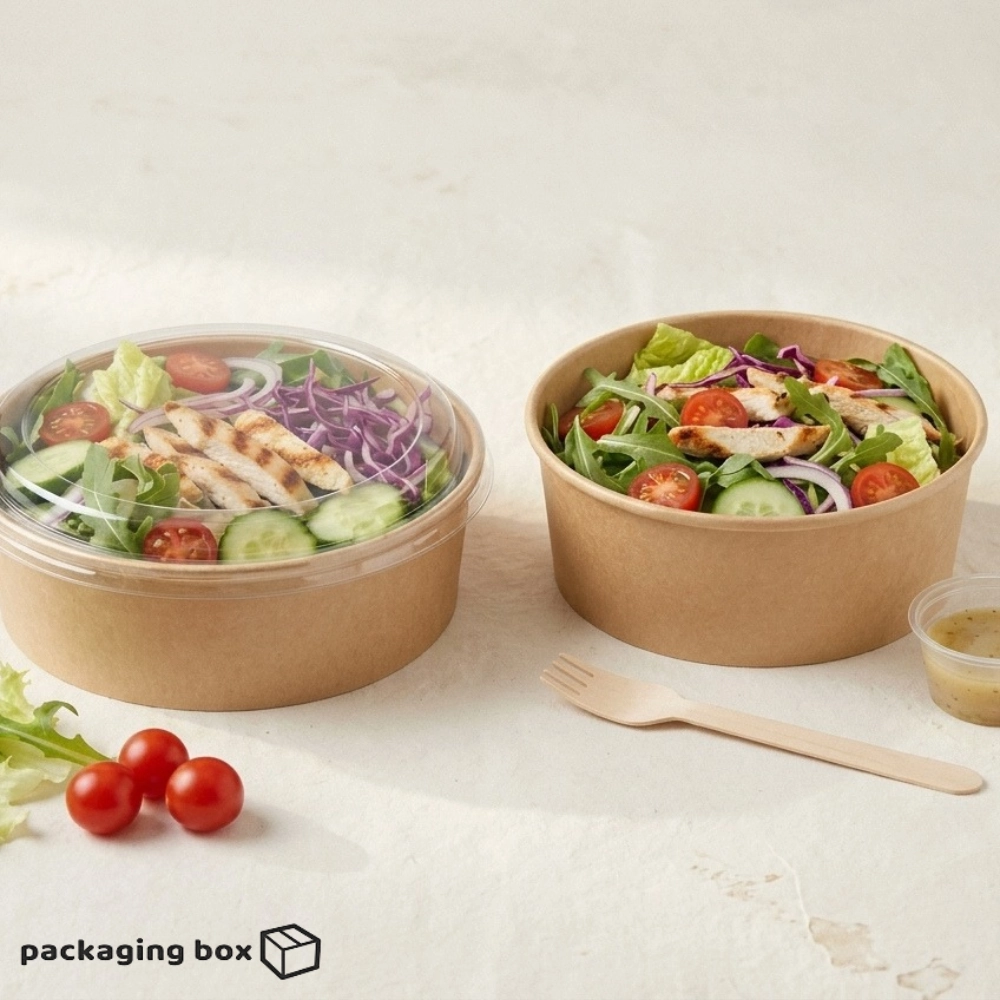

Imagine a customer ordering a colourful chicken Caesar bowl for lunch. It arrives with wilted greens, a pool of dressing at the bottom and a lid that has popped open. The recipe was fresh and healthy, but the experience felt careless. A well-chosen kraft salad box prevents this, because it keeps ingredients fresh, separates the dressing and makes the meal look as wholesome as it tastes.
Healthy food brands sell trust. Customers expect your packaging to feel clean, natural and thoughtful. This guide explains what a kraft salad box is, which sizes and lids work best, how to keep salads crisp during delivery and how to build a simple packaging setup for a salad bar, meal-prep brand or cloud kitchen. You will also find a size guide table you can use straight away.
🧭 What Is a Kraft Salad Box?
A kraft salad box is a disposable bowl made from kraft paper, usually with a food-safe inner lining and a matching lid. Its brown, natural look suits healthy food brands. It is lightweight, stackable and easy to brand with a sticker or print.
🌿 Why Healthy Brands Prefer Kraft
Kraft says “natural” before the customer even opens the lid. A green salad in a brown paper bowl looks fresh and honest, while the same salad in a black plastic tray can feel heavy and processed. That first impression matters a lot for diet food, vegan menus and meal-prep subscriptions.
🧱 What Makes a Good Salad Bowl?
A good kraft salad bowl needs four things. The wall should be firm enough to hold wet ingredients. The lining should resist moisture and oil. The lid should fit tightly without crushing the greens. And the shape should be wide enough to look generous, because salads are judged by sight first. You can see the range in the kraft bowls category and the round kraft bowl category.
📏 Kraft Salad Box Sizes: Which One Do You Need?
Choosing the right size protects your portion cost and your customer’s satisfaction. A bowl that is too small makes the meal look stingy. One that is too big wastes money and lets ingredients slide around.
🔢 Reading Capacity in ml
Bowl capacity is measured in millilitres. As a rough guide, 1 fluid ounce is about 30 ml. But a bowl is never filled to the brim, because lids need headroom and toppings need space. So a 750ml bowl is closer to a 500 to 600 ml serving of loosely packed salad, depending on what goes in.
🥣 Matching Size to Menu
Small bowls suit side salads, fruit cups and snack portions. Medium bowls suit a standard lunch salad. Large bowls suit loaded meals with protein, grains and toppings, or family-share portions. The range runs from the 200ml kraft bowl with lid up to the 1000ml kraft bowl with lid, with in-between options like the 350ml and 480ml.
For bigger meal bowls, the round kraft bowl 500ml, 750ml, 1000ml and 1300ml sizes cover most salad and grain-bowl menus.
🧮 Quick Size Guide
This table is a planning starting point. Always confirm with a real portion before you order in bulk.
| Bowl Size | Best For | Typical Serving | Lid Tip |
|---|---|---|---|
| 200 to 250 ml | Fruit cups, side salads, dips | Small side portion | Flat lid works fine |
| 350 to 480 ml | Light salads, snack bowls | Light lunch | Flat or clear lid |
| 500 to 750 ml | Standard salad, pasta salad | Regular meal portion | Clear dome lid for toppings |
| 1000 ml | Loaded salads, grain bowls | Large meal | Clear dome lid |
| 1300 ml | Sharing salads, family portions | Two servings or heavy bowl | Secure, tight-fitting lid |
This table shows a simple pattern. Light salads need little headroom, while loaded bowls need a dome lid and more space. A good menu offers two or three bowl sizes, which keeps stock simple and gives customers a clear choice.
⚖️ How Much Salad Fits in a 750ml Bowl?
Most leafy salads weigh roughly 150 to 250 grams in a 750ml bowl, because greens are light and airy. Salads with grains, chicken, beans or pasta can reach 300 to 400 grams or more. Weigh your own recipe in a sample bowl, then fix your portion standard from that result.
🎩 What Lid Is Best for a Salad Bowl?
The lid does more than seal the bowl. It protects the presentation, controls moisture and decides whether the salad looks tempting or tired.
👀 Clear Lids Sell Your Food
A clear lid lets customers see the colours of the salad, which does a lot of marketing work. Cherry tomatoes, purple cabbage, grilled chicken and avocado all look better through a clear lid than behind a solid one. If you sell in a counter fridge or through delivery apps, a clear lid is usually the smarter choice.
🏷️ Flat Lid or Dome Lid?
A flat lid is neat, stackable and cheaper to store. It works for dense salads and small portions. A dome lid gives extra headroom, which protects tall toppings like croutons, shredded chicken and herbs. If your salads are generously topped, go with a dome lid. Test the lid with your tallest salad before you buy in bulk.
🔒 Keep the Seal Tight
A loose lid is the number one cause of delivery complaints. Press the lid fully around the rim, and avoid overfilling the bowl. If you want an extra layer of security for delivery, add a small sticker seal across the lid. It also doubles as a branding spot and signals that the meal has not been tampered with.
🥬 How to Keep Salad Fresh in a Kraft Box
Fresh salad is the whole point of the product. Most freshness problems come from moisture, heat and time, and all three can be managed with a few habits.
🧊 Chill and Dry Your Ingredients
Wash and dry your greens thoroughly before packing. Wet leaves create a damp bowl and turn limp quickly. Chill the ingredients before assembly, and pack the salad close to dispatch time. Warm toppings, such as grilled chicken, should cool slightly before going on top, because heat creates steam and steam makes greens soggy.
🪜 Layer Smartly
Put sturdy ingredients at the bottom and delicate ones on top. A practical order is: grains or pasta first, then hard vegetables, then proteins, then leafy greens, and finally light toppings such as seeds or croutons. Layering keeps wet items away from crisp ones and makes the salad look neat when the lid comes off.
🚫 How to Stop Salad from Getting Soggy in a Box
Sogginess comes from dressing, steam and juice from cut vegetables. The most effective fix is to never dress the salad inside the bowl. Pack the dressing separately, drain wet ingredients like cucumber and tomato and add crunchy toppings at the last moment. The same moisture logic appears in burger packaging that doesn’t get soggy, and it applies to salad too.
🥣 How to Pack Salad Dressing for Delivery
Dressing is the single most important accessory in a salad order. Packed badly, it ruins the meal. Packed well, it makes the experience feel premium.
🫙 Use a Separate Dressing Cup
A small lidded sauce cup keeps dressing away from the greens until the customer is ready. The disposable sauce dip container is a handy choice, and the dip sauce with attached lid is useful when you want a one-piece, spill-resistant option. You can browse all options in the dip sauce category.
📍 Where to Place It
Tuck the dressing cup beside the bowl in the delivery bag, or tape it lightly to the lid with a sticker. Never place it inside the bowl on top of the leaves, because it can tip, leak or crush the salad. For thick dressings, fill the cup about three quarters full to leave room for the lid.
🍴 Add the Right Cutlery
A salad without a fork is an incomplete meal. Wooden cutlery matches the natural look of kraft and strengthens your eco story. The birchwood dinner spork is made for rice, pasta and salads, while the eco-friendly wooden fork suits lighter bowls. To understand the material better, read what is a birchwood spork and where to find eco-friendly cutlery in Pakistan. If you are still deciding between materials, this wooden vs plastic cutlery guide helps.
🚚 Best Packaging for Salad Delivery
Delivery tests your packaging harder than any dine-in order. Bumps, tilting and time all work against a delicate salad. The goal is to keep the bowl upright, sealed and cool.
🛍️ Keep It Upright and Secure
Pack the bowl in a bag that fits snugly so it can’t roll. A kraft paper bag or a paper bag works well for single orders. For multi-bowl orders, stack bowls side by side instead of on top of each other, so lids don’t get crushed.
⏱️ Reduce Time Between Pack and Delivery
Salad quality drops with time. Assemble to order where possible, or pre-pack the base and add toppings at dispatch. If you run a cloud kitchen, set a short hand-off window with riders. For broader delivery planning, best food packaging for restaurants and cloud kitchens in Pakistan is a useful companion read.
🧪 Run a Simple Delivery Test
Pack a sample order, seal it and carry it on a bike or in a car for a short trip. Open it and check for spills, crushed greens, popped lids and leaking dressing. Fix the weak point, then test again. This ten-minute habit prevents most bad reviews.
♻️ Are Kraft Salad Boxes Eco-Friendly?
Kraft paper is made from renewable fibre, and paper packaging generally has a lighter environmental story than heavy plastic. But “eco-friendly” depends on the lining, the lid and how the item is disposed of.
🌱 Paper Body, Lining and Lid
Many kraft bowls have a thin inner lining to resist moisture, and many lids are clear plastic so customers can see the food. That means a kraft salad box is often a mixed-material product. Be honest about this in your marketing. Say “paper-based packaging” or “natural kraft look” instead of making claims about composting that you cannot back up.
📣 Tell Your Eco Story Carefully
Customers appreciate honesty. If you use wooden cutlery, paper bags and kraft bowls, you can say your packaging uses natural materials. To explore greener options further, read biodegradable fast food packaging solutions and the eco-friendly custom packaging boxes guide.
🔥 Are Kraft Salad Boxes Microwave Safe? And Kraft vs Plastic
Two questions come up constantly with salad packaging, and both deserve a careful answer.
🍲 Microwave Use
Most salad bowls are designed for cold food. If you also sell warm grain bowls or pasta, check the product specification with your supplier before telling customers to microwave them. Metal parts, glued seams and some linings may not suit heating. When in doubt, add a note such as “Please transfer to a microwave-safe plate before heating.” It protects the customer and your brand.
⚖️ Kraft Salad Box vs Plastic Salad Container
Kraft wins on look, brand feel and eco perception. Plastic containers win on visibility, rigidity and lower sensitivity to moisture over long periods. If you sell salads that sit in a display fridge for hours, a clear transparent food container may display them better. If you sell fresh-to-order bowls with fast delivery, kraft gives a warmer brand image. Many healthy brands use both: kraft for the main bowl and clear lids and small plastic cups for dressings. For a broader view of choosing between materials, read how to choose food packaging in Pakistan.
🎨 How to Make Salad Packaging Look Premium
Premium does not mean expensive. It means consistent, clean and well thought out.
🏷️ Branding Without a Big Budget
Start with plain kraft bowls and add a round logo sticker on the lid, a stamped logo or a printed sleeve. Match the colour to your brand, and use it on every order. As you grow, move to custom printing. For inspiration, see custom packaging box ideas for Pakistan and elevating brand presence with custom packaging solutions.
🧻 Small Extras That Add Value
A branded napkin, a wooden fork and a tiny “best enjoyed within 4 hours” label make a salad feel cared for. You can add a custom napkin at very low cost. A short allergen note, listing nuts, dairy, gluten and sesame, builds trust with health-conscious customers.
💡 Is a Custom Printed Salad Box Worth It?
For brands that deliver regularly or sell through apps, yes. A printed bowl is recognisable in a bag and in photos, and it works as free advertising. If you are just starting, stickers are a smart first step. Move to full printing once your order volume is steady. A related read is custom kraft food box options.
💰 Kraft Salad Box Price in Pakistan and Buying in Bulk
Price depends on bowl size, thickness, lid type, printing and order quantity. Larger bowls cost more, printed bowls cost more than plain ones and lids may be priced separately. Always compare the full cost of bowl, lid, dressing cup and cutlery.
🧾 Think in Cost Per Order
Add the bowl, lid, sauce cup, fork, napkin, sticker and bag, then compare the total with your selling price. This gives an honest margin and prevents hidden losses. For a smart way to think about packaging spend, read investing in packaging for small businesses.
📦 Buy Smart in Bulk
Bulk orders lower your unit cost, but don’t over-order sizes you rarely sell. Start with two core sizes, usually a 500ml or 750ml and a 1000ml, then expand. Before placing a large order, read bulk packaging orders: minimum quantity and cost guide and where to buy wholesale packaging in Pakistan. Smaller shops will find affordable food packaging for small businesses useful, and these tips for choosing the right packaging supplier work as a checklist.
🧰 What Packaging Do You Need to Start a Salad Business?
A starter kit is simpler than most people expect.
- Bowls: two sizes, such as 750ml and 1000ml, in kraft
- Lids: clear lids, with a dome option for tall toppings
- Dressings: small sauce cups with lids
- Cutlery: wooden forks or sporks
- Finishing: stickers, napkins and paper bags
Start with this set, test it for two to three weeks with real orders and adjust. For a wider menu of healthy options, you may also need a sandwich box and kraft food packaging. A full overview of what to stock appears in the top 10 food packaging products in Pakistan and the disposable food packaging buyer’s guide.
📅 Packaging Meal-Prep Subscriptions
If you sell weekly meal-prep plans, label each bowl with the day, contents and best-before time. Use identical bowls and lids so your fridge stock stacks neatly, and group each customer’s bowls in one bag. Consistency makes the subscription feel organised and professional.
✅ Key Takeaways
A kraft salad box works best when you treat it as part of a system: the right bowl size, a clear and secure lid, a separate dressing cup and a clean finishing touch. Keep ingredients dry and chilled, layer them carefully and never dress the salad in the bowl. Test every combination with your real recipe before ordering in bulk, and be honest about what your packaging is made of.
Do these things and your salads will arrive looking as fresh as the day they were made. Healthy food customers notice details, and they come back to brands that get them right.
📣 Ready to Upgrade Your Salad Packaging?
Order a few samples this week, fill them with your real salads and run a short delivery test. Start with the kraft salad box, compare the round kraft bowl range and visit the shop to build your first order. The right bowl costs little and makes every salad look worth more.
❓ Frequently Asked Questions
1. What is a kraft salad box?
A kraft salad box is a disposable paper-based bowl, usually with a food-safe lining and a lid, used to serve and deliver salads and other cold meals.
2. What size salad box do I need?
A 500 to 750 ml bowl suits a standard salad, and a 1000 ml bowl suits loaded or protein-heavy salads. Use 200 to 350 ml for sides and snacks.
3. How do I stop salad from getting soggy in a box?
Dry your greens, drain wet ingredients, layer sturdy items at the bottom and pack dressing separately. Add crunchy toppings just before sealing.
4. How do I pack salad dressing for delivery?
Use a small lidded sauce cup, fill it about three quarters full and place it beside the bowl in the bag, not on top of the salad.
5. Are kraft salad boxes eco-friendly?
Kraft is made from renewable paper fibre, but linings and plastic lids can make the product mixed-material. Describe it honestly as paper-based packaging.
6. What lid is best for a salad bowl?
A clear lid is best because it shows the food. Use a dome lid for tall toppings and a flat lid for dense, compact salads.
{ “@context”: “https://schema.org”, “@type”: “FAQPage”, “@id”: “https://packagingbox.pk/kraft-salad-box-packaging-guide/#faq”, “url”: “https://packagingbox.pk/kraft-salad-box-packaging-guide/”, “inLanguage”: “en”, “mainEntityOfPage”: “https://packagingbox.pk/kraft-salad-box-packaging-guide/”, “mainEntity”: [ { “@type”: “Question”, “name”: “What is a kraft salad box?”, “acceptedAnswer”: { “@type”: “Answer”, “text”: “A kraft salad box is a disposable paper-based bowl, usually with a food-safe lining and a lid, used to serve and deliver salads and other cold meals.” } }, { “@type”: “Question”, “name”: “What size salad box do I need?”, “acceptedAnswer”: { “@type”: “Answer”, “text”: “A 500 to 750 ml bowl suits a standard salad, and a 1000 ml bowl suits loaded or protein-heavy salads. Use 200 to 350 ml for sides and snacks.” } }, { “@type”: “Question”, “name”: “How do I stop salad from getting soggy in a box?”, “acceptedAnswer”: { “@type”: “Answer”, “text”: “Dry your greens, drain wet ingredients, layer sturdy items at the bottom and pack dressing separately. Add crunchy toppings just before sealing.” } }, { “@type”: “Question”, “name”: “How do I pack salad dressing for delivery?”, “acceptedAnswer”: { “@type”: “Answer”, “text”: “Use a small lidded sauce cup, fill it about three quarters full and place it beside the bowl in the bag, not on top of the salad.” } }, { “@type”: “Question”, “name”: “Are kraft salad boxes eco-friendly?”, “acceptedAnswer”: { “@type”: “Answer”, “text”: “Kraft is made from renewable paper fibre, but linings and plastic lids can make the product mixed-material. Describe it honestly as paper-based packaging.” } }, {


💬 0 Comments
Leave a Comment