
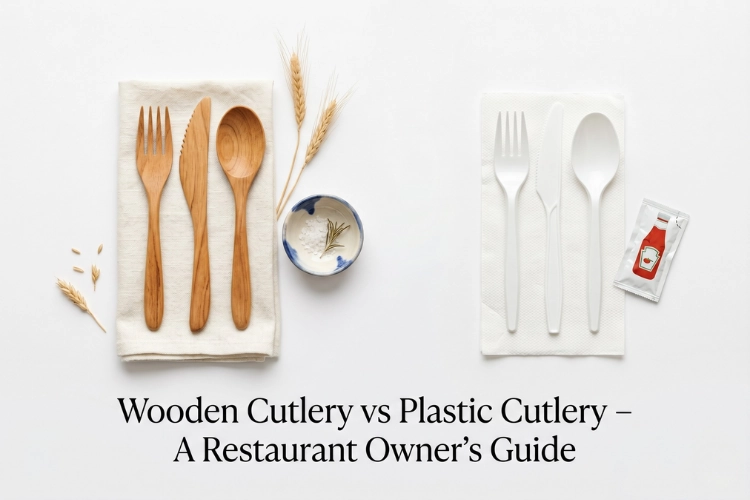

🍴 Introduction: The Cutlery Decision That Could Define Your Brand
Picture this: a customer opens their takeaway order, pulls out a sleek birchwood fork, and snaps a photo for Instagram. Compare that to the moment they wrestle with a flimsy plastic spoon that snaps in half mid-meal. Which story do you want your restaurant to tell?
The debate around wooden cutlery vs plastic cutlery isn’t just about utensils anymore. It’s about your brand identity, your environmental responsibility, your operating costs, and — most importantly — your customers’ experience. In 2026, with single-use plastic bans tightening across Pakistan and globally, restaurant owners are under more pressure than ever to make the right call.
This restaurant cutlery guide breaks down everything you need to know — from cost comparisons and environmental impact to food safety and customer perception — so you can make a confident, informed decision for your food business.
Let’s dig in.
🌍 Why the Cutlery Conversation Has Changed in 2026
Not long ago, plastic cutlery was the default. It was cheap, widely available, and nobody thought twice about it. But the landscape has shifted dramatically.
Governments worldwide — including increasing regulatory pressure in Pakistan’s food service sector — are cracking down on single-use plastic cutlery bans. Customers are more eco-conscious than ever. And brands that ignore sustainability are quietly losing loyal diners to competitors who don’t.
Here’s what’s driving the shift:
- Regulatory pressure — Single-use plastic restrictions are expanding in South Asia
- Customer demand — Studies show 73% of consumers prefer brands with sustainable practices
- Social media visibility — Eco-friendly packaging and cutlery gets shared; plastic waste gets called out
- Health awareness — Growing concerns around plastic cutlery health risks, including microplastic leaching at high temperatures
The question is no longer if you should consider alternatives — it’s when and how.
🔍 Wooden Cutlery vs Plastic Cutlery: A Head-to-Head Comparison
Let’s break this down across every dimension that matters to a restaurant owner.
💰 Cost Comparison
One of the first things every restaurant owner asks: “Is wooden cutlery more expensive?”
The honest answer — yes, slightly. But the gap is smaller than most people think, and the total value equation tells a very different story.
| Factor | Wooden Cutlery | Plastic Cutlery |
|---|---|---|
| Unit Cost | Slightly higher | Lower upfront |
| Bulk/Wholesale Price | Competitive at volume | Cheapest in bulk |
| Breakage Rate | Low (birchwood is sturdy) | Higher (snaps easily) |
| Customer Perception Value | Premium, positive | Neutral to negative |
| Brand Image ROI | High | Low |
| Regulatory Risk Cost | None | Increasing fine risk |
When you factor in wooden cutlery wholesale pricing and the brand premium it creates, the cost difference becomes negligible — especially for restaurants positioning themselves in the mid-to-premium segment.
You can explore eco-friendly wooden cutlery options that are competitively priced for bulk restaurant orders.
🌱 Environmental Impact
This is where wooden cutlery wins decisively.
The environmental impact of plastic cutlery is staggering. A single plastic fork takes 400–1,000 years to decompose. It breaks into microplastics that enter soil, water, and eventually the food chain. For a restaurant serving hundreds of customers daily, the cumulative impact is enormous.
Wooden cutlery, on the other hand:
- Is made from sustainably sourced birchwood or bamboo
- Biodegrades within 3–6 months in composting conditions
- Produces significantly lower carbon emissions during production
- Qualifies as compostable wooden utensils — meaning they can go straight into organic waste streams
- Supports green restaurant practices that resonate with eco-conscious diners
If your restaurant is pursuing zero waste restaurant tips or building an eco brand identity, switching to wooden cutlery is one of the highest-impact, lowest-effort changes you can make.
Pair your wooden cutlery with eco-friendly disposable packaging to create a fully sustainable table setup.
🛡️ Food Safety & Hygiene
A common concern: “Is wooden cutlery food-safe?”
Yes — absolutely, when sourced correctly. Food-safe wooden utensils are treated with food-grade finishes and are free from harmful chemicals. Birchwood, in particular, is naturally smooth, splinter-resistant, and does not leach toxins even when in contact with hot food.
Plastic cutlery, by contrast, carries documented health risks:
- Cheap plastics can leach BPA and phthalates when exposed to hot foods
- Low-quality plastic forks and spoons often contain recycled materials of unknown origin
- Microplastic contamination is a growing concern in disposable food service
Birchwood cutlery for catering is specifically designed to handle a wide range of foods — from hot rice dishes to cold salads — without compromising on safety or structural integrity.
Check out these food-safe options:
- Birchwood Dinner Spork for Rice, Pasta & Salads
- Birchwood Knife
- Birchwood Wooden Spoon
- Eco-Friendly Wooden Fork
🎨 Customer Experience & Brand Perception
This is the factor most restaurant owners underestimate.
Cutlery is a tactile brand touchpoint. The moment a customer picks up their utensil, they form a subconscious impression of your restaurant’s quality and values.
Wooden cutlery signals:
- Premium quality and attention to detail
- Environmental responsibility
- A modern, thoughtful brand
- Trustworthiness in food handling
Plastic cutlery signals:
- Cost-cutting
- Indifference to environment
- A commodity-level experience
For cutlery for takeaway restaurants, this matters even more. When the dine-in ambiance is removed, the packaging and cutlery become the experience. Wooden utensils elevate a takeaway meal from forgettable to shareable.
♻️ Disposal & Waste Management
Compostable food service products like wooden cutlery integrate seamlessly into sustainable waste management systems. They can be:
- Composted in commercial or home composting setups
- Disposed of in organic waste bins without environmental guilt
- Marketed to customers as part of your restaurant eco packaging story
Plastic cutlery, by contrast, almost always ends up in landfill — or worse, in waterways. There is no responsible end-of-life pathway for single-use plastic utensils at scale.
🍽️ Best Use Cases: When to Use Which
Not every scenario is identical. Here’s a practical breakdown for different restaurant formats:
| Restaurant Type | Recommended Cutlery | Why |
|---|---|---|
| Fine Dining / Premium Casual | Wooden (Birchwood) | Matches premium brand positioning |
| Fast Food / QSR | Wooden (cost-effective at bulk) | Regulatory compliance + brand safety |
| Takeaway / Delivery | Wooden | Better customer experience, eco story |
| Catering & Events | Wooden (Birchwood sets) | Presentable, sturdy, compostable |
| Food Trucks | Wooden | Lightweight, eco-friendly, trendy |
| Budget Canteens | Wooden (wholesale bulk) | Cost gap minimal at volume |
The verdict is clear: wooden disposable cutlery is the smarter choice across virtually every restaurant format in 2026.
🌿 Building a Fully Eco-Friendly Restaurant Setup
Switching cutlery is just one piece of the puzzle. The most successful sustainable restaurant supplies strategy covers every customer touchpoint. Here’s how to build a complete eco setup:
Cutlery & Utensils:
- Eco-Friendly Wooden Fork
- Birchwood Wooden Spoon
- Disposable Stir Sticks – Natural Wooden
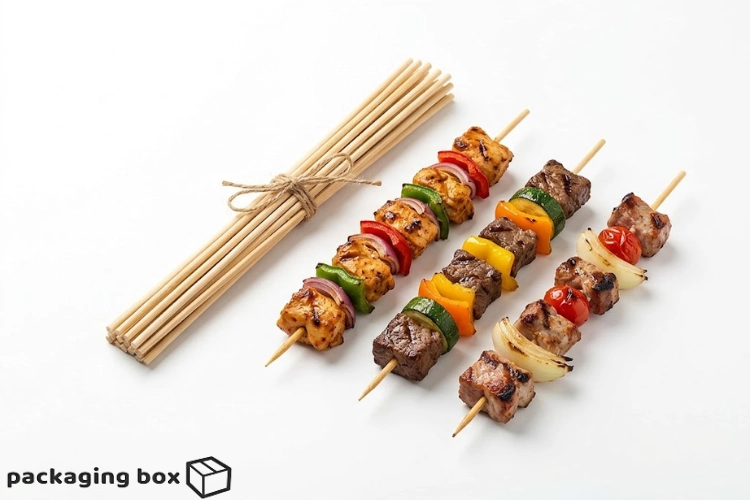
- Wooden Skewer Sticks – BBQ Food Grade
Eco Serving & Presentation:
- Disposable Wooden Boat Serving Tray – Small
- Disposable Wooden Boat Serving Tray – Medium
- Disposable Wooden Boat Serving Tray – Large
- Disposable Wooden Cone for Fries – Large
Eco Packaging:
- Kraft Food Packaging
- Kraft Bowls with Lid
- Kraft Paper Bags
- Compostable 3-Compartment Biodegradable Plates
- Paper Straws
Beverages:
This combination creates a plastic-free restaurant experience that customers notice, appreciate, and talk about.
📊 Wooden Cutlery vs Plastic Cutlery: Final Verdict
Here’s the complete summary scorecard:
| Criteria | Wooden Cutlery | Plastic Cutlery |
|---|---|---|
| Eco-Friendliness | ✅ Excellent | ❌ Poor |
| Food Safety | ✅ High | ⚠️ Moderate risk |
| Durability | ✅ Strong & sturdy | ❌ Snaps easily |
| Customer Perception | ✅ Premium | ❌ Cheap feel |
| Regulatory Compliance | ✅ Future-proof | ❌ At risk |
| Compostability | ✅ Fully compostable | ❌ Non-compostable |
| Bulk Cost | ✅ Competitive | ✅ Slightly cheaper |
| Brand Value | ✅ High | ❌ Low |
Wooden cutlery wins 7 out of 8 categories. The only area where plastic holds a marginal edge is raw unit cost — and even that advantage disappears at wholesale volumes.
💡 Practical Tips for Making the Switch
Transitioning to eco-friendly cutlery for restaurants doesn’t have to be complicated. Here’s a simple action plan:
- Audit your current usage — Calculate how many plastic pieces you use weekly
- Order a sample set — Test birchwood cutlery with your actual menu items
- Buy in bulk — Wooden cutlery wholesale pricing makes the cost difference minimal
- Update your packaging story — Tell customers you’ve switched; put it on your menu and social media
- Go full eco — Combine wooden cutlery with kraft food packaging for maximum impact
- Train your staff — Ensure proper storage (keep wooden cutlery dry) and correct disposal guidance for customers
🏁 Conclusion: The Choice Is Clearer Than Ever
The wooden cutlery vs plastic cutlery debate has a clear winner for modern restaurant owners. Wood wins on sustainability, food safety, customer experience, brand value, and regulatory compliance. Plastic wins on nothing that matters in the long run.
In 2026, choosing wooden disposable cutlery isn’t just the eco-friendly decision — it’s the smart business decision. Your customers are watching, regulators are tightening rules, and your brand deserves better than a utensil that snaps under pressure.
Make the switch. Your restaurant, your customers, and the planet will thank you.
🛒 Ready to Switch to Eco-Friendly Wooden Cutlery?
Browse our complete range of food-safe, restaurant-grade wooden cutlery and sustainable packaging at PackagingBox.pk. From birchwood forks and spoons to full eco packaging setups — everything your restaurant needs to go green, in one place.
👉 Shop Eco Cutlery Now 👉 Explore All Eco Products 👉 Browse Kraft Food Packaging




💬 0 Comments
Leave a Comment