
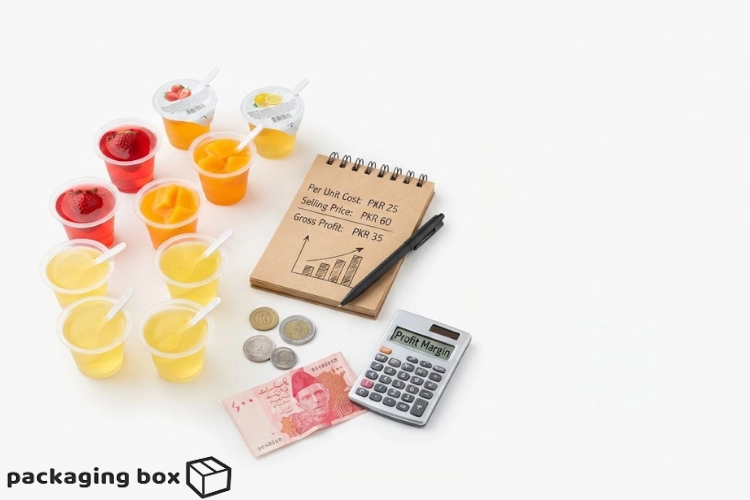

Figuring out how to price jelly cups correctly is one of the biggest challenges new food entrepreneurs face in Pakistan, and honestly, it’s a mistake that quietly eats away profits for months before anyone notices. You make a delicious batch, sell it fast, feel great about the demand — and then realize at the end of the month that your bank balance barely moved. If that sounds familiar, you’re not alone. Most jelly cup sellers price based on guesswork or what competitors charge, without ever calculating their real cost per unit. This guide walks you through a practical, numbers-based approach so you can price with confidence instead of hope.
Whether you’re just starting a small jelly cups business Pakistan-wide or already selling but struggling to see consistent profit, this article breaks down every cost component — ingredients, packaging, labor, and overhead — and turns it into a simple formula you can apply today.
🧠 Why Jelly Cup Pricing Confuses So Many Sellers
Jelly cups look simple to make, and that simplicity is exactly what tricks sellers into underpricing them. A packet of gelatin, some flavored syrup, a few cups — the ingredient list feels almost too small to justify charging much. But the real cost of running a jelly cups business Pakistan-wide includes far more than what goes into the mixing bowl.
Between packaging materials, gas or electricity, delivery charges, wastage, and your own time, the “hidden” costs often exceed the visible ones. This is precisely why a proper jelly cups pricing guide needs to account for every rupee spent, not just the obvious ingredients. Once you see the full picture, pricing stops feeling like guesswork and starts feeling like a calculated business decision.
🧮 Breaking Down Jelly Cup Manufacturing Cost
Before you can set a fair and profitable price, you need complete clarity on your jelly cup manufacturing cost. Let’s separate this into three practical categories that every seller should track.
1. Jelly Cup Ingredients Cost
Your base ingredients — gelatin or agar powder, sugar, flavoring, food coloring, and water — form the foundation of your raw material cost calculation. These costs fluctuate with market rates, so it’s smart to recalculate every few weeks rather than relying on old numbers. A useful habit is buying in slightly larger quantities when prices are low, which naturally improves your margins without changing your selling price.
2. Packaging Cost for Jelly Cups
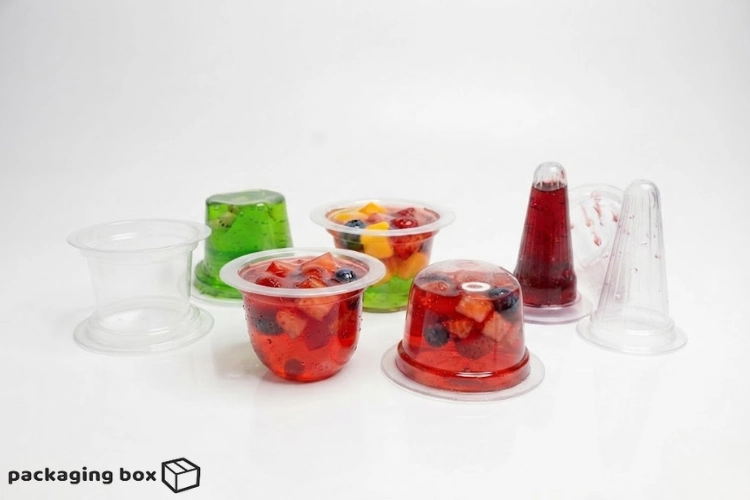
This is the category most new sellers underestimate, yet it directly affects both your final cost and your product’s shelf appeal. The packaging cost for jelly cups includes the cup itself, sealing film, labels, and any secondary packaging used for delivery or retail display.
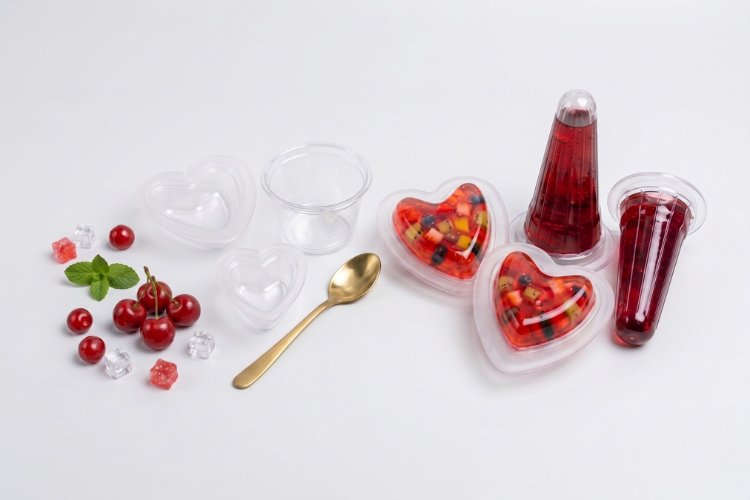
Choosing the right cup size also plays a bigger role than most people realize — a detailed comparison like 25ml vs 90ml jelly cups shows how size selection alone can shift your cost-per-unit and target customer segment. If you’re selling trendy variations, options like the heart-shaped jelly cup or choc-dip jelly cup packaging can justify a premium price point since they stand out visually on social media and in stores.
3. Labor, Utilities & Overhead Costs
Every hour you or your staff spend preparing, filling, and sealing jelly cups has real value — even if you’re not currently paying yourself a wage. Add gas/electricity for cooking, water, and a small buffer for wastage or spoiled batches. This is the overhead cost food business owners often forget to include, and skipping it is one of the fastest ways to underprice your product without realizing it.
📊 The Formula: How to Price Jelly Cups for Profit
Once your costs are clear, pricing becomes a straightforward calculation rather than a guessing game. Here’s the core selling price formula used across the food business:
Selling Price = Total Cost Per Unit + Desired Profit Margin
To apply this practically, first calculate your Cost of Goods Sold (COGS) — the direct cost of producing one jelly cup, including ingredients, packaging, and a portion of labor. Then decide your target profit margin, which for small food businesses in Pakistan typically ranges between 40% to 60%, depending on your market and product uniqueness.
Sample Cost Breakdown Table
| Cost Component | Cost Per 25ml Jelly Cup (PKR) |
|---|---|
| Ingredients (gelatin, sugar, flavor) | 3.50 |
| Packaging (cup, seal, label) | 2.00 |
| Labor & utilities (allocated) | 1.50 |
| Total COGS | 7.00 |
| Profit Margin (50%) | 3.50 |
| Recommended Selling Price | 10.50 |
This table is just an example — your actual jelly cup price per piece will shift based on your local supplier rates, cup size, and packaging style. If you’re using specialty packaging like a jelly cup cone, your COGS will be slightly higher, but so will the price customers are willing to pay for something visually unique.
🏷️ Jelly Cup Price Per Piece – Retail vs Wholesale
Understanding the difference between retail price vs wholesale price is essential once your jelly cups business Pakistan-wide starts scaling beyond individual customers. Retail pricing targets direct consumers and includes your full profit margin, while wholesale pricing is offered to shops, cafes, or resellers buying in bulk — and naturally carries a lower per-unit margin in exchange for volume.
A common approach among successful sellers is setting retail price at full margin, then offering a 15–25% discount for wholesale orders above a certain quantity. This keeps your business attractive to bulk buyers without eating into your overall profitability. If you’re exploring supply relationships, checking where to buy wholesale packaging in Pakistan can help you negotiate better packaging rates, which directly improves your margin on both retail and wholesale sales.
💰 Calculating Profit Margin & Break-Even Point
Knowing your numbers isn’t just about setting a price — it’s about understanding when your business actually starts making money. This is where the break-even point food business owners need to calculate becomes essential.
Your break-even point is the number of jelly cups you need to sell to cover all your costs — ingredients, packaging, utilities, and any fixed monthly expenses like rent or marketing. Once you cross that number, every additional sale contributes directly to profit.
A simple profit margin calculator Pakistan sellers can use manually:
Profit Margin (%) = (Selling Price − Total Cost) ÷ Selling Price × 100
Using our earlier example: (10.50 − 7.00) ÷ 10.50 × 100 = 33.3% profit margin. Tracking this number monthly helps you spot when rising ingredient or packaging costs are quietly shrinking your margins, giving you time to adjust prices before profits disappear.
🧁 Practical Pricing Examples for a Jelly Cups Business in Pakistan
Let’s apply everything above to real-world scenarios, since theory only helps so much without context.
A small home-based seller producing 25ml jelly cups for local delivery typically prices each cup between PKR 10–15, depending on flavor variety and packaging quality. A seller offering premium options — like heart-shaped or choc-dip variants — can comfortably price 20–30% higher, since customers associate unique presentation with higher value.
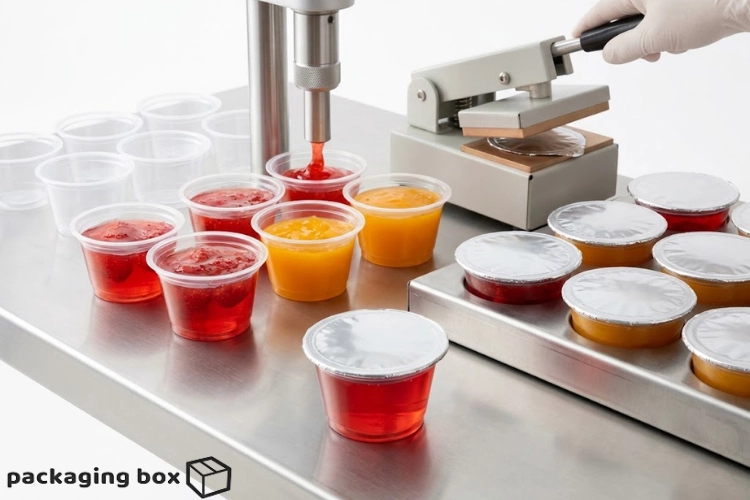
For sellers targeting cafes or retail shelves, packaging plays an even bigger role in justifying price. A well-sealed, professionally labeled jelly cup naturally commands a better shelf price than a plain, unbranded one. If you’re new to this side of the business, our guide on how to fill and seal jelly cups for retail sale walks through the exact process that keeps your product both safe and shelf-ready.
For anyone still exploring the basics of this niche, what is a jelly cup — types, sizes, and uses in Pakistan is a solid starting point before diving into pricing decisions.
⚠️ Common Mistakes That Quietly Kill Jelly Cup Profits
Even sellers with good sales volume sometimes struggle financially, usually because of a few repeated pricing mistakes:
- Ignoring packaging cost when calculating COGS, leading to underpriced products
- Copying competitor prices without knowing their actual cost structure
- Skipping wastage allowance, which silently increases real production cost
- Not revisiting prices when raw material rates rise
- Underestimating labor time, especially for detailed packaging styles
Avoiding these five mistakes alone can improve your jelly cups profit margin significantly, often without changing a single ingredient in your recipe.
📦 Smart Packaging Choices That Improve Your Margins
Packaging isn’t just a cost — when chosen strategically, it becomes a tool for increasing your selling price without increasing customer resistance. Attractive, well-sealed packaging signals quality, and customers consistently pay more for products that look professionally finished.
Small food businesses looking to balance affordability with presentation should explore affordable food packaging solutions for small businesses in Pakistan, which shows how to upgrade packaging without dramatically increasing your jelly cup manufacturing cost. For sellers ready to scale production, understanding bulk packaging orders, minimum quantities, and cost guides can unlock significant per-unit savings that flow straight into your profit margin.
If you’re just getting your food packaging business started, our foundational post on how to start a packaging business in Pakistan offers broader context that pairs well with jelly cup-specific strategy.
🎯 Final Thoughts: Pricing With Confidence, Not Guesswork
Pricing your jelly cups correctly isn’t about picking a number that “feels right” — it’s about understanding every rupee that goes into production and building a margin that keeps your business sustainable long-term. Once you calculate your jelly cup manufacturing cost, apply the selling price formula, and track your break-even point regularly, pricing stops being stressful and starts becoming a strategic advantage over competitors who are still guessing.
The sellers who succeed long-term in this space aren’t necessarily the ones with the tastiest recipe — they’re the ones who treat pricing as seriously as they treat their product quality. Start applying this cost and margin guide for food business owners today, revisit your numbers monthly, and watch your profitability grow steadily instead of unpredictably.
🚀 Ready to Package Your Jelly Cups Professionally?
If your pricing strategy is solid but your packaging needs an upgrade, explore our full range of jelly cup packaging solutions — from classic 25ml and 90ml cups to trending choc-dip and heart-shaped designs — all built to help your product stand out and justify the price it deserves.
❓ Frequently Asked Questions
How to price jelly cups for a small business in Pakistan? Calculate your total cost per unit — including ingredients, packaging, and labor — then add a 40–60% profit margin depending on your market. This gives you a fair, sustainable selling price.
Jelly cups price kitna rakhna chahiye? Aam tor par 25ml jelly cup ka price PKR 10–15 ke darmiyan rakha jata hai, jo ingredients, packaging aur local market rate par depend karta hai.
How much profit is realistic in the jelly cup business? Most small sellers achieve a 30–50% profit margin once packaging and labor costs are properly accounted for in their pricing formula.
What is the total cost to make one jelly cup? Depending on size and packaging style, total cost typically ranges from PKR 5 to PKR 10 per unit, covering ingredients, packaging, and allocated labor.
How do I calculate profit margin on jelly cups? Use the formula: (Selling Price − Total Cost) ÷ Selling Price × 100. This gives your exact profit margin percentage per unit sold.
Does packaging really affect jelly cup pricing? Yes — premium packaging like heart-shaped or choc-dip cups allows sellers to charge 20–30% more, since customers associate better presentation with higher value.




💬 0 Comments
Leave a Comment