
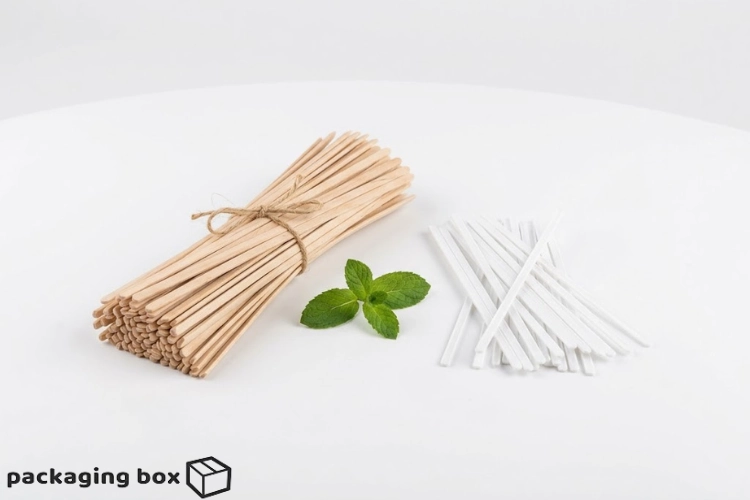

Every café has a tiny habit nobody questions: a quick stir, a flick of the wrist, and a stick in the bin. Multiply that by hundreds of drinks a day and you have a real waste stream. The debate of wooden stir sticks vs plastic is no longer a niche sustainability topic. It affects your costs, your brand image, and your compliance with plastic rules that keep tightening around the world.
The good news is that this is one of the easiest eco upgrades a café can make. A stir stick costs very little. It is also in the customer’s hand for a few seconds, so the switch is noticed and appreciated. This guide walks you through the real differences, the costs, the heat performance, and the step-by-step process of changing over without upsetting your workflow. If you run a coffee shop, a tea stall, or a cloud kitchen with a beverage menu, you will find a practical plan here.
🌍 Why the Stir Stick Debate Matters More Than You Think
Stir sticks are small, light, and used once. That is exactly why they cause trouble. A plastic stirrer is easy to lose in the waste stream, it rarely gets recycled, and it breaks into smaller fragments over time instead of truly disappearing.
The environmental impact of plastic stirrers
Most plastic stirrers are made from polystyrene or polypropylene. These are lightweight materials that sit in the “too small to recycle” category at most sorting facilities. When people ask how long plastic takes to decompose, the commonly cited estimate is several hundred years. Exact figures vary by conditions, but the pattern is clear. Plastic does not biodegrade in any useful timeframe. It fragments into microplastics.
That fragmentation is why microplastics in beverages and in the wider food chain are now a research priority. A café is not going to be the main source of microplastics. But a stirrer sits directly in a hot drink, and that is a detail some customers do think about. Hot liquid also speeds up the release of tiny particles from some plastics, which is one reason many health-conscious customers now ask about materials.
Rules are already moving
Regulation is the other driver. The European Union banned plastic stirrers under its Single-Use Plastics Directive in 2021, and several other countries and cities have followed with their own restrictions. Pakistan’s provinces and Islamabad have also introduced limits on certain single-use plastics, mainly bags, and the direction of travel is obvious. If you are reviewing plastic waste regulations for restaurants in your area, check with your local authority, because rules change often. Moving early is cheaper than scrambling later.
🪵 Wooden Stir Sticks vs Plastic: Head-to-Head Comparison
Now to the main question. Here is how the two options compare on the points café owners care about most.
What are wooden coffee stirrers made of?
Most wooden coffee stirrers are made from birch, which is a pale, fine-grained hardwood that is smooth and has very little taste. Some suppliers also offer bamboo stirrers. Birch wood stirrers are popular in cafés because the grain is tight, the surface is easy to polish, and the wood does not leave a strong flavour in the drink. It is the same logic behind birchwood cutlery. If you want to see how that material works in a full table setting, our guide to what a birchwood spork is explains why birch has become the go-to eco wood.
Are wooden stir sticks biodegradable?
Yes. This is one of the most common questions, and the answer is simple. Are wooden stir sticks biodegradable? They are made of natural fibre, so they break down in soil and in composting systems. In a commercial or well-managed compost, they break down much faster than in a landfill. In a landfill, even wood breaks down slowly because there is little oxygen. So “biodegradable” is a real advantage, but it works best when you have a collection or composting option, even a simple one.
Side-by-side comparison
| Factor | Wooden Stir Sticks | Plastic Stir Sticks |
|---|---|---|
| End of life | Biodegradable, compostable in proper conditions | Persists for centuries, breaks into microplastics |
| Heat behaviour | Handles hot drinks well, no melting | Can soften or warp in very hot drinks |
| Feel and taste | Natural feel, minimal taste if birch | Smooth, but can feel cheap |
| Cost per piece | Slightly higher, falls with bulk buying | Lowest upfront cost |
| Brand image | Strong eco signal | Increasingly seen as outdated |
| Regulatory risk | Low | Rising |
Plastic wins only on the lowest unit price. Wood wins on nearly everything customers and regulators now care about, and the price gap shrinks fast when you buy in volume.
💰 Wooden vs Plastic Stirrer Cost: The Real Numbers Logic
Price is usually the first objection, so let’s deal with it honestly. Wooden vs plastic stirrer cost per unit is higher for wood. But the unit price is not the whole story.
Think in cost per drink
A stirrer is a tiny share of the cost of a cup of coffee. Between the cup, lid, sleeve, sugar, and the coffee itself, the stirrer is usually the smallest line item. If wood adds a fraction of a rupee per drink, that is easy to absorb. Many cafés add it to their overall packaging cost without changing menu prices at all.
A simple way to check is to take your monthly drink count and multiply by the price difference. For most small and mid-sized cafés, the monthly increase is modest. Then compare that to what a “plastic-free” label does for loyalty and word of mouth. The cost comparison of stir sticks is rarely the deciding factor once you see the numbers laid out.
Bulk buying changes everything
This is where bulk wooden stir sticks become the smart move. Buying in larger cartons lowers the unit cost and reduces how often you reorder. If you are unsure how much to order at a time, our bulk packaging orders and minimum quantity cost guide shows how quantity affects pricing. For a broader view of sourcing, where to buy wholesale packaging in Pakistan covers what to look for in a wholesale café supplies partner.
🔥 Performance in the Cup: Heat, Splinters and Customer Experience
Eco switches fail when the product disappoints. Nobody wants a stirrer that bends, tastes odd, or leaves a splinter. Here is what to check before you commit.
Heat resistance of wooden stirrers
Good wooden stirrers handle hot coffee and tea easily. Wood does not melt, so there is no softening at 90°C the way some thin plastic stirrers can behave. The heat resistance of wooden stirrers is one of their quiet advantages. A well-made birch stick stays rigid from the first stir to the last sip. The one thing to avoid is very thin, low-grade sticks that can swell if left sitting in a drink for a long time. That is a quality issue, not a wood issue.
Splinter-free wooden stirrers
A splinter is the nightmare scenario, and it is avoidable. Splinter-free wooden stirrers come from smooth sanding, rounded ends, and a clean cut. When you evaluate a sample, run your finger along the edges and snap one in half. If it fractures into sharp needles, move on. Quality birch should feel almost polished. This matters for food-grade safety too, so ask suppliers for food-contact information.
The taste question
Some owners worry that wood will flavour the drink. With untreated, odourless birch, the effect is negligible in a normal stirring time. If you want to understand how materials can change what a customer tastes, our piece on why coffee tastes different in a disposable cup is a useful companion read.
For a ready-to-use option, our natural wooden disposable stir sticks for tea and coffee are made for exactly this job.
🛠️ How to Switch to Sustainable Café Supplies: A Practical Plan
Here is the part most guides skip. This is your eco café switching guide, a simple process for how to switch to sustainable café supplies without disrupting service. Think of it as a short project, not a big overhaul.
Step 1: Audit what you use now
Count how many stirrers you go through per week. Note where they sit: the counter, the self-service station, or behind the bar. A café that hands stirrers to customers uses fewer than one that leaves an open dispenser. Many owners find they can cut usage by 20 to 30 percent just by moving to staff-handed stirrers, which makes the switch even cheaper.
Step 2: Order samples and test them
Never switch blind. Order a small batch of samples and test them in your real drinks: espresso, latte, hot tea, and iced coffee. Stir for the time a normal customer would. Check for taste, bending, and smoothness. Let two or three team members try them too, because baristas notice things customers will not say out loud.
Step 3: Choose your supplier carefully
This is supplier selection for eco café products, and it deserves a few careful questions. Can they provide consistent quality across batches? Do they offer FSC-certified wood or can they explain where the wood comes from? Is delivery reliable? Our guide on choosing the right packaging supplier lists the checks worth making before your first big order.
Step 4: Switch in stages
You do not need to flip everything in a day. Start with one location or one drink type. Run wood and plastic side by side for a week, then retire the plastic completely. This staged approach keeps the team calm and gives you time to fix surprises.
Step 5: Tell your customers
An eco switch is only half-effective if nobody knows about it. A small sign by the till, a line on your menu, or a quick Instagram post is enough. Customers love a story that is short and honest, such as “We’ve replaced plastic stirrers with natural wood.”
| Switching Stage | What to Do | Typical Time |
|---|---|---|
| Audit | Count usage, locate stir stations | 1–2 days |
| Sampling | Test wooden stirrers in real drinks | 1 week |
| Supplier check | Compare quality, pricing, delivery | 1 week |
| Pilot | Run wood and plastic side by side | 1 week |
| Full switch + announce | Retire plastic, tell customers | Ongoing |
This five-stage plan keeps risk low. Most cafés complete the entire change in three to four weeks.
🌱 Building a Bigger Green Picture: Beyond the Stir Stick
A wooden stirrer is a great first step, but it looks best as part of a wider plastic-free café story. Customers notice when the whole experience is consistent.
Match your cups, lids and cutlery
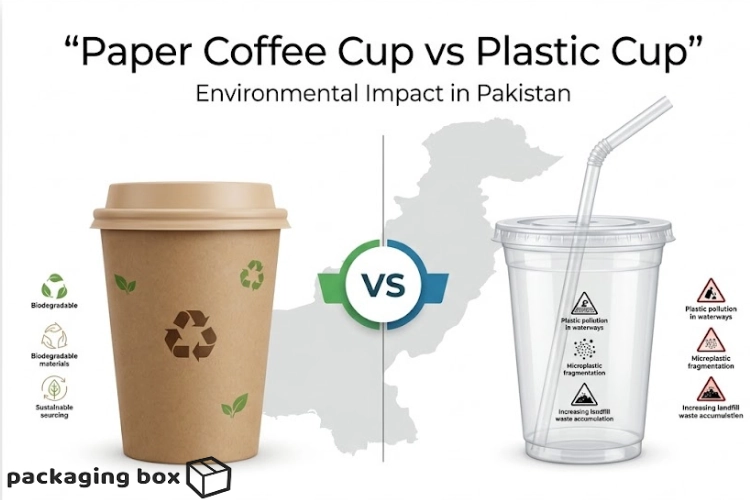
If your stirrer is wood but your cup is a plastic-lined tumbler with a plastic straw, the message feels mixed. Look at your whole beverage setup as one system. Our guide to eco-friendly coffee cups and sustainable choices covers cup options. If you are still deciding between materials, paper coffee cup vs plastic cup in Pakistan breaks the comparison down. You can also browse our coffee cup range and coffee straws, including 6mm paper straws, to complete the setup.
Cutlery and food service
If you serve desserts, cakes, or light meals, wooden cutlery is the natural next step. Our wooden cutlery vs plastic cutlery restaurant guide and the walkthrough on a wooden fork, knife and spoon eco café setup show how to build it. For local sourcing, see where to find eco-friendly cutlery in Pakistan or browse the full eco cutlery category. A polished wooden tea spoon also works well for premium tea service.
The circular economy idea
The long-term goal in food service is a circular economy: materials that come from renewable sources and return safely to the earth. Wood from managed forests fits that model far better than fossil-based plastic. Even small steps, like composting used stirrers and coffee grounds together, move a café in that direction. If you also run a takeaway menu, our overview of biodegradable fast food packaging solutions shows how the same thinking extends to the rest of your packaging.
✅ Certifications, Trust and Customer Perception
Eco claims only work if they are believable. Customers are better at spotting vague “green” language than ever.
Look for real sustainability certifications
Sustainability certifications give your claim backing. For wood products, FSC-certified wood is the best known mark, showing the timber comes from responsibly managed forests. For compost claims, look for recognised compostability standards where they apply. If a supplier cannot explain what certification they have, treat the “eco” label with caution. Ask for documents and keep them on file.
How customers actually react
Customer perception of eco-friendly cafés is strongly positive, especially among younger buyers who often choose a café partly on its values. A visible, simple change like wooden stirrers builds goodwill because it is something customers can hold and see. It also gives people something easy to mention to friends. You are not just swapping a product. You are giving customers a small reason to talk about your café.
Be honest, not perfect
Do not claim to be “zero waste” if you are not. Say what you have done, such as “plastic-free stirrers, paper straws, and compostable cutlery,” and what you are working on next. That honesty builds more trust than a big promise. A clear zero waste coffee shop goal can be a long-term target, but present it as a journey.
🏁 Conclusion: Small Stick, Big Signal
When you put wooden stir sticks vs plastic side by side, the picture is clear. Plastic is cheaper per piece, but it carries growing regulatory risk, a poor environmental record, and an image your customers increasingly dislike. Wood costs slightly more, performs well in hot drinks, breaks down naturally, and tells a positive story about your café. With a staged plan, quality samples, and a trustworthy supplier, the switch is simple, affordable, and fast.
You do not need to rebuild your café to become greener. You can start with the smallest tool on the counter. That is the whole point of this eco café switching guide: small, practical steps that add up.
📞 Ready to Make the Switch?
Start with our natural wooden stir sticks, then explore the full eco-friendly range at PackagingBox.pk to build a consistent, plastic-free café. For bulk pricing and custom orders, visit our shop or contact our team today.
❓ Frequently Asked Questions
Are wooden stir sticks better than plastic?
For most cafés, yes. Wooden stir sticks are biodegradable, hold up in hot drinks, and support a plastic-free brand image. Plastic is only cheaper per unit.
Are wooden stir sticks biodegradable and compostable?
Yes. They are made from natural wood and break down in soil or compost. They decompose fastest in commercial or well-managed composting conditions and more slowly in landfill.
Do wooden coffee stirrers affect the taste of coffee?
High-quality, untreated birch has very little taste and does not noticeably change a drink during normal stirring.
How much more do wooden stirrers cost than plastic?
The per-piece price is slightly higher, but it is a very small share of the total cost of a drink. Buying bulk wooden stir sticks lowers the gap further.
Can wooden stirrers handle very hot drinks?
Yes. Wood does not melt or warp in hot beverages, which gives it an advantage over thin plastic stirrers.
How do I switch my café from plastic stirrers to wooden ones?
Audit your usage, test samples in real drinks, choose a reliable supplier, pilot the change for a week, then retire plastic and tell your customers.






💬 0 Comments
Leave a Comment