
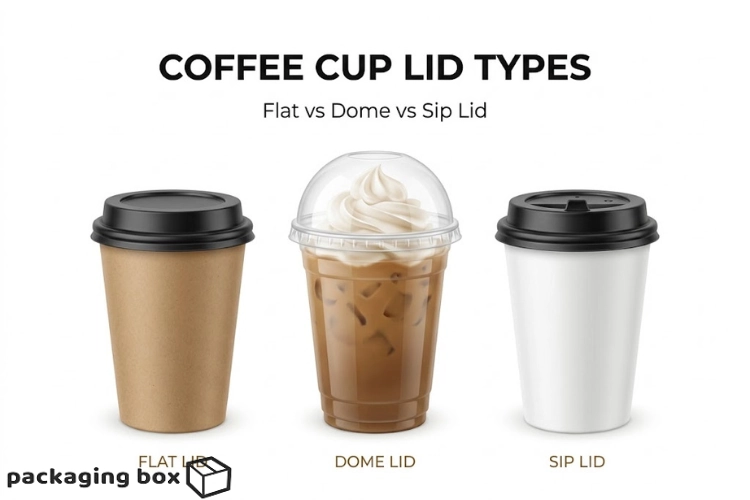

Choosing between different coffee cup lid types may look like a small packaging decision, but it can directly affect drinking comfort, spill prevention, takeaway safety, product presentation, and customer satisfaction. The main types of coffee cup lids include flat lids, dome lids, and sip lids, yet each style serves a different purpose. A flat coffee cup lid offers a practical low-profile fit, a dome lid provides raised clearance for foam or toppings, and a sip lid creates a controlled drinking opening for beverages consumed on the move.
For cafés, restaurants, bakeries, cloud kitchens, offices, and takeaway beverage businesses, the lid is not merely an accessory. It completes the cup system. Even an attractive, well-insulated cup can disappoint a customer when its lid feels loose, leaks around the rim, collapses under pressure, or does not match the drink inside.
This guide provides a practical coffee cup lid comparison, explains the difference between a flat lid vs dome lid, and shows where a sip lid fits into the picture. It also covers lid materials, sizes, compatibility, safety, sustainability, and the factors businesses should check before ordering disposable coffee cup lids in bulk.
🧭 Why the Right Coffee Cup Lid Matters
A coffee lid performs several jobs at the same time. It helps reduce splashes, supports heat retention, protects the drinking surface, and makes a takeaway cup easier to carry. In many cases, it also becomes part of the customer’s first physical interaction with a café’s packaging.
Imagine a customer collecting a fresh latte before driving to work. The coffee may be prepared perfectly, but a poorly fitted lid can allow liquid to escape around the cup rim. That single packaging failure can result in stained clothes, a messy vehicle, a burn risk, and a negative impression of the business. The lid may cost very little, yet its influence on the experience is surprisingly large.
The right lid should create a secure snap fit without requiring excessive pressure. It should match the rim diameter, tolerate the intended beverage temperature, and provide a comfortable drinking opening. A well-designed lid can be splash-resistant or leak-resistant, but disposable lids should not automatically be described as completely leak-proof. Most are designed to reduce ordinary spills, not to make a filled cup safe when turned upside down or shaken.
Cup construction matters as well. A strong lid cannot compensate for a weak or incompatible cup rim. Businesses comparing complete takeaway systems can explore the available coffee cup range rather than purchasing cups and lids as unrelated items.
🥤 What Are the Main Types of Coffee Cup Lids?
The most familiar coffee lid styles are flat lids, dome lids, and sip lids. However, these categories can overlap. For example, many flat lids also include a raised sipping opening and therefore function as sip lids. “Flat” usually describes the lid’s overall profile, while “sip” describes how a person drinks through it.
Beyond these three common options, the disposable drinkware market also includes straw-slot lids, vented lids, reclosable lids, push-button lids, and speciality drink-through lids. Some are made for hot coffee and tea, while others are intended for iced coffee, shakes, smoothies, and whipped-cream drinks.
Here is a quick comparison of the three principal styles.
| Lid Type | Best Suited For | Key Advantage | Main Limitation |
|---|---|---|---|
| Flat lid | Regular hot coffee, tea and basic cold drinks | Compact, practical and easy to stack | Limited clearance for foam or toppings |
| Dome lid | Cappuccino, speciality cold coffee, shakes and whipped toppings | Raised space protects foam and toppings | Uses more storage space |
| Sip lid | Takeaway hot drinks and beverages consumed while walking | Controlled drink-through opening | An open sip hole may still allow splashes |
The practical choice depends on the drink, the cup material, the customer’s routine, and the serving environment. There is no single best lid for every beverage—which is good news for lids, because they do not have to compete in a tiny plastic talent show.
▬ Flat Coffee Cup Lid: Simple, Compact and Practical
A flat coffee cup lid has a low-profile shape that sits close to the top of the cup. Depending on its design, it may include a sipping opening, straw slot, steam vent, or scored tab. It is one of the most widely used options for everyday takeaway beverages because it is compact, easy to store, and generally economical.
Flat lids are commonly paired with paper coffee cups containing black coffee, Americano, tea, or other drinks that do not need extra space above the rim. Their low profile also makes them convenient for busy cafés where staff need to separate and apply lids quickly during peak service.
For example, a customer ordering a standard 8 oz Americano does not usually need raised clearance above the drink. A properly matched flat drink-through lid can offer a neat finish without adding unnecessary height. Businesses serving smaller portions may pair a suitable lid with an 8 oz insulated ripple coffee cup for compact takeaway service.
✅ Advantages of a Flat Lid
The flat design uses less vertical space than a dome lid, which can improve storage efficiency behind a café counter. It also gives the cup a clean and familiar appearance. When correctly matched to the cup rim, it can provide a dependable closure for normal walking and carrying.
Flat lids are particularly useful when a business sells large numbers of regular hot drinks with no whipped topping. Their straightforward design can also make stock management easier because the same compatible lid may fit several cup capacities when those cups share one rim diameter.
⚠️ Limitations of a Flat Lid
A flat lid does not provide much room above the rim. If a cappuccino is filled too high, the foam may touch the underside of the lid. This can flatten the presentation, block the drinking hole, or push liquid toward the opening when the lid is applied.
It is also important not to assume that “flat” means “sealed.” A flat lid with an uncovered sipping opening can release liquid if the cup is tilted sharply. A reclosable variation may offer better splash protection during transport, but it still requires sensible handling.
Flat lids work best when the cup is not overfilled, the rim is undamaged, and the lid is pressed evenly around the entire edge.
⛰️ Dome Coffee Cup Lid: Extra Room for Foam and Toppings
A dome coffee cup lid rises above the cup rim to create additional internal space. This raised lid is commonly associated with cold drinks such as iced coffee, frappés, smoothies, milkshakes, and beverages finished with whipped cream. Some dome designs are also used for cappuccino or speciality hot drinks, provided the lid material is rated for the required beverage temperature.
The most obvious benefit is raised clearance. Instead of compressing foam or decorative toppings, the dome creates a small presentation chamber above the cup. Clear dome lids are especially useful for cold beverages because customers can see the topping, colour, and texture of the drink.
A practical example is a 16 oz iced mocha topped with whipped cream. A flat lid could press against the cream and create a messy opening. A compatible dome lid allows the topping to retain its shape and may include a straw slot for easy serving. Businesses offering larger speciality drinks can review a 16 oz disposable cup with dome lid, while smaller servings may suit a 12 oz dome-lid disposable cup.
🌟 Advantages of a Dome Lid
Dome lids improve presentation and provide foam allowance without requiring an oversized cup. They can make layered drinks, colourful shakes, and whipped-cream beverages appear more premium. This is valuable for cafés where visual appeal contributes to social sharing and impulse purchases.
The raised shape can also keep the lid away from delicate toppings. Depending on the design, the opening may support a straw, spoon, or direct sipping. For cold beverage service, a dome lid paired with the correct straw can create a complete and convenient takeaway format.
📦 Limitations of a Dome Lid
Dome lids occupy more storage volume than low-profile lids. They may also cost more, depending on their material and design. Because of their shape, staff must store them carefully to avoid crushing or distortion.
A dome lid should never be selected on appearance alone. A clear lid made from material suitable for cold beverages may deform when exposed to very hot coffee. The temperature rating, food-contact suitability, and manufacturer instructions must therefore be checked before use.
The term “dome” also does not guarantee a particular opening. Some designs have a central straw slot, some have a wide opening for spoons, and others may be designed for direct drinking. The use case must match the actual lid configuration.
👄 Sip Lid Explained: Designed for Drinking on the Move
A sip coffee cup lid, also called a drink-through coffee lid, contains an opening that lets the user drink without removing the entire lid. The opening may be positioned near the edge, formed into a raised spout, or protected by a small reclosable tab.
This is where the terminology can become confusing. A sip lid can be mostly flat, moderately raised, or even dome-shaped. “Sip lid” refers primarily to its function, not necessarily its external profile. That distinction is essential when comparing flat vs dome coffee cup lids.
A sip lid is usually preferred for hot takeaway coffee because it controls the flow better than drinking directly from an uncovered paper cup. Many designs also include a small steam vent. The vent helps balance air pressure as liquid leaves through the drinking hole, which can support a smoother flow and reduce sudden “glugging.”
The shape of the sipping opening affects comfort. A sharp, narrow, or poorly finished opening can feel unpleasant against the lips. A rounded drink-through area generally delivers a better experience, particularly for customers who carry coffee during a commute.
🚶 Where Sip Lids Work Best
Sip lids are suited to coffee shops, office coffee stations, restaurants, event caterers, and delivery businesses. They are useful for espresso-based drinks, regular coffee, hot chocolate, and tea, provided the lid and cup are rated for hot beverage use.
A commuter buying a 12 oz latte, for instance, benefits from a sip lid with a raised drinking edge and splash-resistant design. The same customer may also need a stable holder. A coffee cup carrier can improve portability when two beverages are ordered together, while a kraft four-cup drink carrier suits larger group orders.
🔒 Open vs Reclosable Sip Lids
An open sip lid is convenient because the drink is immediately accessible. However, liquid can splash through the opening during sudden movement. A reclosable lid adds a sliding tab, hinged plug, or other closure that covers the drinking hole between sips.
Reclosable lids can improve splash protection, but their moving parts may increase cost and complicate recycling. They also need to be tested for ease of use. If a closure is too stiff, customers may force it and spill the drink—the opposite of its intended purpose.
⚖️ Flat Lid vs Dome Lid: What Is the Real Difference?
The central difference in the flat lid vs dome lid debate is the amount of space above the cup rim. A flat lid keeps the package compact, while a dome lid creates raised clearance. That difference influences beverage presentation, storage requirements, drinking method, and suitability for toppings.
For a standard black coffee or tea, a flat drink-through lid is usually the practical choice. The beverage does not require additional space, and the low-profile lid supports quick service. For cappuccino, the decision depends on the fill level and foam height. A modestly raised sip lid may be sufficient, while a fuller or more decorative drink may benefit from a dome.
Cold speciality drinks create a clearer case for dome lids. Iced coffee with whipped cream, milkshakes, and smoothies need enough internal height to protect toppings and accommodate a straw. A transparent dome also lets the product remain visible, adding commercial appeal.
The decision should therefore follow the beverage rather than a one-lid-fits-all purchasing habit. Café operators should consider:
- Drink temperature: Use materials approved for the intended hot or cold application.
- Toppings and foam: Select dome clearance when the drink rises above the rim.
- Consumption method: Choose a sipping opening, straw slot, or reclosable feature accordingly.
- Transport conditions: Prioritise secure fit and splash resistance for delivery and commuting.
- Storage capacity: Flat lids normally require less counter and storeroom space.
These factors make the comparison more useful than simply asking which lid looks better.
📏 Coffee Cup Lid Sizes and Rim Compatibility
Cup capacity and lid size are related, but they are not the same measurement. An 8 oz coffee cup lid and a 12 oz coffee cup lid may fit different rim diameters—or they may fit the same diameter if the manufacturer designed the cup range around a common rim.
This is why cup capacity alone cannot confirm compatibility. The actual lid diameter must correspond to the cup’s rim diameter and rim profile. Even a small mismatch can cause a weak seal, difficult application, lid cracking, or unexpected detachment.
A cup may be labelled 8 oz, 10 oz, 12 oz, 16 oz, or 20 oz, but the number describes approximate volume rather than the lid connection. A “universal coffee cup lid” is only universal within the compatible cup series or rim specification stated by its supplier. It does not necessarily fit every cup of that volume in the market.
Businesses should consult a clear guide to choosing the right coffee cup size before standardising their takeaway range. Choosing fewer rim formats across several cup capacities can simplify ordering and reduce the chance of staff selecting the wrong lid during a busy shift.
🧪 How to Test Cup and Lid Compatibility
Begin by checking the supplier’s specified lid and rim dimensions. Then conduct a physical fit test using samples from the same production batch whenever possible. Press the lid around the full circumference and listen or feel for a consistent snap.
After fitting, hold the cup upright over a sink and apply gentle side-to-side movement. Check the rim for seepage, but do not test hot liquids by shaking the cup near the face or body. Finally, ask several staff members to apply the lid. A fit that only one person can achieve reliably is not ideal for commercial service.
Temperature testing also matters because some materials soften or become more flexible when exposed to heat. A lid that appears secure at room temperature may behave differently when fitted to freshly poured coffee.
🧱 Coffee Cup Lid Materials Explained
Most plastic coffee cup lids are made from polymers such as polypropylene or polystyrene. Some clear cold-cup lids use PET plastic, while certain plant-based alternatives use PLA bioplastic. Paper-based lids, molded fibre, and bagasse options are also becoming more visible in eco-friendly packaging ranges.
Polypropylene, often identified as PP, generally offers useful flexibility and heat resistance, making it common in hot cup lid applications. Polystyrene, or PS, can form a rigid lid with a crisp snap, but its suitability depends on the product specification and local waste-management rules. PET offers good clarity and is frequently used for cold beverage dome lids rather than hot coffee.
PLA bioplastic is made from renewable feedstocks, but “plant-based” does not automatically mean it can break down in a home compost pile. Many PLA items require controlled industrial composting conditions. Similarly, a recyclable plastic lid is only practically recyclable when local facilities accept that material and the lid is collected, sorted, and processed correctly.
Molded fibre, bagasse, and paper-based lids can reduce reliance on conventional plastic. However, performance varies. Buyers should evaluate moisture resistance, heat tolerance, lid flexibility, cup rim compatibility, and disposal infrastructure instead of relying solely on an eco-friendly label.
For a broader understanding of cup and lid sustainability, the eco-friendly coffee cups guide explains how materials and disposal systems influence environmental outcomes.
♻️ Recyclable and Compostable Coffee Cup Lids
Environmental claims need precision. Recyclable coffee cup lids may be technically recyclable, but local acceptance is what determines whether they are likely to be recycled in practice. Small items can also be difficult for sorting systems to capture.
Likewise, compostable coffee cup lids should be supported by recognised certification and clear disposal instructions. A certified compostable cup lid may still end up in landfill when industrial composting facilities are unavailable. Mixing compostable and conventional plastic lids can also create sorting confusion.
A more responsible packaging strategy considers the complete lifecycle. This includes the source material, manufacturing efficiency, shipment volume, customer use, collection system, and realistic end-of-life route. A lightweight lid with a reliable fit may also prevent drink spills and product waste, which should form part of the sustainability discussion.
Cafés can improve disposal behaviour by keeping their cup and lid materials consistent, training staff, and communicating instructions clearly. Vague claims such as “100% green” should be replaced with verifiable information such as the material code, certification, and accepted disposal method.
🌡️ Heat Retention, Steam Vents and Drinking Comfort
A lid reduces direct exposure at the cup opening, which can help slow heat loss. However, the cup wall usually has a greater influence on hand comfort and insulation than the lid alone. Café owners comparing cup construction can read the detailed double-wall vs single-wall coffee cup guide.
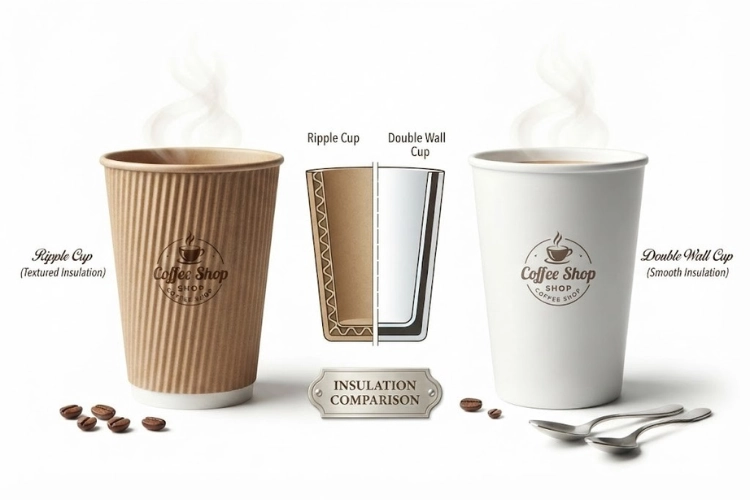
For drinks that must remain warm during takeaway service, a well-fitted lid works together with the cup wall. A 12 oz insulated ripple double-wall cup with lid can support insulation and hand comfort, while businesses deciding between insulated formats can also review the ripple cup vs double-wall cup comparison.
Steam vents are small but important design features. They allow pressure and vapour to escape and can help liquid flow more steadily through the sipping opening. Nevertheless, any opening can release hot steam or liquid. Customers should allow extremely hot beverages to cool to a safe drinking temperature.
The lid’s raised edge can influence beverage aroma as well. Some modern sip lids create a wider drinking area that lets more aroma reach the nose, producing an experience closer to drinking from an open cup. This feature may be attractive for speciality coffee, though spill prevention and safety remain the priority.
🏪 How to Choose the Best Lid for Coffee Cups
The best lid for coffee cups is the one that matches the beverage, cup rim, service method, and customer environment. A café serving mostly flat whites and Americanos may prioritise compact sip lids. A dessert café selling shakes and whipped iced drinks will need dome lids and suitable straws. A delivery-focused kitchen may place greater emphasis on reclosable openings and secure fit.
Start with the menu. List each beverage, its serving temperature, portion size, foam level, topping height, and drinking method. This quickly reveals whether the business needs one versatile lid family or separate hot and cold systems.
Next, standardise cup rims where practical. Using cups from a compatible range can reduce stock complexity. For instance, a business may select branded 8 oz and 12 oz formats while keeping lid requirements manageable. Packaging Box offers both 8 oz customised coffee cups and 12 oz customised coffee cups for businesses building a consistent takeaway identity.
Branding should not be overlooked. The cup carries most of the visible design, but lid colour and shape affect the final presentation. A black lid can create a premium contrast with a kraft cup, while a white lid may produce a cleaner visual finish. For more ideas, see how custom-printed coffee cups can promote a café.
Finally, order samples before purchasing in bulk. Test them during real service—not only on an empty cup at a desk. Apply lids to hot and cold drinks, place cups in carriers, and observe how they behave during realistic movement and delivery times.
🚫 Common Coffee Lid Mistakes Businesses Should Avoid
One of the most common errors is buying lids according to cup capacity without checking rim diameter. A supplier’s 12 oz lid may not fit another manufacturer’s 12 oz cup. Mixing brands or production specifications without testing can create inconsistent cup lid fit.
Overfilling is another frequent problem. A cup filled to the rim leaves little space for movement, steam, or lid application. When the lid is pressed down, liquid can rise through the drinking hole or collect around the edge.
Businesses should also avoid using cold-only dome lids for hot drinks unless the supplier confirms their temperature suitability. Clear plastic may look attractive, but appearance does not prove heat resistance.
Poor storage can create problems before the lid reaches a customer. Lids should be kept clean, dry, protected from dust, and away from excessive heat or direct sunlight. Bent or distorted lids should not be forced onto cups.
A cup carrier can provide another layer of stability for multiple-drink orders. A disposable cup carrier with handle is particularly useful for takeaway orders where customers need to carry beverages over a longer distance.
❓ Frequently Asked Questions
What are the main coffee cup lid types?
The main coffee cup lid types are flat lids, dome lids, and sip lids. Flat and sip categories can overlap because a low-profile flat lid may include a drink-through opening. Other variations include straw-slot, vented, snap-on, reclosable, and push-button lids.
What is the difference between a flat lid and a dome lid?
A flat lid stays close to the cup rim and works well for regular coffee, tea, and drinks without tall toppings. A dome lid rises above the rim to provide clearance for foam, whipped cream, or other toppings. Dome lids are especially common on speciality cold beverages.
Is a sip lid the same as a flat lid?
Not always. “Sip lid” describes a lid with a drinking opening, while “flat lid” describes its overall profile. Many flat lids are sip lids, but a sip lid may also have a raised spout or contoured shape.
Are coffee cup lids universal?
No. Even when two cups have the same capacity, their rim diameters or rim profiles may differ. Buyers should match the lid specification to the cup and carry out a physical fit test before ordering large quantities.
Which lid is best for hot coffee?
A heat-rated drink-through or sip lid with a secure snap fit is usually suitable for hot coffee. The best option depends on the cup rim, beverage temperature, transport method, and required level of splash protection.
Can a dome lid be used for hot drinks?
Some dome lids are suitable for hot drinks, but many clear dome lids are designed specifically for cold beverages. Always check the material, temperature rating, and supplier instructions before using a dome lid with hot coffee.
Are disposable coffee cup lids leak-proof?
Most disposable lids are better described as leak-resistant or splash-resistant. They may reduce ordinary spills when fitted correctly, but an open sipping hole and rim connection can still release liquid if the cup is tipped, shaken, squeezed, or overfilled.
Which lid should be used for cappuccino?
A standard cappuccino may work with a raised sip lid if there is enough foam allowance. A taller dome lid can be useful when the foam rises above the cup rim or when presentation requires extra clearance.
🎯 Final Verdict: Match the Lid to the Drink
The best choice among coffee cup lid types depends on what is being served and how customers will consume it. A flat coffee cup lid is compact and practical for regular hot beverages. A dome coffee cup lid provides valuable space for foam, whipped cream, and speciality cold drinks. A sip lid makes takeaway drinking more convenient by adding a controlled drinking opening.
The most important lesson is that shape alone does not determine performance. Cup rim compatibility, lid diameter, beverage temperature, material quality, secure fit, and realistic disposal options all matter. A lid should be tested as part of a complete cup system rather than purchased as an isolated accessory.
For cafés and restaurants, getting this small detail right can improve hot drink safety, reduce messy handovers, support presentation, and create a more professional customer experience.
📣 Complete Your Takeaway Coffee Packaging
Explore Packaging Box’s coffee cup collection to compare insulated, customised, and takeaway cup options. Match your chosen cup with a compatible lid and add a suitable carrier for safer multi-drink orders.
For broader café, restaurant, and disposable food packaging requirements, visit the Packaging Box online shop and build a practical packaging system around your menu, service style, and brand.











💬 0 Comments
Leave a Comment