
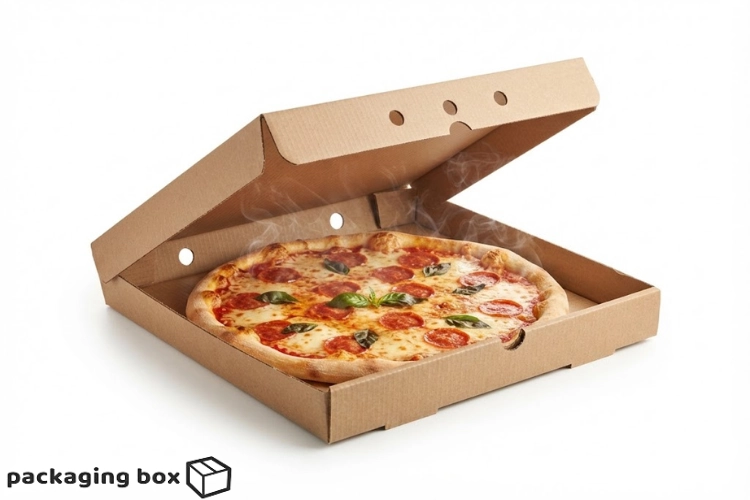

Every pizza lover knows the disappointment of opening a box to find a soggy base, cold cheese, or a crust that’s lost its crunch. The truth is, the recipe isn’t always to blame — pizza delivery packaging plays an equally important role in whether that pizza arrives tasting like it just left the oven or like it’s been sitting in a cold car for an hour. For restaurant owners, cloud kitchens, and home-based pizza businesses across Pakistan, getting packaging right isn’t a small detail; it’s the difference between a five-star review and a refund request.
In this guide, we’ll walk through exactly how heat, moisture, and material science work together inside a pizza box, what separates a decent box from a great one, and how you can apply simple, affordable packaging upgrades to keep every delivery hot, fresh, and customer-approved.
🔥 Why Pizza Delivery Packaging Matters More Than You Think
Pizza is one of the most unforgiving foods when it comes to delivery. Unlike biryani or burgers, which can tolerate a bit of jostling and temperature drop, pizza depends on a very specific balance of heat and moisture to stay enjoyable. The moment that balance is disrupted — say, steam gets trapped and turns the crust soggy, or heat escapes too quickly — the entire eating experience changes.
This is why pizza box packaging isn’t just about holding the food; it’s an engineered system designed to manage three things simultaneously: temperature retention, moisture escape, and physical protection during transit. Restaurants that invest in proper packaging consistently report fewer complaints, better repeat orders, and stronger online reviews, simply because the food tastes the way it’s supposed to when it reaches the customer’s door.
If you’re running a food business, pairing good packaging with reliable supplies matters just as much as the box itself — many cloud kitchens in Pakistan have scaled their delivery reputation significantly by sourcing consistent, high-quality food packaging solutions rather than cutting corners on materials.
🌡️ The Science Behind Keeping Pizza Hot During Delivery
Thermal Insulation and Heat Retention Technology
At its core, keeping a pizza hot is a battle against heat loss. Heat naturally wants to escape toward cooler surroundings, and every minute a pizza spends in transit, it’s losing warmth to the air around it. Thermal insulation slows this process down by creating a barrier that traps heat inside the box rather than letting it dissipate.
This is where heat retention technology becomes genuinely useful. Insulated materials — whether it’s a thicker corrugated layer or a specialized lining — act like a thermos for food, holding onto warmth far longer than a plain, thin box ever could. For delivery runs that stretch beyond 15–20 minutes, this technology isn’t optional; it’s essential.
The Role of Insulated Pizza Bags
While the pizza box itself handles the first layer of insulation, insulated pizza bags add a second, equally important layer of protection. These bags are typically lined with reflective or foam-based material that reduces heat transfer even further, especially useful during longer delivery routes or in colder weather.
Many successful delivery operations combine a solid pizza box with a quality insulated bag, creating what’s essentially a double-insulation system. This combination is particularly valuable for businesses handling bulk orders or operating in areas with longer average delivery times, where even five extra minutes outside a controlled temperature zone can noticeably affect quality.
📦 Choosing the Right Pizza Box Packaging
Corrugated Cardboard Box Basics
The humble corrugated cardboard box remains the industry standard for pizza packaging, and for good reason. The corrugated structure — essentially a wavy inner layer sandwiched between two flat sheets — creates small air pockets that naturally slow down heat loss while also providing structural strength to prevent crushing during transit.
Not all corrugated boxes are created equal, though. Thickness, flute size, and the quality of the cardboard itself all influence how well a box performs. If you’re sourcing packaging in bulk, it’s worth comparing options directly — our breakdown on corrugated box vs regular box for online shipping explains the practical differences in strength and insulation that matter for food businesses specifically.
Pizza Box Ventilation Holes — Why They Matter
Here’s a detail that surprises a lot of new restaurant owners: a completely sealed box is actually bad for pizza. Without any airflow, steam from the hot cheese and toppings has nowhere to go, and it condenses on the inside lid, dripping back down onto the crust and turning it soft and soggy.
Pizza box ventilation holes solve this problem by allowing a controlled amount of steam to escape while still retaining most of the heat. It’s a careful balance — too much ventilation and the pizza cools too fast; too little and moisture ruins the crust. Well-designed boxes, like the universal pizza box and kraft pizza box options available through our catalog, are engineered with this exact balance in mind.
🌿 Best Packaging Materials for Pizza Freshness
Grease-Resistant Box Linings
Pizza, by nature, is oily — cheese, meats, and sauces all release grease during cooking, and that grease needs somewhere to go that isn’t through the bottom of the box. A grease-resistant box uses a treated inner lining that absorbs or repels oil, preventing the dreaded grease-soaked bottom that weakens the box structure and makes handling messy for both delivery riders and customers.
Moisture Control Packaging Techniques
Beyond grease, moisture control is about managing the overall humidity inside the packaging environment. Moisture control packaging often combines ventilation design with absorbent liner materials to pull excess condensation away from the pizza surface, keeping the crust closer to its original texture even after 20–30 minutes of travel time.
For businesses handling multiple food categories beyond pizza — think fries, burgers, or wraps — the same moisture-management principles apply. Our guide on burger packaging that doesn’t get soggy covers similar material science that’s directly relevant if you’re running a multi-item fast-food menu alongside pizza.
🚴 Hot Pizza Delivery Tips for Restaurant Owners
Getting the packaging right is half the equation; the other half is operational. Here are a few practical, field-tested habits that genuinely make a difference:
- Pack immediately after baking — every minute a pizza sits uncovered on the counter is heat lost before delivery even begins.
- Use insulated delivery bags for riders, especially for orders traveling more than 10–15 minutes.
- Stack boxes carefully — never place heavy items on top of a pizza box, as this crushes the structure and traps steam unevenly.
- Train riders on route efficiency so hot orders don’t sit in a bag while multiple deliveries are completed in sequence.
These small operational tweaks, paired with the right box, often make a bigger difference to customer satisfaction than people expect — it’s rarely just one factor, but the combination of good packaging and good process that keeps pizza tasting fresh.
📊 Packaging Material Comparison for Pizza Delivery
Choosing between packaging options becomes much easier once you see how each one performs across the factors that matter most.
| Packaging Type | Heat Retention | Moisture Control | Best For |
|---|---|---|---|
| Standard Corrugated Box | Moderate | Good (with vents) | Short-distance delivery |
| Kraft Pizza Box | Good | Very Good | Eco-conscious brands |
| Insulated Delivery Bag | Excellent | Moderate | Long-distance / bulk orders |
| Custom Printed Box | Moderate–Good | Good | Branding-focused restaurants |
As the table shows, no single option wins on every front — the smartest approach is usually combining a well-ventilated box with an insulated bag for anything beyond a quick, nearby delivery.
♻️ Eco-Friendly and Sustainable Packaging Solutions
Sustainability has shifted from a “nice-to-have” to something customers genuinely notice and appreciate. Eco-friendly pizza packaging — made from recyclable kraft paper or biodegradable corrugated material — not only reduces environmental impact but also signals to customers that a brand takes quality seriously across the board, not just in the kitchen.
Sustainable packaging options have become increasingly accessible and affordable in Pakistan’s local market, making this an easy upgrade for brands at almost any scale. If you’re exploring a broader shift toward environmentally responsible packaging, our detailed piece on biodegradable fast food packaging solutions is a great next read, covering options that extend well beyond pizza into your entire menu.
🎨 Custom Pizza Boxes — Branding Meets Functionality
While function matters most, there’s no reason packaging can’t also work as a marketing tool. Custom pizza boxes printed with your logo, colors, and even a QR code linking to your menu turn every delivery into a small branding opportunity. Customers who order repeatedly start associating that recognizable box design with quality and reliability — it’s subtle, but it builds brand recall over time.
If you’re ready to move beyond generic packaging, the customize pizza box option lets you combine the same ventilation and insulation benefits with a design that reflects your brand identity. For restaurants managing dine-in and delivery together, a pizza table saver is also worth considering — it keeps the box lid from sagging into toppings during transit, a small addition that prevents a surprisingly common complaint.
❌ Common Mistakes in Pizza Delivery Packaging
Even experienced restaurant owners fall into a few recurring traps when it comes to packaging their pizzas. Overpacking boxes too tightly, choosing boxes that are slightly too large (which lets the pizza slide and toppings shift), and skipping ventilation entirely to “keep things simple” are among the most frequent issues reported by delivery-focused businesses.
Another overlooked mistake is sourcing packaging inconsistently — switching suppliers or box types frequently leads to unpredictable performance, where one batch of boxes retains heat well and the next doesn’t. Working with a dependable, consistent packaging solutions provider helps avoid this entirely, which is one of the biggest reasons established food businesses prefer sticking to a trusted source rather than shopping around every time.
✅ How to Choose the Best Packaging for Pizza Delivery
Bringing everything together, here’s a simple framework for selecting the right fit for your business:
| Consideration | What to Look For |
|---|---|
| Delivery distance | Longer routes need insulated bags, not just boxes |
| Order volume | High volume favors cost-efficient kraft or corrugated boxes |
| Brand positioning | Premium brands benefit from custom-printed packaging |
| Sustainability goals | Eco-friendly kraft materials align with modern customer expectations |
Matching your packaging choice to these four factors — rather than picking based on price alone — tends to produce the best long-term results in both customer satisfaction and operational cost.
🏁 Final Thoughts
Getting pizza delivery packaging right isn’t about chasing perfection; it’s about understanding the handful of factors — heat retention, ventilation, moisture control, and material quality — that genuinely influence how a pizza tastes when it finally reaches the customer. Whether you’re a small home-based pizza seller or managing a multi-branch cloud kitchen, the packaging choices you make directly shape your brand’s reputation, one delivery at a time.
If you’re ready to upgrade your packaging setup with reliable, ready-to-order options, explore our full pizza box collection and start delivering pizzas that taste just as good as the moment they left the oven.
❓ Frequently Asked Questions
Q1. What is the best packaging to keep pizza hot during delivery? Insulated pizza bags combined with a well-ventilated corrugated or kraft box offer the best heat retention for delivery, especially for longer routes.
Q2. Why do pizza boxes have ventilation holes? Ventilation holes release trapped steam, preventing moisture buildup that would otherwise make the crust soggy.
Q3. Are eco-friendly pizza boxes as effective as regular ones? Yes, modern eco-friendly kraft boxes offer comparable insulation and moisture control while being more sustainable.
Q4. How long can a pizza stay hot in proper packaging? With quality insulated packaging, pizza can retain acceptable heat for 20–30 minutes, sometimes longer with insulated delivery bags.
Q5. Can custom printed pizza boxes affect packaging performance? No, custom printing doesn’t compromise insulation or ventilation as long as the underlying box material and design remain unchanged.



💬 0 Comments
Leave a Comment