
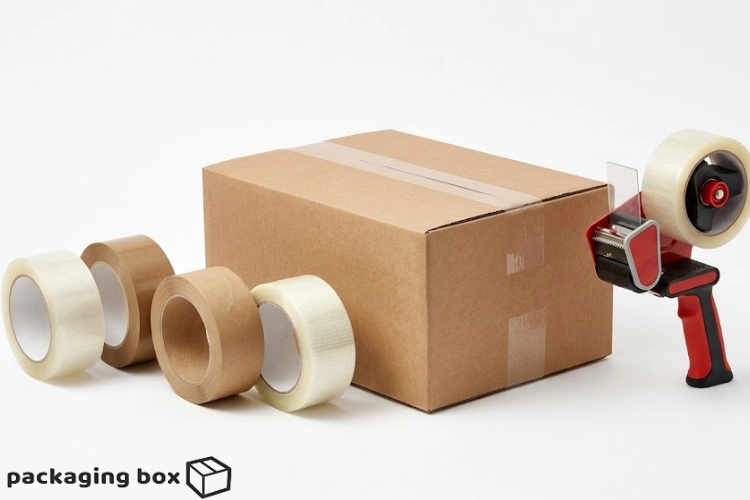

You pack the parcel carefully and add the bubble wrap. Then the tape lets go halfway through the courier route. The box pops open, the product is exposed, and the customer is annoyed. It happens more often than most sellers admit, and a ten-rupee mistake can cost a whole order.
Understanding packaging tape types is the simple fix. Tape is not just “sticky plastic”. Each type has its own adhesive, thickness, strength and ideal use. Some work well on light e-commerce parcels. Others are built for heavy cartons, cold storage or tamper protection.
This guide covers the main tape options, how adhesives differ, and what thickness and width to choose. It also shows how to find the best tape for shipping for your boxes, whether you run a home business or a busy warehouse.
🧠 What Is Packaging Tape and Why Does It Matter?
Packaging tape is a pressure-sensitive adhesive tape used for box sealing. It holds flaps shut and keeps the parcel closed through loading, sorting, stacking and delivery. In e-commerce shipping, it is often the only thing between your product and the outside world.
Good tape does more than hold. It adds package security, resists moisture and handles rough courier treatment. A strong seal also supports transit damage prevention. Even a well-built corrugated carton can fail if its seams give way.
Think of a box as a team. The carton gives structure, the cushioning gives protection, and the tape keeps everyone together. If you are still choosing the carton itself, our guide on corrugated boxes for e-commerce explains how to pick the right one before you worry about the seal.
🎞️ The Main Packaging Tape Types Explained
Let’s walk through each major option. Every type suits a different job, so there is no single winner for every parcel.
🔹 BOPP Tape (Clear and Brown Packing Tape)
BOPP tape is the most common choice worldwide. BOPP stands for biaxially oriented polypropylene. This polypropylene tape is strong, smooth and cheap, and it works with most dispensers.
You will usually see it as clear packing tape or brown packing tape. Clear tape looks neat on white or printed boxes. Brown tape blends into kraft cartons and hides dust and small marks. Both perform the same, so the choice is mainly about looks.
A small online store shipping clothes, accessories or stationery will find BOPP tape the safest everyday option. It offers good sealing performance at a cost-effective price. For a ready option, see our packaging tape.
🔹 Paper Packaging Tape
Paper packaging tape is made from kraft paper with an adhesive backing. It is popular with brands that want eco-friendly, recyclable tape, because the box and tape can often go into recycling together.
It also looks premium and natural, which suits handmade, organic and gift brands. Plain paper tape has lower moisture resistance than plastic tape, so it is not ideal for wet or humid routes. Reinforced versions with fibre threads are tougher.
If sustainability is part of your brand story, read our post on eco-friendly custom packaging boxes. It shows how greener materials fit together.
🔹 Filament Tape and Reinforced Packaging Tape
Filament tape has glass fibre threads running through the backing. This gives it very high tensile strength, so it is hard to stretch or snap. Reinforced packaging tape uses the same idea to hold bundles, pallets and heavy items.
Filament tape is usually the strongest packaging tape for demanding jobs. It is a good choice for heavy-duty packaging tape needs such as machinery parts, books by the carton or bundled steel items. It costs more, so using it on a box of T-shirts is overkill.
🔹 Water-Activated Tape (Gummed Tape)
Water-activated tape is paper tape coated with a starch-based glue. When you wet it, it bonds with the carton fibres and becomes part of the box. Pulling it off usually tears the cardboard, which makes it excellent for package security.
It needs a special dispenser and some practice. For high-volume warehouse packaging and valuable goods, though, it gives an extremely tough, tamper-resistant seal.
🔹 PVC Tape
PVC tape is thicker and more flexible than BOPP. It has strong adhesion strength and handles rougher surfaces well. It also stays quieter when unrolled, which some packing teams like. It tends to be pricier and less eco-friendly than paper options, so it is used more for specific industrial needs.
🔹 Specialty Tapes: Printed, Fragile and Tamper-Evident
Some tapes do a second job beyond sealing.
Printed packaging tape carries your logo or a message. It turns every parcel into a small advertisement. Fragile tape warns handlers with bold “Handle with Care” text. Tamper-evident tape leaves a visible mark or void message if someone tries to open the box, which protects high-value or sensitive orders.
Cold storage tape uses a special adhesive that stays sticky in freezing temperatures. It is useful for frozen food, medicine and chilled goods.
📊 Quick Comparison of Packaging Tape Types
Here is a side-by-side look at the most common options. Use it as a quick reference when comparing choices.
| Tape Type | Strength | Best For | Eco-Friendliness |
|---|---|---|---|
| BOPP (clear/brown) | Medium | Everyday e-commerce parcels | Low |
| Paper tape | Medium (higher if reinforced) | Eco brands, light to medium boxes | High |
| Filament tape | Very high | Heavy cartons, bundling | Low |
| Water-activated tape | Very high | Secure, high-volume packing | High |
| PVC tape | High | Rough surfaces, industrial use | Low |
As the table shows, there is a clear trade-off between price, strength and sustainability. BOPP wins on cost, filament wins on strength, and paper or gummed tape wins on environmental impact.
🧪 Adhesives: Acrylic vs Hot Melt vs Natural Rubber
Most people look at the tape and forget the glue. The adhesive decides how long the tape lasts and where it works best.
☀️ Acrylic Adhesive Tape
Acrylic adhesive tape is known for ageing well. It resists sunlight, heat and cold, and it keeps its grip over a long time. It also has good temperature resistance, so it suits goods stored for months or shipped across varied climates. It bonds more slowly at first but lasts well.
🔥 Hot Melt Adhesive Tape
Hot melt adhesive tape grips fast and hard. It is ideal for quick packing lines and for cartons with dusty or recycled surfaces. Its weakness is temperature. In very hot or very cold conditions it can lose strength, so it is better for indoor use or short transit times.
🌿 Natural Rubber Adhesive Tape
Natural rubber adhesive tape has the strongest instant tack. It sticks well even to rough, dusty or cold surfaces. It does not age as well as acrylic under heat or UV light, so it is best for fast shipping rather than long storage.
A practical rule: for fast-moving courier parcels in normal weather, hot melt or natural rubber is fine. For long storage, summer heat in a warehouse, or outdoor exposure, choose acrylic.
📏 Thickness, Width and Length: The Details That Matter
A strong tape can still fail if it is the wrong size. Pay attention to the specs on the roll.
📐 Tape Thickness (Mil and Micron)
Thickness is measured in mil or microns. One mil equals about 25 microns. Many standard tapes sit near 1.8 to 2 mil (roughly 45 to 50 microns). Thicker tapes of 2.5 mil and above give better tear resistance and durability.
For light parcels, standard thickness is enough. For heavy boxes, step up to a thicker or reinforced option. Thin tape stretches, wrinkles and can lift at the edges under stress.
📏 Tape Width and Length
Most packing tape is about 48 mm (2 inches) wide. A wider tape covers more of the seam and holds more firmly, which is useful on larger cartons. Longer rolls reduce changeovers, which saves time on busy packing tables.
If you are unsure which box size needs which tape, check our corrugated box sizes in Pakistan guide. It helps you match tape width to carton size.
⚖️ Shipping Tape vs Packing Tape, and Other Common Mix-Ups
People often use different tape names for the same thing. Let’s clear that up.
🚚 Shipping Tape vs Packing Tape
In everyday use, shipping tape vs packing tape is mostly a naming difference. Shipping tape is usually built for the rough journey of couriers and warehouses. Packing tape is often a lighter version for sealing boxes at home, for storing or for moving short distances. Both can be BOPP, so always check thickness and adhesive instead of relying on the label.
🧻 Masking Tape vs Packaging Tape
Masking tape vs packaging tape is an easy call. Masking tape is made for painting. It peels off cleanly, which also means it lets go under stress. Never use it to seal a shipping box.
🔧 Duct Tape vs Packing Tape
Duct tape vs packing tape is trickier. Duct tape is strong but thick, messy and hard to tear straight. It can leave residue and often fails on cardboard in cold or damp conditions. Packing tape is made for carton fibre and gives a cleaner, more reliable seal. Use duct tape for repairs, not for shipping.
🏆 Best Tape for Shipping by Scenario
So, what is the best tape for shipping? It depends on what you are sending. This table matches common situations to the right choice.
| Shipping Scenario | Recommended Tape | Why It Works |
|---|---|---|
| Light parcels (clothes, accessories) | BOPP clear or brown tape | Affordable and reliable |
| Medium e-commerce boxes | Thicker BOPP (2 mil+) | Better durability in transit |
| Heavy cartons | Reinforced or filament tape | Higher tensile strength |
| Eco-conscious brands | Paper or gummed tape | Recyclable and premium |
| Frozen or chilled goods | Cold storage tape | Holds in low temperatures |
| High-value orders | Tamper-evident tape | Shows signs of opening |
The best option is the one that matches your box weight, route and brand needs. For everyday shipping, a quality BOPP tape is a solid starting point. For the best packing tape for heavy boxes, move to reinforced or filament types.
🛠️ How to Seal a Box Properly
Even great tape fails when it is applied badly. The following steps give a strong, professional seal.
- Close the flaps so they meet evenly in the middle.
- Apply tape along the centre seam, extending 5 to 7 cm down each side.
- Add tape along the edge seams for a full H-seal on heavy boxes.
- Press firmly so the adhesive bonds with the carton.
- Use a tape dispenser or tape gun for speed and straight, tight application.
The method matters as much as the material. For a very heavy load, the box itself needs attention too. Our guide on how to strengthen a corrugated box for heavy items pairs well with a strong H-seal. If you ship fragile goods, add bubble wrap inside so the tape is not the only layer of protection.
⚠️ Common Tape Mistakes to Avoid
Most sealing failures come from small, avoidable errors. A few of them show up again and again.
The first is using too little tape. A single thin strip on a heavy box is a gamble. The second is sealing over dust, moisture or oil, which stops the adhesive from bonding. Wipe the surface first. The third is ignoring climate. Hot, humid weather can weaken some adhesives, so choose acrylic or a heavier tape in those months.
Another common mistake is reusing a box with old, damaged flaps. Worn cardboard cannot hold tape well. If you ship often, start with a proper carton such as our 7-ply DHL shipping box or a standard e-commerce box. To understand the carton choice itself, read corrugated box vs regular box for online shipping.
For items like footwear, the whole setup matters. See how to ship shoes safely in Pakistan for a worked example of box, filler and tape working together.
💰 Buying Tape in Bulk Without Overspending
When your orders grow, tape becomes a regular expense. Buying bulk packaging supplies lowers the cost per roll and keeps your packing table from running out mid-rush.
Start by estimating your monthly volume. Then compare supplier pricing, roll length and quality, not just the sticker price. A cheaper roll that fails in transit costs far more in refunds and replacements. Our guides on where to buy wholesale packaging in Pakistan and bulk packaging order quantities and costs break down what to expect. If you are new to buying online, is it safe to order packaging online in Pakistan answers common worries.
You can also browse our wider range of packaging materials, including cling film rolls and packing rope, to complete your shipping setup from one place.
✅ Final Thoughts: Choose Tape That Fits Your Parcel
The right tape protects your product, your reputation and your profit. To recap, BOPP tape suits most everyday shipments. Paper and gummed tape suit eco-minded and security-focused brands. Filament and reinforced tape handle the heaviest loads, and specialty tapes cover cold storage, branding and tamper protection.
Match the adhesive to your climate, pick the right thickness for your box weight, and apply it with a proper seal. These small choices improve parcel protection and cut down on damaged deliveries.
Ready to seal your next order with confidence? Browse our packaging tape and explore our e-commerce boxes to build a complete, reliable shipping setup. New to online selling? Start with our first-time buyer’s guide to e-commerce packaging in Pakistan.
❓ Frequently Asked Questions (FAQs)
Which packaging tape is best for shipping?
For most parcels, a quality BOPP tape at 2 mil or thicker is the best all-round choice. For heavy boxes, use reinforced or filament tape.
What is the strongest packaging tape?
Filament tape is generally the strongest, because glass fibre threads give it very high tensile strength. It suits heavy cartons and bundling.
What is the difference between acrylic and hot melt tape?
Acrylic adhesive lasts longer and handles heat, cold and sunlight well. Hot melt grips faster but works best in normal indoor temperatures.
Can I use duct tape for shipping boxes?
It is not recommended. Duct tape can peel, leave residue and fail on cardboard. Packing tape is designed for carton sealing.
How thick should packing tape be for shipping?
Around 2 mil (about 50 microns) works for standard parcels. Choose 2.5 mil or higher for heavier or longer-distance shipments.
Is paper tape better than plastic tape?
Paper tape is better for sustainability and looks premium, while plastic BOPP tape has better moisture resistance and is cheaper. The best choice depends on your brand priorities.







💬 0 Comments
Leave a Comment