
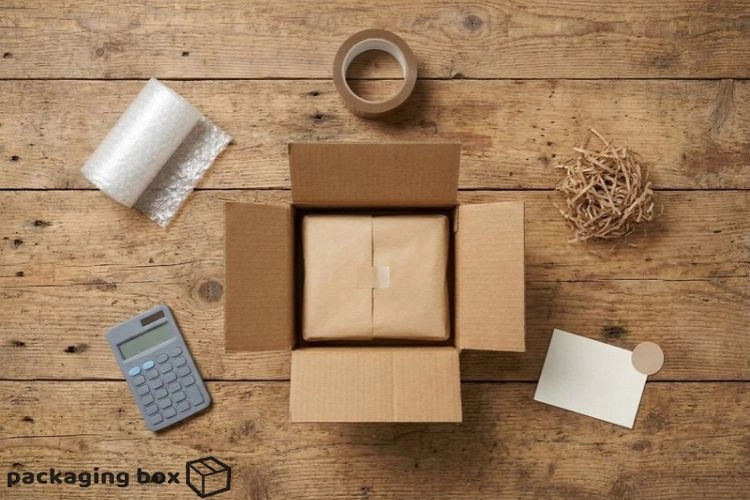

You sell a product for Rs 1,800, your supplier charges Rs 900, and the profit looks great on paper. Then the orders arrive. The box, tape, bubble wrap, sticker and thank-you card quietly eat into every sale. Knowing how to calculate packaging cost for online store orders is one of the simplest ways to protect your margin. Most new sellers skip it, and they only notice when the bank balance looks smaller than the sales report.
The good news is that the math is easy. You don’t need accounting software, only a clear list of what goes into each parcel. This guide walks you through the formula step by step with real-looking PKR examples. It also covers hidden costs, pricing tips and ways to cut spending without making your parcels look cheap.
🧠 Why Packaging Cost Deserves Its Own Line in Your Budget
Packaging is not an extra. It is part of the product the customer receives. If a parcel arrives crushed, the customer does not blame the courier for long. They blame your brand.
💸 The Silent Profit Leak
Many Daraz, Instagram and Shopify sellers price products using only the supplier cost and a guess for shipping. Packaging gets lumped into “other expenses” or forgotten. Rs 120 per order sounds small, but across 300 orders a month it is Rs 36,000. That is real money leaving your business without a label on it.
🎯 What Good Costing Gives You
When you know your exact packaging cost per order, you can set smarter prices and spot waste quickly. You also negotiate better with suppliers, because you know what you actually use. In short, you stop guessing and start running a business with numbers.
🧾 What Is Included in Packaging Cost for E-Commerce?
Before any formula, you need a complete list. Packaging cost is more than the box. It covers everything that touches the product between your shelf and the customer’s door.
📥 Outer Packaging
This is the layer the courier handles. It includes your corrugated box, poly mailer or kraft bag, plus tape and shipping labels. If you ship fragile or heavy goods, this layer matters most. A good starting point is this guide on corrugated box vs regular box for online shipping, which explains why strength changes your damage rate.
🛡️ Inner Packaging
Inner packaging protects the product inside the box. Bubble wrap, paper filler, cling film, tissue or small inserts all count here. These items look cheap one by one, but they add up quickly. You can check pricing on bubble wrap and cling film rolls as a baseline.
🎁 Branding Extras
Stickers, thank-you cards, branded tissue paper, custom printed boxes and ribbons belong in this group. They are optional, but if you use them, you must count them. A branded touch can raise the unboxing experience, as long as you know what it costs. For ideas, read elevating brand presence with custom packaging solutions.
🧑🔧 The Costs Most Sellers Forget
Several costs hide in the background and rarely appear in a seller’s spreadsheet:
- Labour: the time you or a helper spends packing each order.
- Storage: the space your boxes and rolls occupy.
- Damage and returns: replacement or refund cost when a parcel is crushed.
- Wastage: boxes cut wrong, tape wasted, bubble wrap torn.
If you want a wider look at what a new seller needs, the complete first-time buyer’s guide to e-commerce packaging in Pakistan covers the basics well.
🧮 The Packaging Cost Formula for E-Commerce
Here is the method. It has four small steps, and you can finish it in under an hour with a pen and a calculator.
1️⃣ Step One: List Every Item in One Parcel
Pack one real order and write down everything that goes in or on it. Include the box, tape, filler, label, sticker, card and any inner wrap. If you sell different product types, repeat the exercise for each type, because a ring box and a kettle need different packaging.
2️⃣ Step Two: Find the Cost Per Unit of Each Item
Divide what you paid by how many pieces you received. If a roll of tape costs Rs 400 and gives you 50 parcels, the tape cost per order is Rs 8. If a bundle of 500 boxes costs Rs 27,500, each box is Rs 55. This is your cost per unit.
3️⃣ Step Three: Add Labour, Storage and Damage Allowance
Now add the invisible costs. Estimate packing time and assign a modest labour value. Add a small share for storage. Then add a damage allowance based on your real damage rate. The damage formula looks like this:Damage Allowance=Damage Rate×Cost at Risk
For example, a 2% damage rate on an order where roughly Rs 1,000 is at risk gives an allowance of about Rs 20 per order.
4️⃣ Step Four: Add Everything Together
The final formula for your cost per order is:Packaging Cost per Order=Materials+Labour+Storage+Damage Allowance
That single number is what you should plug into your pricing.
📊 A Real-Looking Example: Packaging Cost per Order
Let’s say you run a small online store selling home décor items. Your average product costs you Rs 900 and sells for Rs 1,800. Here is one typical parcel, broken down.
| Cost Item | Amount (PKR) |
|---|---|
| Corrugated shipping box | Rs 55 |
| Bubble wrap | Rs 15 |
| Packaging tape | Rs 8 |
| Paper filler | Rs 5 |
| Thank-you card | Rs 6 |
| Brand sticker | Rs 4 |
| Shipping label | Rs 3 |
| Packing labour | Rs 10 |
| Storage share | Rs 4 |
| Damage allowance (2%) | Rs 20 |
| Total packaging cost per order | Rs 130 |
This table shows that the box is only about 42% of the total. The rest comes from small items and hidden costs. Many sellers count only the box and underestimate their spending by more than half.
📈 What This Does to Your Profit
Now compare two versions of the same sale. Assume marketing and platform fees take Rs 180 per order.
- Without counting packaging: Rs 1,800 − Rs 900 − Rs 180 = Rs 720 profit, which looks like a 40% margin.
- With packaging counted: Rs 1,800 − Rs 900 − Rs 130 − Rs 180 = Rs 590 profit, which is a real margin of about 33%.
The difference is Rs 130 per order. On 300 orders a month, that is Rs 39,000 you thought you had but didn’t. The formula for margin is:Profit Margin (%)=Selling PriceSelling Price−Total Costs×100
This is why packaging cost vs profit margin is a topic every seller should check monthly, not once a year.
📐 What Is a Good Packaging Cost Percentage?
Sellers often ask how much they should spend on packaging per order. There is no single number, because it depends on your product value and brand. A useful rule of thumb is to keep packaging between 5% and 15% of the selling price for most products. In our example, Rs 130 on Rs 1,800 is about 7%, which is comfortable.
The percentage changes with the product type. Low-priced items feel packaging cost more sharply, while premium items can carry richer packaging easily. The table below gives a rough planning guide. Treat the ranges as starting points, not strict rules.
| Product Type | Typical Packaging Share of Price | Packaging Priority |
|---|---|---|
| Low-price items (under Rs 500) | 10–20% | Keep it light and simple |
| Mid-range items (Rs 500–3,000) | 5–12% | Balance protection and look |
| Premium or gift items | 8–15% | Invest in presentation |
| Fragile items (glass, ceramics, electronics) | 10–18% | Protection comes first |
As you can see, fragile and low-price items are the hardest to price. A Rs 300 mug with Rs 80 of protection needs a smart plan, not a bigger discount. If your numbers fall outside these ranges, don’t panic. Review your box size, filler and branding extras first.
🏷️ How to Include Packaging Cost in Your Product Price
Once you know your cost per order, the next step is to put it into your pricing. Don’t hide it inside “shipping.” Make it part of your cost base.
🧱 Start from Total Cost, Not Product Cost
Add up your product cost, packaging cost, platform fees and marketing share. This gives you your total cost per order. Then add your target profit on top. If you want a 35% margin on a Rs 1,220 total cost, divide by 0.65 to get a selling price of about Rs 1,877. That is how you price with packaging included, rather than hoping the margin survives.
🚚 Decide How to Handle Shipping
You can charge shipping separately, include it in the price or offer free shipping above a set amount. Packaging is separate from courier charges, but they interact. A bigger box can raise your shipping bill through dimensional weight, so a larger box may cost you twice.
✅ Protect Your Margin with a Price Check
Review your prices every quarter. Packaging costs, tape, cartons and filler move with the market. A small supplier increase in one month can silently erase your margin over the next three.
📏 Choosing the Right Box Size to Save Money
Box size is one of the most overlooked levers. Oversized boxes cost more to buy, need more filler and can push you into a higher courier weight slab.
🔍 Measure, Then Match
Measure your product’s length, width and height. Add a small allowance for padding, usually 2 to 3 cm on each side for fragile goods. Then pick the nearest standard size. This corrugated box sizes guide for Pakistan helps you match common sizes to common products.
🧰 Standardise to Two or Three Sizes
Selling twenty products does not mean you need twenty boxes. Most stores can cover their range with two or three sizes. This simplifies ordering, cuts waste and improves your bulk pricing. A standard e-commerce box is an easy starting point, and the full e-commerce boxes category lets you compare sizes side by side. For heavier parcels, the DHL shipping box 7-ply gives extra strength.
🎨 Brown or White?
Colour affects both brand feel and cost. If you’re deciding, read this comparison of white vs brown corrugated box for branding. Brown is usually cheaper and has an eco-friendly look, while white suits clean, premium branding.
🔧 How to Reduce Packaging Cost for Your Online Store
Cutting cost should never mean cutting protection. A cheap box that fails is the most expensive box you can buy. Instead, look for savings that customers won’t notice.
📦 Buy in Bulk, but Sensibly
Order quantity changes your unit price a lot. If a box costs Rs 65 at 100 pieces and Rs 55 at 500 pieces, you save Rs 10 per box, or Rs 5,000 across the larger batch. But don’t over-order. Boxes take up space, and unused stock is cash sitting on a shelf. Read the minimum quantity and cost guide for bulk packaging orders before you decide. For sourcing options, see where to buy wholesale packaging in Pakistan.
🛠️ Use the Right Strength, Not the Strongest
Heavy-duty packaging for a light T-shirt wastes money. On the other hand, weak packaging for a heavy item causes returns. If you ship heavy goods, this guide on how to strengthen a corrugated box for heavy items shows low-cost ways to reinforce without buying a thicker box. Basic supplies like packaging tape and packing rope go a long way.
🧼 Cut Waste, Not Quality
Track how many boxes, tape rolls and filler sheets you actually use in a month. Many sellers find 5% to 10% waste from torn tape, wrong box choices or over-padding. A simple packing checklist for helpers fixes most of it.
🤝 Compare Suppliers Carefully
The cheapest quote is not always the lowest cost. Look at quality consistency, delivery time and minimum order. These tips for choosing the right packaging supplier work as a handy checklist. If you buy online, this article on whether it is safe to order packaging online in Pakistan explains what to verify first.
🎁 Is Branded Packaging Worth the Extra Cost?
This is the question every growing store asks. The honest answer is that it depends on your product and customer. Branded packaging adds cost, but it can also add value that plain brown boxes cannot.
✨ When It Pays Off
Branded packaging works well for gifts, beauty items, fashion, jewellery and anything customers might share on social media. It supports repeat orders and makes your store feel more established. If you’re curious about design directions, browse custom packaging box ideas for Pakistan and best packaging box ideas and trends.
🪙 When to Wait
If you sell low-margin, high-volume commodity products, plain packaging with a simple sticker may be smarter. You can upgrade as your margins grow. A middle path also works well. Use plain boxes with a branded sticker, card or tissue wrap, which costs far less than full custom printing. For a deeper look at the investment side, read investing in packaging for small businesses. If you decide to go custom, brand-focused packaging manufacturing in Pakistan shows what the process looks like.
🚨 How to Avoid Damage and Return Costs with Better Packaging
A damaged parcel costs you the product, the shipping both ways, the replacement packaging and often the customer. That is why damage allowance is part of your formula. The best way to lower it is to prevent damage in the first place.
🧪 Test Before You Scale
Pack a sample parcel, seal it and drop it from waist height onto a hard floor. Shake it. If the product moves inside, add filler or reduce the box size. This five-minute test can save you thousands of rupees.
📏 Fit Matters More Than Padding
A snug box with light filler beats a huge box stuffed with paper. Loose items shift and break. Tight packing protects the product and reduces your shipping weight at the same time. If you sell shoes or fashion items, this guide on best ways to package shoes for shipping in Pakistan shows a practical example.
🧰 Stock the Essentials
Keep a small kit ready for every order. It should include boxes, tape, bubble wrap, labels and filler. The packaging materials category lets you buy most of these together.
📒 How to Track Packaging Expenses Month After Month
Costing once is a good start. Tracking it monthly is what keeps your profit healthy.
🗂️ Keep a Simple Sheet
Create a spreadsheet with four columns: item, quantity bought, total cost and cost per unit. Update it whenever you restock. At month’s end, compare packaging spend with order count. That gives you the real packaging cost per order for the month.
🔔 Watch for Warning Signs
Three signs tell you that packaging costs are drifting. Your cost per order is rising, your damage rate is climbing, or your stock is running out faster than your sales suggest. When any of these appear, review your sizes, supplier and packing habits.
✅ Key Takeaways
Knowing how to calculate packaging cost for online store orders comes down to four steps. List every item in a parcel, find the cost per unit, add labour, storage and damage allowance, and total it all. Then build that number into your price instead of absorbing it from your profit.
Keep packaging between 5% and 15% of the selling price for most products. Standardise your box sizes, buy in sensible bulk and test your parcels before you scale. Track your numbers monthly so small price changes never turn into big margin losses.
📣 Ready to Cost Your Packaging Properly?
Pack one real order today and write down every item. Then compare your total with the example in this guide. When you’re ready to upgrade or restock, explore the e-commerce boxes range, check the packaging materials, and visit the shop to build your first optimised order. Good costing costs nothing and pays you back in every parcel.
❓ Frequently Asked Questions
1. How do I calculate packaging cost for my online store?
List every item in one parcel, find the cost per unit of each, then add labour, storage and a damage allowance. The total is your packaging cost per order.
2. What is included in packaging cost for e-commerce?
It includes the outer box or mailer, tape, labels, inner protection like bubble wrap and filler, branding extras such as stickers and cards, plus labour, storage and damage allowance.
3. How much should I spend on packaging per order?
For most products, 5% to 15% of the selling price is a healthy range. Fragile or premium items may need more, while low-price items need extra care to keep packaging affordable.
4. How do I include packaging cost in my product price?
Add product cost, packaging cost, platform fees and marketing share to get your total cost. Then divide by one minus your target margin to find the selling price.
5. How can I reduce packaging cost for an online store?
Standardise to two or three box sizes, buy in sensible bulk, avoid oversized boxes, reduce waste and test your parcels so you lower damage and returns without weakening protection.
6. Is branded packaging worth the extra cost?
It can be, especially for gifts, fashion and beauty products where presentation drives repeat orders and social sharing. If margins are tight, start with plain boxes and a branded sticker or card.





💬 0 Comments
Leave a Comment