
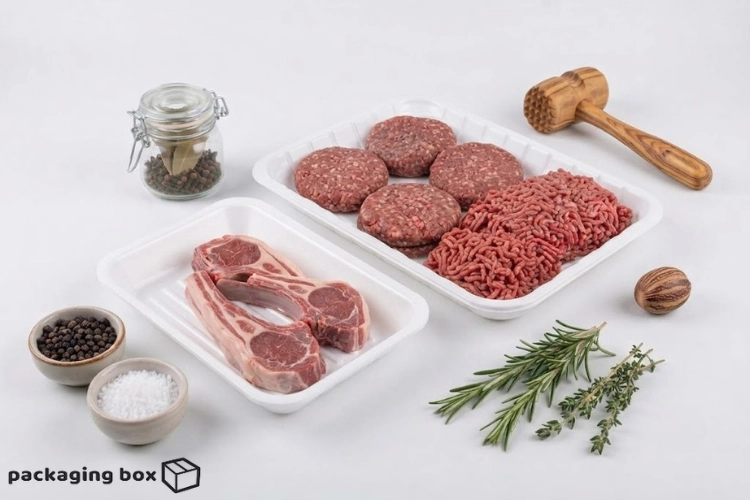

Walk into any busy butcher shop or supermarket meat aisle, and you’ll notice something most customers never consciously register — the trays. Getting the meat tray size right isn’t just a packaging detail; it directly affects how fresh your product looks, how much waste you generate, and ultimately how much profit walks out the door with every sale.
Too small a tray, and juices spill over, cuts look cramped, and customers hesitate to buy. Too large, and you’re wasting material, shelf space, and money on packaging that dwarfs the product inside. Getting this balance right is one of those “small decisions, big impact” situations that separates a well-run meat counter from a messy one.
In this guide, we’ll walk through everything you need to know to choose the perfect tray size for your business — from understanding size charts to picking the right material, and avoiding the common mistakes that cost retailers money every single day.
🥩 Why Meat Tray Size Matters More Than You Think
Before diving into specific dimensions, it’s worth understanding why this decision deserves your attention in the first place.
- Presentation drives sales. A cut of meat that looks squeezed into a tray that’s too small appears less appetizing — even if the quality is excellent.
- Portion control affects pricing. The right tray size helps you standardize weights, making pricing and inventory management far easier.
- Waste reduction saves money. Oversized trays mean more plastic or foam per unit, which adds up fast across thousands of packages monthly.
- Food safety compliance. Trays that are too shallow can lead to leaks and cross-contamination risks — a serious concern under food safety packaging standards.
In short, tray size touches nearly every part of your meat retail operation, from your bottom line to your brand reputation.
📏 Understanding Different Meat Tray Sizes for Supermarket and Butcher Use
Not all meat cuts are created equal, and neither are the trays that hold them. Here’s a breakdown of the general categories you’ll encounter.
Small Trays (For Portioned Cuts)
These are typically used for individually portioned items like:
- Steaks
- Chicken breast fillets
- Ground meat (small packs)
- Sausages
Small trays are popular in supermarkets aiming for grab-and-go convenience, where portion consistency matters for pricing per unit.
Medium Trays (For Everyday Retail Cuts)
Medium-sized trays are the workhorses of most butcher shops and supermarket meat counters. They comfortably fit:
- Family-size chicken packs
- Multiple beef or lamb cuts
- Mixed meat combos for weekly shopping
Large Trays (For Bulk and Wholesale Meat)
If you supply restaurants, caterers, or sell in bulk, larger trays are essential. These handle:
- Whole cuts (briskets, roasts)
- Bulk poultry orders
- Wholesale meat packaging for distributors
If your business also deals in high-volume orders, browsing bulk meat trays wholesale options can help you compare sizing without overcommitting to one supplier’s standard range.
📊 Meat Tray Size Chart – Quick Reference Guide
To make things easier, here’s a simplified meat tray size chart most retailers use as a starting benchmark:
| Tray Category | Typical Use Case | Approx. Dimensions | Best For |
|---|---|---|---|
| Small | Portioned cuts, snacks | 5″ x 7″ | Steaks, fillets, sausages |
| Medium | Everyday retail cuts | 7″ x 9″ | Chicken packs, mixed cuts |
| Large | Bulk/family packs | 9″ x 12″ | Roasts, bulk poultry |
| Extra Large | Wholesale/catering | 12″ x 15″+ | Restaurant & bulk supply |
Note: Exact dimensions vary slightly by manufacturer, so always confirm specifications with your supplier before ordering in bulk.
🧭 Key Factors to Consider When Choosing the Right Meat Tray for Butcher Shop
Choosing the right tray isn’t just about picking a size off a chart — several practical factors should guide your decision.
1. Type of Meat Cut
Different cuts have different shapes and moisture levels. A whole chicken needs more depth and surface area than a neatly portioned fillet. Always match the tray to the cut’s natural shape rather than forcing a standard size.
2. Tray Material (Foam, Plastic, Compostable)
Material affects everything from cost to shelf appeal:
- Foam meat trays — Lightweight, absorbent, budget-friendly, widely used across supermarkets.
- Plastic meat trays — Durable, often clearer for better product visibility.
- Compostable/eco-friendly meat trays — Increasingly popular as customers and regulations push toward sustainable packaging.
If sustainability is part of your brand story, exploring eco-friendly packaging alternatives alongside traditional trays can strengthen your positioning with environmentally conscious shoppers.
3. Display and Shelf Space
Your refrigerated display case has fixed dimensions. Before finalizing a tray size, measure your display case or meat display case shelving to ensure trays fit neatly without overcrowding or wasted space.
4. Food Safety and Hygiene Standards
Trays must meet food-grade packaging standards to prevent contamination and maintain shelf life. Look for suppliers who clearly state compliance with food safety packaging standards, especially for exported or regulated markets.
5. Cost and Sustainability
Bulk purchasing often reduces per-unit cost significantly. If you’re scaling up, compare pricing across wholesale meat tray suppliers to find the sweet spot between quality and affordability.
⚖️ Foam vs Plastic vs Compostable Meat Trays – Which One Fits Your Business?
This is one of the most common questions butcher shop owners ask, and honestly, there’s no single “best” answer — it depends on your priorities.
| Material | Pros | Cons | Best For |
|---|---|---|---|
| Foam (Polystyrene) | Cheap, absorbent, lightweight | Not eco-friendly, less durable | High-volume supermarkets |
| Plastic | Sturdy, clear visibility, reusable-friendly | Higher cost, less absorbent alone | Premium butcher shops |
| Compostable | Eco-conscious, growing demand | Pricier, limited shelf life | Sustainability-focused brands |
If you’re unsure which fits your operation, start with a small trial batch of each material before committing to a full switch — customer feedback often reveals preferences you wouldn’t expect.
❌ Common Mistakes to Avoid When Selecting Meat Packaging Trays
Even experienced retailers slip up here. Watch out for these frequent errors:
- Choosing one size for everything. Different cuts need different trays — a one-size-fits-all approach usually backfires.
- Ignoring absorbent pad needs. Skipping an absorbent pad for meat tray setups can lead to leaky, unappetizing packaging.
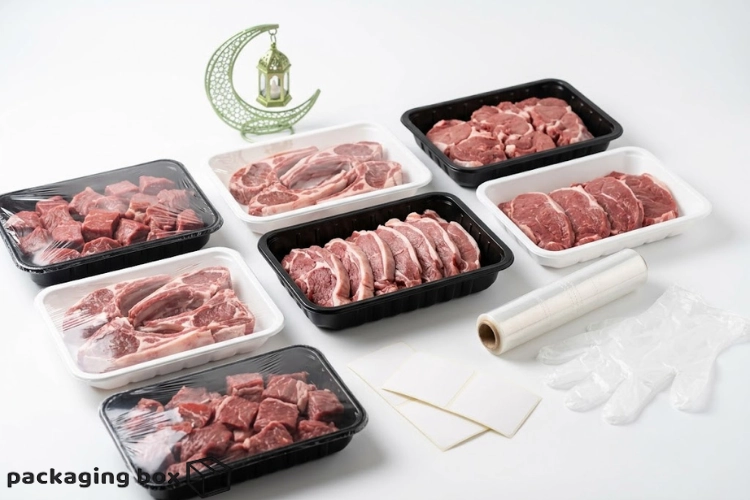
- Overlooking shrink wrap compatibility. Not every tray works well with every shrink wrap for meat packaging — test combinations before bulk ordering.
- Underestimating storage space. Bulk-buying large trays without checking storage capacity leads to wasted inventory space.
- Skipping supplier samples. Always request samples before committing to thousands of units.
🏪 Tips for Supermarket Meat Tray Selection at Scale
If you’re managing a larger operation with multiple counters or locations, scaling your packaging strategy requires a bit more planning.
- Standardize sizes across locations where possible to simplify inventory and reordering.
- Negotiate bulk pricing with a reliable meat tray manufacturer rather than juggling multiple small suppliers.
- Train staff on proper tray selection per cut type to maintain consistency across shifts.
- Pair trays with proper hygiene supplies — don’t forget essentials like food-grade gloves for staff handling raw meat.
- Review packaging quarterly as customer preferences shift toward more sustainable retail meat packaging solutions.
🎯 Final Thoughts
Choosing the right meat tray size isn’t just a logistics decision — it’s a customer experience decision, a sustainability decision, and a profitability decision, all rolled into one small piece of packaging. Whether you’re running a neighborhood butcher shop or managing meat counters across multiple supermarket branches, taking the time to match tray size, material, and display needs pays off in fresher-looking products, less waste, and happier customers.
The businesses that get this right treat packaging as part of their brand — not an afterthought.
🛒 Ready to Upgrade Your Meat Packaging?
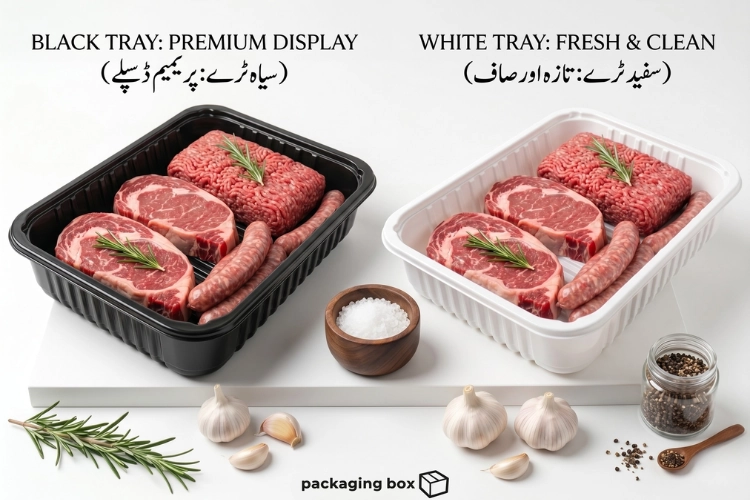
Browse our full range of meat trays in various sizes and materials — including popular options like black meat trays and white meat trays — designed specifically for supermarkets and butcher shops across Pakistan. Explore our complete packaging shop to find everything your meat counter needs, from trays to shrink wraps and hygiene supplies.
❓ Frequently Asked Questions
Q1: What is the standard meat tray size for a butcher shop? There isn’t one universal standard — sizes typically range from small (5″x7″) for portioned cuts to extra-large (12″x15″+) for wholesale and bulk orders. The right size depends on the cuts you sell most frequently.
Q2: Are foam meat trays better than plastic ones? Foam trays are cheaper and more absorbent, making them popular for high-volume supermarkets. Plastic trays offer better durability and product visibility, often preferred by premium butcher shops. The better option depends on your budget and brand positioning.
Q3: How do I know if my meat tray is too small? If juices frequently spill over the edges, the meat appears cramped, or wrapping becomes difficult, your tray is likely undersized for that cut.
Q4: Can I use the same tray size for all meat types? It’s not recommended. Different cuts — like poultry versus steaks — have different shapes and moisture levels, so using varied tray sizes improves both presentation and food safety.
Q5: Are compostable meat trays a good investment for small butcher shops? Yes, especially if your customer base values sustainability. While slightly pricier than foam, compostable trays can strengthen brand loyalty among eco-conscious shoppers.










💬 0 Comments
Leave a Comment