
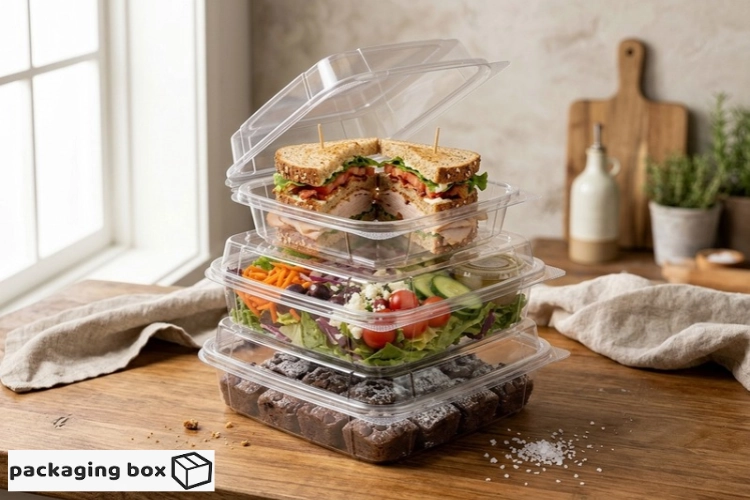

Every takeaway order makes a promise: the food that left your kitchen will arrive in the same condition. Hinged deli boxes are one of the simplest ways to keep that promise. They have a lid attached to the base, a secure click-shut closure, and a clear, sturdy build. That means no lost lids, no spilled salads, and no sloppy first impression when the customer opens the bag.
If you run a restaurant, cafe, bakery, or cloud kitchen, your packaging is part of your service. A customer who opens a neat, sealed box feels the care that went into the order. A customer who opens a leaking, crushed container remembers that instead. This guide explains why hinged deli boxes have become a favourite for takeaway food packaging, how they compare with traditional containers, and how to choose and buy the right ones for your business.
🥡 What Are Hinged Deli Boxes and What Are They Used For?
Hinged deli boxes are single-piece food containers. The base and lid are joined by a built-in hinge, so the lid folds over and snaps shut. Most are made from clear food-grade plastic, so customers can see the food inside. Deli-style versions come in several depths and sizes.
Because they are so versatile, restaurants use them for much more than deli meats. You will commonly see them used for:
- Sandwiches, wraps, and sliced cakes
- Fresh salads and fruit cups
- Rice portions, pasta, and noodles
- Desserts, pastries, and brownies
- Cold appetizers, finger food, and mezze
If you want to see the style in a real product range, you can browse our hinged deli box collection or check the specific hinged deli box container.
The main idea is that the lid cannot go missing. Anyone who has packed a hundred orders in a rush knows how often loose lids get mismatched, misplaced, or knocked off.
⭐ Why Choose Hinged Deli Boxes for Takeaway?
Restaurant owners compare packaging on price, but the better question is what each container costs you when it fails. A leaked order means a refund, a bad review, or a lost repeat customer. Here are the main benefits of hinged deli boxes for restaurants, with real-world examples.
🔒 A Secure-Closure Lid That Stays Put
The built-in hinge keeps the lid and base together from the first order to the last. When you close it, the lid snaps into place, and a good closure holds even when the box is shifted around in a delivery bag. For a rider balancing five orders on a motorbike, that matters.
A secure-closure lid also supports food safety. Because the box stays closed until the customer opens it, there is less chance of contamination along the way. Some restaurants add a sticker or seal across the front for a tamper-evident finish, which many customers now expect from delivery orders.
💧 Leak-Resistant and Grease-Resistant Performance
Nobody wants dressing at the bottom of the delivery bag. Hinged deli boxes with a snug closure and smooth, non-porous walls handle moisture and oil better than flimsy paper trays or loose-lid containers. They suit salads with dressing, fruit with natural juices, and dishes with a little sauce.
A word of honesty: a box that is leak-resistant is not always fully leak-proof. Very thin soups and watery gravies are better in a round container with a screw or press-fit lid. For most deli and snack foods, though, a well-made hinged box does the job. The plastic material also stays rigid and clean, which is useful for oily fried foods.
🔥 Keeps Food Fresh During Delivery
Closed boxes protect food from dust, air, and handling. That helps with freshness, especially for sandwiches, salads, and desserts that dry out when exposed. A tight closure also helps contain warmth for short deliveries.
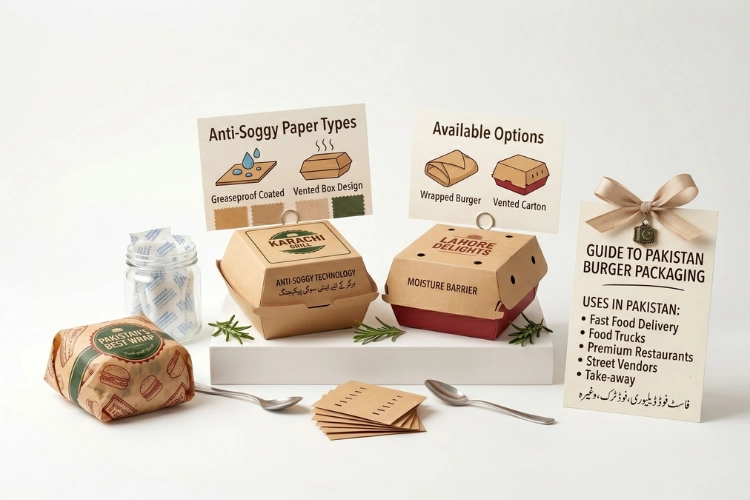
Keep in mind that a deli box is not a thermal container. For hot food on long deliveries, pair the box with an insulated delivery bag, and avoid sealing steaming food completely, because trapped steam can make crispy items soggy. Our guide to burger packaging that doesn’t get soggy explains how steam and airflow affect crispiness.
📦 Easy to Carry and Stack
Takeaway packaging should be easy to store, pack, and move. Hinged deli boxes are usually flat-topped, so they stack neatly in the kitchen, in delivery bags, and on retail shelves. That saves space, speeds up packing, and reduces the chance of crushed food.
Their shape also works well in grab-and-go fridges. Staff can stack and rotate them, and customers can easily see what is inside. If you are scaling up, the stacking pattern also helps you predict bag sizes.
👀 Clear Visibility That Helps You Sell
A transparent lid works as a built-in advertisement. People buy with their eyes, and a fresh salad or a colourful dessert looks appetising through a clear window. In grab-and-go cases, visibility reduces the need for staff to explain what is inside.
⚖️ Hinged Deli Boxes vs Traditional Takeaway Containers
To see where hinged deli boxes win, compare them with the common alternatives. Table 1 summarises the key differences.
| Feature | Hinged Deli Boxes | Traditional Takeaway Containers (loose lid) | Basic Paper/Foam Boxes |
|---|---|---|---|
| Lid attached? | Yes, built-in hinge | No, separate lid | Often folded flaps |
| Closure security | Snap-shut, stable | Depends on fit | Weak to moderate |
| Leak resistance | Good for most deli foods | Good if lid fits well | Low to moderate |
| Visibility | Clear option available | Clear or black options | None |
| Stackability | Excellent | Good | Fair |
| Packing speed | Fast, one piece | Slower, two pieces | Medium |
| Branding options | Sticker, sleeve, label | Sticker, sleeve | Direct printing |
The biggest difference is speed and reliability. With a one-piece box, your packing staff handle one item instead of two, and there is no hunting for a matching lid. During a Friday-night rush, that saves real time.
Traditional black containers do have a place. They suit hot, saucy, or heavy meals, such as curries and rice dishes. If you sell those, you can see our black food containers as a complementary option. Many restaurants use both: hinged deli boxes for sandwiches, salads, and desserts, and deeper containers for hot mains.
🌿 Are Hinged Deli Boxes Eco-Friendly?
This is one of the most common questions, and the honest answer depends on the material. Most clear hinged deli boxes are plastic, which is recyclable in some systems but not always accepted everywhere. Plastic options offer durability and clarity. Paper-based options offer easier disposal and a natural look.
If sustainability is part of your brand, you have several practical routes:
- Choose recyclable, food-grade materials and label them clearly.
- Use right-sized boxes so you waste less material.
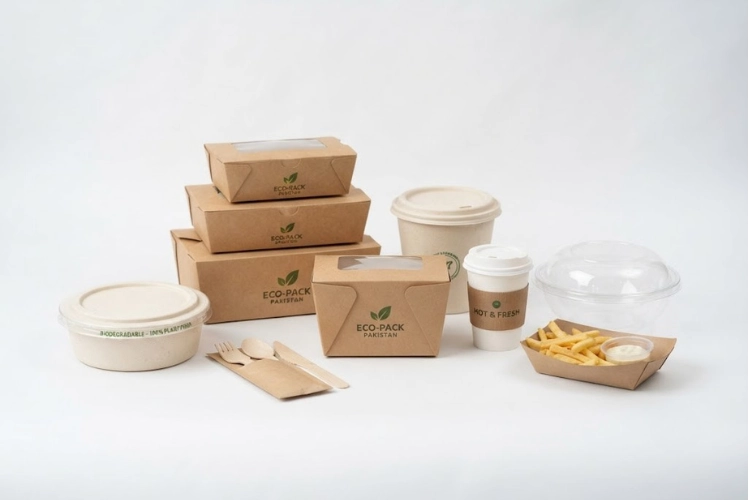
- Offer a paper or kraft alternative for items that do not need visibility, such as a kraft sandwich box with window or a kraft salad box.
- Review our biodegradable fast food packaging solutions for compostable and plant-based options.
Customers are also paying more attention to packaging waste. Being transparent about what your boxes are made of builds trust, even if you use plastic for some items. For a wider look at greener options, you can read our guide to eco-friendly custom packaging boxes.
🍽️ Best Foods to Pack in Hinged Deli Boxes
Not every dish belongs in the same container. Matching the food to the box prevents most packaging complaints. Here is a practical breakdown.
Great fits: Sandwiches, wraps, club sandwiches, chicken salads, fruit bowls, cupcakes, brownies, slices of cake, samosas, rolls, and pasta salads. These foods are stable, relatively dry, and benefit from a closed, visible container.
Use with care: Oily fried foods work well, but let them cool slightly and add a small paper liner to absorb grease. Foods with sauce can work if the sauce is mostly contained, but sending dips separately is smarter. You can pair your boxes with a dip sauce container with attached lid so fries or nuggets stay crisp.
Better in other containers: Thin soups, very wet curries, and anything served piping hot and steaming. For these, look at round bowls such as our kraft bowls with lids.
A good rule: if a food would spill when tilted about 30 degrees, a hinged deli box alone is probably not the right choice.
🛒 How to Choose the Right Takeaway Box for Your Restaurant
Choosing the right takeaway box is not about picking the cheapest option. It is about matching the container to your menu, delivery style, and customer expectations. Work through these questions before you order.
🧪 1. Check the Material and Food Safety
Always confirm that the box uses food-grade packaging materials. Ask your supplier for material details, and check whether the box is suitable for hot, cold, or both. If you plan to reheat food in a microwave, confirm that the specific product is microwave-safe before telling customers. Not every plastic handles heat, and your supplier should state this clearly.
📏 2. Pick the Right Size and Depth
An oversized box lets food slide around, while an undersized one squashes it. Shallow boxes suit sandwiches and pastries. Deeper ones suit salads and pasta. Order a small sample batch first, pack a few real meals, and test them on a delivery run.
🚴 3. Test It on a Real Delivery
Pack an order, close the box, place it in a delivery bag, and ride or drive it around for 20 to 30 minutes. If it arrives neat, the box passes. This simple test shows more than any product description.
💰 4. Compare the Cost per Order, Not per Piece
A slightly more expensive box that prevents refunds and bad reviews is usually cheaper in the long run. If you are working with a limited budget, our guide on affordable food packaging for small businesses offers useful ideas. For a broader checklist, see how to choose food packaging in Pakistan.
The table below gives a quick decision guide.
| Your Menu Type | Recommended Packaging Approach |
|---|---|
| Sandwiches, wraps, salads | Hinged deli boxes, clear lid |
| Desserts, brownies, pastries | Hinged deli boxes or clear lid boxes |
| Hot rice dishes and curries | Deeper containers with tight lids |
| Fries and nuggets | Cones, pockets, or vented boxes |
| Burgers | Burger boxes with airflow |
🎨 Custom Hinged Deli Boxes and Branding
Your packaging is a small billboard that travels to customers’ homes and offices. While some hinged deli boxes are plain and transparent, you can still brand them effectively and affordably.
Practical options include:
- A printed sticker or seal on the front of the lid
- A branded sleeve or paper band around the box
- A custom-printed bag or tissue paper in the same bag
- A small thank-you card or QR code for repeat orders
If you want a fuller brand look, custom printed food boxes and paper packaging offer larger print areas. For example, our custom kraft food box and sealed branded packaging guide show how a simple seal and design can make food feel safer and more premium.
A tamper-evident label has a double benefit. It gives customers confidence that nobody opened their meal, and it carries your logo. Many food businesses find that this small detail improves how professional their delivery service feels.
📊 Hinged Deli Boxes Wholesale: Where to Buy in Bulk
Once you know which box works, buying in bulk lowers your cost per unit and helps you avoid running out in the middle of a busy week. Look for a supplier that can offer consistent quality across batches, clear product specifications, and reliable delivery.
When you are comparing wholesale suppliers, ask about:
- Minimum order quantity and price breaks
- Material specifications and food-grade confirmation
- Sample availability before large orders
- Delivery timelines for repeat orders
- Branding or customisation options
Our guides on where to buy wholesale packaging in Pakistan and bulk packaging orders, minimum quantity, and cost explain how to plan quantities and avoid overpaying. If you are ordering online for the first time, it also helps to read is it safe to order packaging online in Pakistan.
A practical tip: order slightly more than your monthly average. Running out of packaging forces last-minute substitutions, and those usually cost more and look worse.
⚠️ Common Mistakes Restaurants Make With Takeaway Boxes
Even a great box fails when it is used the wrong way. These are the mistakes that come up most often.
Overfilling the box. If the lid does not close flat, the closure is under stress and may pop open. Leave a little room so the lid sits properly.
Packing food too hot. Trapped steam creates condensation, which makes food soggy and can warp thinner plastics. Let hot items rest for a minute or two, and use vented packaging for crispy foods.
Mixing wet and dry items together. Dressing, sauces, and syrups should travel in separate small containers. This keeps salads crisp and sandwiches intact.
Ignoring storage. Boxes stored in damp or dusty areas can collect dirt before use. Keep them in sealed cartons, away from the floor and from direct sunlight.
Skipping the sample test. Many owners order a thousand boxes before they have tested one on a real delivery. Test first, then scale.
If you want a wider view of what works for restaurants and cloud kitchens, our guides on the best food packaging for restaurants and cloud kitchens and disposable food packaging buyer’s guide cover this in detail.
❓ Frequently Asked Questions About Hinged Deli Boxes
What are hinged deli boxes used for?
Hinged deli boxes are used for sandwiches, salads, desserts, pastries, fruit, rice portions, and other cold or room-temperature foods. Restaurants, cafes, bakeries, and cloud kitchens use them for takeaway and delivery orders.
Are hinged deli boxes leak-proof?
Most are leak-resistant rather than fully leak-proof. They handle moisture, oil, and light dressings well when the lid is fully snapped shut. For thin soups or very watery dishes, a round container with a tight lid is a safer choice.
How do hinged deli boxes keep food fresh?
The attached lid snaps shut and protects the food from dust, air, and handling. That helps prevent drying out and contamination during storage and delivery. For hot food over long distances, use an insulated delivery bag as well.
Are hinged deli boxes eco-friendly?
It depends on the material. Many clear versions are plastic, which may be recyclable depending on your local system. If sustainability is a priority, you can choose paper, kraft, or biodegradable alternatives for items that do not need a clear window.
Where can I buy hinged deli boxes in bulk?
You can buy them directly from a packaging supplier that offers wholesale pricing, product samples, and reliable delivery. Check minimum order quantities and material details before placing a large order.
How do I choose the right takeaway box for my restaurant?
Match the box to your menu. Check that the material is food-grade, pick the right size and depth, test the box on a real delivery, and compare the cost per order rather than just the price per piece.
🏁 Conclusion: Small Box, Big Impact
Takeaway customers judge your restaurant in the first few seconds after they open the bag. Hinged deli boxes help you win those seconds. They offer a secure, attached lid, good leak resistance for most deli foods, easy stacking, clear visibility, and simple branding options. They also speed up your packing process, which helps in busy hours.
They are not the answer to every dish, and the best restaurants use a mix of containers matched to the menu. But for sandwiches, salads, desserts, and many snacks, a hinged deli box is one of the most practical, reliable, and cost-effective choices available.
📞 Ready to Upgrade Your Takeaway Packaging?
Explore our hinged deli box range, browse our full disposable packaging collection, or read more in our food packaging in Pakistan guide. Contact the Packaging Box team today to ask for samples and bulk pricing, and give every order the first impression it deserves.



💬 0 Comments
Leave a Comment