
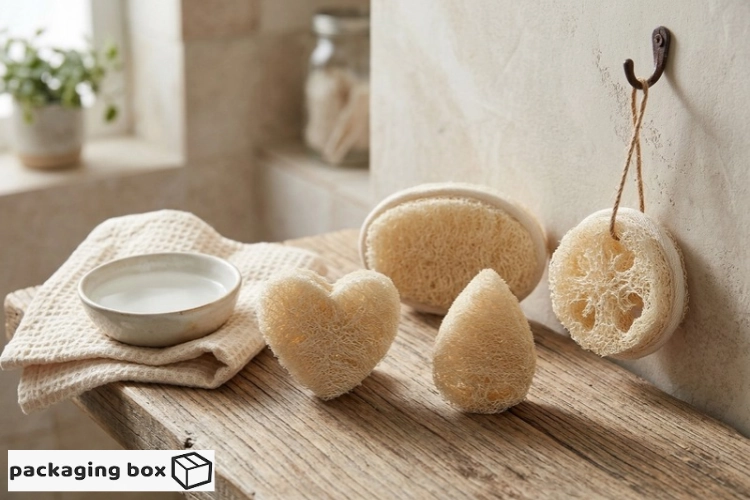

You bought a natural loofah because it feels good on the skin, it is plant-based and it is kinder to the planet than a plastic scrubber. But a few weeks later it smells strange, feels slimy or has started to shed. What went wrong? Usually, nothing about the loofah itself. It is simply a matter of care. This loofah care guide shows you exactly how to clean, dry and store your loofah so it stays fresh, hygienic and useful for as long as possible.
A natural loofah is the dried fibre of the luffa gourd. It is tough when dry and soft when wet, and it works beautifully as an exfoliating sponge. The same fibrous structure that scrubs away dead skin also holds water, soap and skin cells. In a warm, humid bathroom, that is a perfect place for bacteria and mold to grow. The good news is that a few simple habits fix almost every problem. Let us go through them step by step.
🌱 What Is a Natural Loofah and Why Does Care Matter?
A natural loofah comes from the luffa plant, a vine that produces long gourds. Once the gourd is dried and peeled, the inner fibres form a strong, sponge-like network. This makes it a popular zero waste bathroom choice, because it is biodegradable and compostable, unlike plastic shower poufs.
Care matters for two reasons. The first is hygiene. A damp loofah that never fully dries can collect bacteria, mold and mildew, which you then rub on your skin. The second is lifespan. Fibres that stay wet for long periods weaken, break down and start to smell. With good habits, a natural loofah can last around three to four weeks of regular use in the shower, and often longer if you use it only a few times a week and dry it well. This is a general guideline, and the real number depends on how humid your bathroom is and how often you use it.
If you are still choosing one, you can browse the natural loofah range to see the different shapes available, such as a natural loofah sponge, an oval loofah scrubber and a heart-shaped loofah scrubber.
🚿 How to Use a Loofah Correctly From Day One
Good care starts before the first wash. A brand new loofah is stiff and rough, and many people give up on it too early. Soak it in warm water for a minute or two before using it. It will soften quickly and become comfortable on the skin.
When you use it, apply a little body wash and work in gentle circles. You do not need to press hard. Over-scrubbing can irritate the skin, especially on the face-adjacent areas, neck and inner arms. Rinse the loofah thoroughly afterwards until the water runs clear, because leftover soap residue is food for bacteria.
If you are asking whether a loofah is safe to use every day, most people with healthy skin use one a few times a week. Daily use is fine for many, but if your skin is dry or sensitive, scale it back. A loofah is an exfoliator, so it should support your skincare routine, not overwhelm it.
🧼 How to Clean a Loofah the Right Way
Rinsing is not enough. Your loofah needs a proper cleaning routine, and a quick weekly habit makes a big difference.
After every use, rinse it under running water and squeeze out as much water as you can. Squeezing helps push out soap and loose skin cells trapped in the fibres.
Once a week, give it a deeper clean. Here are three simple methods, and you can pick whichever suits your home:
- White vinegar soak: Mix equal parts white vinegar and warm water and soak the loofah for about 15 to 20 minutes. This helps remove soap scum and reduce odor.
- Hydrogen peroxide: A diluted solution of hydrogen peroxide works as a gentle disinfectant. Soak briefly, then rinse very well.
- Diluted bleach solution: Use this only occasionally, and dilute it properly, for example about one part bleach to nine parts water. Soak for around five minutes and rinse until no smell remains. Never mix bleach with vinegar or any other cleaner.
If you want to know how to clean a loofah with just soap and water, wash it with a mild soap, squeeze it several times and rinse well. This is fine for light cleaning, but a weekly soak is better for disinfecting.
| Method | How Long | Best For |
|---|---|---|
| Soap and warm water | 2 to 3 minutes | Quick everyday cleaning |
| White vinegar soak | 15 to 20 minutes | Soap residue and mild odor |
| Hydrogen peroxide soak | A few minutes | Gentle weekly disinfecting |
| Diluted bleach soak | About 5 minutes | Occasional deep sanitizing |
Always rinse the loofah completely after any soak, and let it dry fully before the next use.
🌬️ Drying Is the Most Important Step
If there is one thing to remember from this guide, it is this: a loofah that dries quickly lasts longer. Moisture is the real enemy. Most mold and odor problems come from a loofah that stays damp between showers.
After rinsing and squeezing, hang your loofah in a place with good airflow. Do not leave it on the shower floor, in a closed soap dish or inside a cupboard. A hook or loop that lets air move around all sides is ideal. Many natural loofahs come with a hanging string for exactly this reason.
If your bathroom is small and steamy, take the loofah out of the shower after use and hang it near a window or in a well-ventilated spot. Direct morning sunlight for an hour or two can also help it air dry and naturally freshens the fibres. Just avoid leaving it in harsh sun for many hours, since that can make it brittle.
🏠 Loofah Storage Tips: Where to Keep It
Many people ask whether they should keep a loofah in the shower. It is fine for a short time, but only if the spot is well ventilated and the loofah can dry between uses. In a very humid bathroom with little airflow, it is better to store it outside the shower.
Good loofah storage tips are simple:
- Hang it on a hook, not in a damp corner.
- Keep it away from other wet items and the floor.
- Make sure it dries completely before you put it away.
- Keep separate loofahs for body use and kitchen use.
A kitchen loofah should never be shared with your bath loofah. Kitchen use involves food residue and grease, which can introduce different bacteria. Label them or use different shapes to avoid mix-ups.
🤢 Why Does My Loofah Smell Bad, and How Do You Remove Mold?
A bad smell is the first warning sign. It usually means bacteria are growing because the loofah stays wet or has soap trapped inside. Try a vinegar soak and thorough drying. If the smell comes back quickly, the loofah is probably past its best.
Mold is more serious. If you see black, green or pink spots, or you notice a slimy feel, do not try to rescue it. Throw it away. A moldy loofah cannot be fully sanitized, and using it on your skin is not worth the risk. This is especially important if you have cuts, eczema, shaved skin or a weak immune system.
To prevent mold in the first place, squeeze out water after every use, dry it in the open air and replace it on time.
📅 How Often Should You Replace a Loofah?
This is one of the most common questions in any loofah care guide. As a general rule, replace a natural loofah every three to four weeks if you use it often. If you use it only a few times a week and dry it well, it may last a little longer, but do not stretch it for many months.
Replace it sooner if you notice any of these signs:
- A persistent sour or musty smell
- Visible mold or discolouration
- A slimy or sticky texture
- Fibres that are breaking down and shedding heavily
- A dull, limp feel that no longer scrubs properly
Because natural loofahs are biodegradable, you can cut up the old one and add it to your compost instead of throwing it into the bin. That is one of the best parts of choosing a plant-based sponge.
⚖️ Natural Loofah vs Plastic Shower Pouf
Many people wonder whether natural loofahs are better than plastic ones. The honest answer is that both can harbour bacteria if they are not cleaned and dried, but they differ in other ways.
| Feature | Natural Loofah | Plastic Shower Pouf |
|---|---|---|
| Material | Plant-based luffa fibre | Synthetic mesh |
| Environmental impact | Biodegradable and compostable | Adds to plastic waste |
| Drying | Dries well when hung | Often stays damp in the folds |
| Exfoliation | Firm and effective | Usually softer |
| Lifespan | A few weeks, then compost | Often kept too long |
A natural loofah is the more sustainable choice, and it can be just as hygienic when you follow the care steps above. If you are building a greener bathroom routine, choosing sustainable bath products like this is an easy first step. For more ideas on greener choices, see our guide on eco-friendly custom packaging boxes and our eco products collection.
💡 Bonus Tips to Make Your Loofah Last Longer
A few small habits stretch the life of your loofah without much effort:
- Rinse it well after every use, never skip this step.
- Use a gentle body wash that rinses out easily.
- Do not share your loofah with anyone else.
- Keep it away from the bathroom floor and damp surfaces.
- Rotate two loofahs so each one gets a full day to dry.
- Choose a good quality, firm loofah to begin with.
Rotating two loofahs is a smart trick. While one dries completely, you use the other, and both last longer.
If you run a small bath or gift business and sell loofahs, good packaging matters too. Breathable packaging keeps loofahs dry during storage and shipping. A kraft paper bag or a clear-front kraft bag lets the product breathe while still looking neat and eco-friendly. For brands thinking about presentation, our guide on soap packaging boxes offers useful ideas for bath products.
🛒 Where to Buy Natural Loofah in Pakistan
If you are looking for a natural loofah in Pakistan, choose one that is fully dry, firm and free of any musty smell. A good loofah should feel light, with even fibres and no dark patches. Different shapes suit different needs. A round or oval loofah fits the hand for body scrubbing, a teardrop or pear shape works well for the back and shoulders, and a heart shape makes a lovely gift.
You can explore these options here:
If you want to buy in larger quantities for a shop or gift hampers, read where to buy wholesale packaging in Pakistan and bulk packaging orders and minimum quantity for helpful buying tips.
✅ Quick Loofah Care Checklist
Before you finish your shower, run through this short list:
- Did I rinse out all the soap?
- Did I squeeze out the water?
- Is it hanging where air can reach it?
- Did I do a weekly vinegar or peroxide soak?
- Is it still fresh, or is it time to replace it?
If you can answer yes to these, your loofah is in good shape.
❓ Frequently Asked Questions
How do I clean my loofah?
Rinse it after every use and squeeze out the water. Once a week, soak it in a vinegar and warm water mix or a diluted hydrogen peroxide solution, then rinse well and let it dry fully.
How often should you replace a natural loofah?
Most people should replace a natural loofah every three to four weeks, or sooner if it smells, looks moldy or feels slimy.
Can you clean a loofah with vinegar?
Yes. Soak it in equal parts white vinegar and warm water for 15 to 20 minutes, then rinse thoroughly. This helps remove soap residue and mild odor.
Why does my loofah smell bad?
A bad smell usually means bacteria are growing because the loofah stays damp or holds soap residue. Clean it, dry it well, and replace it if the smell returns.
Should you keep a loofah in the shower?
Only if your shower is well ventilated and the loofah can dry between uses. In a humid bathroom, hang it outside the shower.
How do I soften a hard loofah?
Soak it in warm water for a minute or two. It will turn soft and flexible almost right away.
🚀 Final Thoughts
A natural loofah is a simple, eco-friendly way to exfoliate, but only if you look after it. Rinse it, squeeze it, soak it weekly, dry it in open air and replace it on time. Follow this loofah care guide and you will enjoy a cleaner, fresher and longer-lasting scrubber every day.
Ready to try a fresh one? Explore our full collection of natural loofah scrubbers and make your bath routine a little more sustainable.











💬 0 Comments
Leave a Comment