
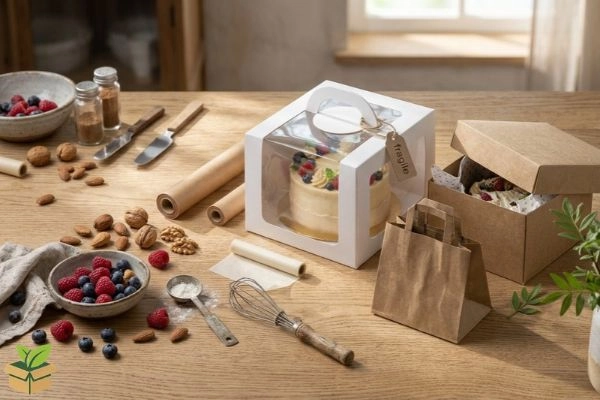

🎂 Introduction: The Cake Was Perfect Until the Doorstep
Every baker knows the sinking feeling. You spend hours baking, levelling, filling and decorating a cake. It looks flawless on your counter. Then the customer sends a photo from their doorstep: the cream has slid to one side, the box lid is stuck to the frosting and the decoration is smudged. The recipe was fine. The cake delivery packaging failed.
Cakes are among the most difficult products to deliver. They are heavy, soft, top-heavy and often covered in delicate decoration. A bumpy road, a sharp turn or a tilted bag can ruin hours of work in seconds. The good news is that most delivery disasters are preventable with the right box, the right board and a few smart habits.
In this guide, we’ll look at why cakes get damaged in transit, how to choose the right box and base, how to secure a cake so it doesn’t slide, and how to handle tricky cases such as tiered, fondant and cream cakes. Everything here is practical and based on how home bakers and bakeries really work, so you can start improving your deliveries today.
🚚 Why Cakes Get Damaged During Delivery
Before fixing a problem, it helps to understand it. Cake damage usually comes from a handful of repeating causes. Once you can name them, you can design your packaging around them.
The Four Common Causes of Cake Damage
The first cause is sliding. A cake sitting loose on a smooth surface moves with every brake and turn. Even a small shift can smear frosting against the box wall. If you often see this, our article on why a cake slides inside the box during delivery explores the issue in more detail.
The second is wrong box size. A box that is too big gives the cake room to travel. A box that is too small squashes decoration against the lid. Either way, the cake loses.
The third is weak packaging materials. A thin box wall or flimsy base bends under weight, and a bending base cracks cakes and splits layers.
The fourth is handling and temperature. Tilted carrying, hot vehicles and humid weather can soften buttercream, melt fillings and cause condensation. Delivery is not only a physical journey. It is an environmental one too.
A Quick Real-World Example
Imagine a home baker who sells chocolate ganache cakes. Her first few deliveries go well, but then three orders in one week arrive with the cake pushed against the box wall. She checks her routine and finds that she uses the same box size for every cake, regardless of diameter, and places each cake straight on the box bottom. After switching to a snug box and adding a proper board, the complaints stop. The cake recipe never changed. Only the packaging system did.
📦 Choosing the Right Cake Box for Safe Delivery
The box is your cake’s travel capsule. Choosing well here solves more than half of your delivery problems.
Get the Size Right
A good rule is to choose a box slightly larger than the cake board, with just enough room to slide the cake in and out without touching the sides. Height matters as much as width. Decorations, toppers and piped details need clearance so the lid does not crush them. If you are unsure how to size your boxes, read our guide on how to choose the right cake box size for a baking business.
For tall, layered or decorated cakes, a standard box may not be enough. Our article on when you need a tall cake box explains how to decide. You can also look at options like the 10x10x12 inch tall cake box or the 12x12x12 inch cake box for extra vertical space.
Pick a Sturdy Material
Look for a firm, corrugated or thick paperboard cake box with strong corners. The box should hold its shape when picked up from the sides. If the walls flex easily, the cake inside will feel every bump. A well-built box with a locking lid also keeps dust and insects out, which matters for food safe packaging for cakes.
Window or Plain Box?
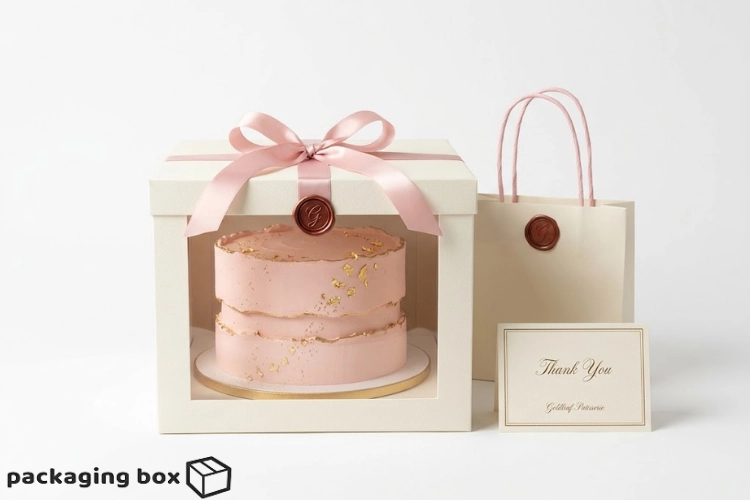
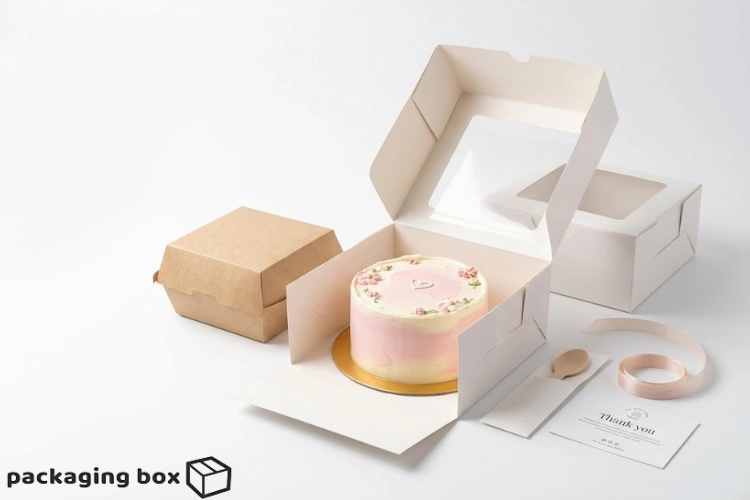
Window boxes let customers see the cake, which is a great marketing tool. Plain boxes give more protection from light and a cleaner, premium look. Neither is wrong, and the choice depends on your brand and your product. For a deeper comparison, see window cake box vs plain cake box. You can browse ready options such as the 10x10x5 inch cake box with transparent window or the full cake boxes collection.
🧱 The Cake Board: The Most Underrated Part of Packaging
Many bakers focus on the box and forget the base. Yet the board is what actually carries the weight. A strong, correctly sized board keeps the cake flat, supports the layers and lets you lift the cake without touching it.
Cake Board vs Cake Drum
A cake board is thin and suits light cakes, cupcakes and small sizes. A cake drum is thicker and sturdier, so it suits heavy, tiered or fondant-covered cakes. If your cake is heavy, a thin board will bend, and a bending base is how cracks begin. You can explore cake boards and cake drum boards to match the board to your cake weight. For everyday cakes, a white cake board is a practical choice. For heavier or premium cakes, a golden cake drum board adds strength and a polished look.
Choose the Right Board Size
Your board should be slightly larger than the cake, usually by about an inch all around, so you can handle it safely and still fit the box. A board that matches the cake exactly leaves no handling room, while a board that is too wide limits fit inside the box.
Add Grip Underneath
A smooth board on a smooth box bottom is a recipe for sliding. Add a small dab of non-toxic edible icing or a thin non-slip layer between the board and the box base. This simple step anchors the cake and removes most movement.
🔒 How to Stop a Cake from Sliding in the Box
This is the question bakers ask most, and the answer is not a single trick. It is a short routine that works when you do every step.
Step 1: Chill the Cake First
A cold cake is a firm cake. Refrigerate your cake before packing, especially buttercream or cream-filled cakes. Chilled frosting is less likely to smudge, and chilled layers are less likely to shift. Let it set fully rather than rushing it into the box.
Step 2: Secure the Board to the Box
Place the cake board in the centre of the box and fix it using a small amount of icing, double-sided tape or a non-slip mat. You are creating one stable unit, so the cake, the board and the box move together rather than separately.
Step 3: Fill the Gaps
Even a snug box can have small gaps around the board. Fill them with folded parchment, rolled paper or a clean piece of foam, so the cake cannot drift. Keep the filler low enough that it does not touch the frosting.
Step 4: Close and Reinforce the Lid
Close the lid fully and make sure the locking tabs engage. For longer journeys, add a small strip of food-safe tape on the sides, avoiding contact with the cake. Some bakers also wrap the closed box in a thin layer of film or paper for extra stability. You can find supporting items like butter paper and cling film rolls for wrapping and protecting sides, board edges and decorations.
Step 5: Pack for the Journey, Not Just the Box
Use a cake bag with handles when handing the cake to a customer, as it helps carry the box level. Choosing a black handle bag for cake boxes also makes the order look professional and gives customers a safer grip.
🍰 Packaging Different Types of Cakes
Not every cake needs the same treatment. A simple sponge and a four-tier wedding cake are very different delivery challenges. Here is how to adapt your approach.
Cream and Buttercream Cakes
These are sensitive to heat and pressure. Keep them chilled, use a box with good clearance and avoid stacking anything on top. Place the box flat in a cool part of the vehicle, not in a hot boot or direct sun.
Fondant Cake Delivery Packaging
Fondant is more stable than whipped cream but has its own problems. It can sweat in humid conditions and crack with rough movement. Use a strong drum, allow extra box height for decorations and avoid sealing the cake in airtight plastic, which can trap moisture. A calm, level journey matters more than anything else here.
Tiered Cakes
Tiered cakes are the hardest to transport. The safest method is to deliver tiers separately and stack them on site, using internal supports such as dowels and boards. If you must transport them assembled, use a tall, strong box and keep the journey short. Our guide on tiered wedding cake packaging in Pakistan covers this in detail.
Bento and Small Cakes
Bento cakes are small, trendy and easy to damage because they often have thin edges and playful details. Compact boxes with a snug fit work best. Read more about bento cake packaging trends in Pakistan for ideas that suit this style.
Kids’ and Smash Cakes
Birthday and smash cakes are usually small, bright and heavily decorated. A secure box with a window can show the design without exposing it. Take a look at our guide to the best smash cake packaging box for kids’ birthday cakes for practical options.
📊 Quick Comparison: Packaging Materials for Cake Delivery
Different materials suit different jobs. The table below gives you a quick view of what each item does and when to use it.
| Packaging Item | Main Job | Best For | Watch Out For |
|---|---|---|---|
| Corrugated or thick cake box | Protects shape and blocks crushing | All cakes, especially heavy ones | Thin walls bend easily |
| Cake board | Supports light cakes | Sponge, cupcakes, small cakes | Bends under heavy weight |
| Cake drum board | Carries heavy loads | Fondant and tiered cakes | Needs a larger box |
| Non-slip layer or icing dab | Stops sliding | Every delivery | Use food-safe materials |
| Parchment or butter paper | Protects sides and fillings | Delicate and iced cakes | Keep it away from wet frosting |
| Cake bag with handles | Keeps the box level when carried | Customer pickup and courier | Poor-quality handles can tear |
In short, a good delivery setup is a system. The box, board, grip and handling bag each solve a different problem, and they work best together.
🌡️ Keeping a Cake Fresh and Safe in Transit
A cake that arrives intact but warm and soft is still a poor delivery. Freshness and food safety are part of good packaging.
Control the Temperature
Heat is the enemy of buttercream, cream and chocolate. Chill the cake well before packing and keep delivery times as short as you can. In hot weather, avoid leaving boxes in a parked vehicle. Insulated bags or cool storage can help on longer routes.
Manage Moisture
Moisture can soften boxes and dull decorations. Use moisture-resistant, food-safe packaging and avoid leaving the cake in a damp environment. A grease-resistant board and a clean, dry box prevent stains and keep the presentation neat.
Think About Hygiene
Customers care about cleanliness, especially for celebration cakes. A closed, clean box with a tight lid signals that the cake has been handled carefully. Food-safe materials also protect your reputation. For more on this area, our food packaging guide for Pakistan offers helpful background.
🛵 Smart Delivery Habits That Protect Your Cake
Great packaging still needs good handling. A few habits take almost no time and prevent most disasters.
Handle the Box Properly
Always carry the box from the bottom with both hands, not by the lid or one side. Keep it level and avoid sudden tilts. When placing it in a car, put it on a flat surface such as the floor of the back seat or a non-slip mat, not on a seat that slopes.
Brief Riders and Couriers
If you use a delivery rider, tell them the box must stay flat and upright. Add a simple “This Side Up – Fragile” label to remind them. Some bakers place a short instruction card inside the bag as well. It costs almost nothing and avoids misunderstandings.
Tell the Customer How to Care for the Cake
Include a short note with storage and serving advice, for example, to keep the cake chilled, to remove the box lid gently and to take it out of the fridge a short time before serving. This reduces complaints and shows professionalism.
A Practical Example
Picture a small bakery that delivers about twenty cakes each weekend. They standardise their process: chill the cake, place it on a drum, fix it with a dab of icing, close a snug box, add a “fragile” label and put it in a handle bag. A rider delivers it flat on a non-slip mat. After a month of following this routine, they notice far fewer complaints and more repeat orders. The routine is simple, but the results are visible.
🌿 Making Cake Packaging Eco-Friendly Without Losing Strength
Many customers now prefer sustainable packaging, and bakers can respond without weakening protection. The key is to choose materials that are strong first and sustainable second, never the other way round.
Look for recyclable paperboard and kraft options that still hold their shape. Right-size your boxes so you use less material, and avoid unnecessary plastic wrap where a paper alternative works. A sturdy box that survives delivery is also more sustainable than a flimsy one that needs a remake. For ideas, read our guide on eco-friendly custom packaging boxes.
💼 Buying Cake Packaging in Bulk and Branding It
As your orders grow, buying in bulk helps you control costs and stay consistent. It also gives you a chance to build your brand through packaging.
Bulk Buying Tips
Order sizes that match your best-selling cakes first, and test samples before committing to large quantities. Check box strength, lid fit and print quality. Consistency matters because a box that fits well in one batch but loosely in the next causes daily problems. Our guides on where to buy wholesale packaging in Pakistan and bulk packaging order minimums and costs help you plan wisely.
Branding Your Cake Boxes
A custom-printed box with your logo turns delivery into marketing. Customers see your brand at the door, in photos and at the party. If you want to explore this, see our guide to custom bakery packaging boxes in Pakistan and our overview of bakery packaging in Pakistan. For a broader look at design options, read about cake boxes that are stylish and sturdy for celebrations.
🛠️ A Simple Delivery Checklist You Can Use Today
Before every cake leaves your kitchen, run through this short list:
- Is the cake chilled and set?
- Is the board strong enough for the cake’s weight?
- Is the box size snug, with enough height for decorations?
- Is the cake fixed to the board and the board fixed to the box?
- Are gaps filled and the lid fully locked?
- Is the box labelled “fragile” and placed in a handle bag?
- Does the rider or customer know to keep it flat?
Print this list and keep it near your packing area. A repeated routine is the most reliable way to protect your cakes, and it takes less than two minutes.
✅ Conclusion: Good Packaging Protects Your Reputation
Cake delivery packaging is not an extra cost. It is part of the product. A strong box, a sturdy board, a simple grip method and careful handling can turn risky deliveries into reliable ones. When a cake arrives neat, fresh and beautiful, customers remember it, post about it and order again.
Start with the basics: right-size your box, upgrade your board and chill every cake before packing. Then refine your routine as you learn what works for your menu, whether it is fondant, cream, bento or tiered cakes. Small improvements add up quickly, and each safe delivery strengthens your brand.
🎁 Ready to Upgrade Your Cake Delivery Packaging?
Explore our complete range of cake boxes, pair them with strong cake boards and cake bags, and give every order the safe, professional delivery it deserves. For more baker-friendly guides, visit the Packaging Box blog.
❓ Frequently Asked Questions
How do you package a cake for delivery without ruining it?
Chill the cake, place it on a sturdy board, fix the board to a snug cake box, fill any gaps and lock the lid fully. Carry the box flat and keep the journey short.
How do you stop a cake from moving in the box?
Secure the board to the box base using a dab of icing, double-sided tape or a non-slip layer. Then fill small gaps around the board with folded parchment or foam so the cake cannot slide.
What type of box is best for cake delivery?
A strong, snug cake box made from thick paperboard or corrugated material works best. It should have a locking lid and enough height for decorations. Taller boxes suit layered or decorated cakes.
Can you deliver a tiered cake without damage?
Yes, but it needs planning. The safest option is to transport tiers separately and stack them on site. If assembled, use internal supports, a strong drum and a tall box, and keep the trip short.
How do you keep a cake fresh during delivery?
Chill the cake before packing, use a clean and dry food-safe box and avoid heat. Deliver quickly, keep the box flat and out of direct sun, and use insulated bags for longer trips.
What is the difference between a cake board and a cake drum?
A cake board is thin and suits light cakes, while a cake drum is thicker and carries heavy, tiered or fondant cakes. Choosing the right base prevents bending and cracking in transit.



💬 0 Comments
Leave a Comment