
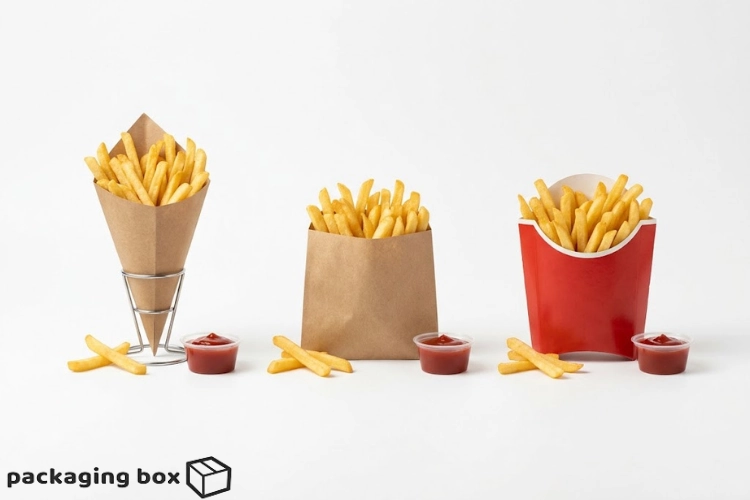

Choosing the right fries packaging can quietly make or break your fast food business. A perfectly fried batch of fries can arrive limp, greasy and lukewarm if the container works against it. The same batch can arrive crisp, hot and Instagram-worthy if the packaging is right. Cone, pocket or box? Each one has a loyal fan base, and each one solves a different problem.
In this guide, we compare all three formats on the things that matter: crispiness, portability, cost, branding and delivery performance. You will see real-world examples, a side-by-side table and a simple framework for picking the best packaging for fries in your own kitchen, cart or cloud kitchen.
🍽️ Why Fries Packaging Matters More Than You Think
Fries are one of the most fragile foods in any menu. They lose heat fast, trap steam easily and soak up oil if the container holds moisture against them. A burger can survive a bumpy ride. Fries cannot. That is why french fries packaging deserves the same attention as your recipe.
Think about the last time you opened a delivery bag and found soggy fries. You probably blamed the restaurant, not the weather or the rider. Customers do the same. They rarely say “the packaging failed.” They say “the fries were bad.” Your container is part of your product, and it shapes the first impression before the first bite.
Packaging also affects your numbers. A container that is too large wastes money and makes portions look small. One that is too tight crushes fries and ruins presentation. A well-matched one controls portions, speeds up service and gives you a free branding surface every time a customer walks down the street holding your logo.
🌡️ The Three Enemies of Fries
Every fries container is fighting three problems:
- Steam: trapped moisture turns crisp edges soft within minutes.
- Grease: oil that cannot escape or be absorbed leaks through weak paper.
- Heat loss: fries cool quickly, and cold fries lose most of their appeal.
The best container manages all three. Keep them in mind as we compare each format.
🔍 Understanding the Main Fries Packaging Types
Before comparing, let’s look at what each format actually is and where it shines. These are the most common fries packaging types in the fast food industry today.
🍦 Fries Cone Packaging
A fries cone is a conical holder, usually made of kraft paper or paperboard, that stands in a tray, stand or cup holder. Think of the Belgian street-food style: a paper cone packed with thick-cut fries and topped with sauce. It looks playful and photographs beautifully.
The cone shape is smart for airflow. Because the sides are open at the top and the base is narrow, steam can rise out instead of sitting at the bottom. Customers can eat one-handed while walking, which makes it a natural fit for markets, festivals and food streets.
The trade-off is stability. A cone cannot stand alone on a table, so you need a stand, holder or tray. Cones also pack fewer fries per square inch than boxes, so they are better for single servings than family portions. If you want to see a ready-to-use option, our kraft fries cones are built for exactly this style of service, and the kraft fries cones guide explains sizing and use cases in detail. For a complete serving combo, the French fries cone with ketchup pairs the fries and the dip in one neat unit.
👜 Fries Pocket Packaging
A fries pocket is a flat, open-top paper sleeve, like a small bag with a wide mouth. It is the quiet workhorse of quick service restaurants. It is light, cheap, easy to store flat and fast to fill.
Pockets are excellent for portion control because the size is fixed and clear. A staff member can scoop, drop and serve in a couple of seconds. They are also easy to slip into a delivery bag next to a burger without taking up much room. When you need speed during rush hour, few formats beat them.
Their weakness is structure. A pocket can slump or fold if the fries are heavy, and a very hot, oily batch can soften thin paper if the stock is poor. Quality grease-resistant paper makes a big difference here. You can explore the range in our fries pocket collection or look at the kraft fries pocket directly. We also wrote a practical comparison on nugget bags vs fries pockets if your menu includes both.
📦 Fries Box Packaging
A fries box is a folded carton, usually made of paperboard or cardboard, with a sturdy base and walls that hold their shape. This is the format most people picture when they think of a big-brand fast food meal. The red McDonald’s fries carton is probably the most recognisable example in the world.
Boxes shine at stackability, durability and display. They stand upright on a tray, survive being squeezed into a bag and give you large flat panels for printing. They are also the easiest format for larger portions and sharing sizes. A good cardboard fries carton feels premium in the hand, and that matters when you are charging a premium price.
The drawbacks are cost and storage. Boxes are usually more expensive per piece than pockets, and they take up more shelf space before use. They can also trap more steam if the design has no vents, which hurts crispiness on longer delivery trips.
🥤 Other Options Worth Knowing
Cones, pockets and boxes are not your only choices. Some outlets use a fries cup, like the thick paper cup Five Guys is known for, which gives a generous, scoopable serving. Others use a fries sleeve or a boat-style tray, which suits dine-in and sharing platters. Our disposable wooden boat serving trays are a good example for casual dine-in and event service. These are strong supporting formats, but the three main styles cover most real-world needs.
⚔️ Cone vs Pocket vs Box: The Head-to-Head Comparison
Now for the part you came for. Here is how the three formats stack up on the factors that matter most to food businesses. Use this table as a quick reference, then read the notes below it.
| Factor | Cone | Box | |
|---|---|---|---|
| Crispiness retention | Very good (open airflow) | Good (depends on paper) | Moderate (needs vents) |
| Heat retention | Low to moderate | Low to moderate | Good (thicker walls) |
| Portability | Excellent (one-handed) | Very good | Good |
| Delivery performance | Fair (needs a stand) | Very good | Excellent |
| Cost per unit | Low to medium | Lowest | Medium to high |
| Brand visibility | High (unique look) | Medium | Very high (large print area) |
| Best use | Street food, events | Fast food, QSR | Delivery, dine-in, combos |
As the table shows, there is no single winner. Each format is strongest in a different situation.
🔥 Crispiness and Heat
If your top priority is the best packaging to keep fries crispy, the cone usually has the edge for short, walk-away service because steam escapes quickly. The pocket is close behind, especially with good grease-resistant paper. A box holds heat better thanks to thicker walls, but without ventilation holes it can create a steamy little sauna in the bottom corner.
A practical example: a food truck serving fries hot out of the fryer to someone who eats within two minutes will get the best result from a cone. A restaurant sending fries on a 25-minute delivery ride should look at a vented box or a well-built pocket tucked beside the main item.
🛵 Delivery and Takeaway
For fries packaging for delivery, boxes win on protection. They hold their shape under pressure, stack neatly and rarely collapse in a bag. Pockets are the second choice because they are slim and flexible, though they can be squashed. Cones are the weakest for delivery because they need to stay upright, which is hard in a rider’s bag.
If you also sell burgers, read our guide on burger packaging that doesn’t get soggy. The same moisture-control principles apply, and pairing the right burger and fries packaging keeps the whole meal in better shape.
💰 Cost and Margins
The cheapest fries packaging is almost always the pocket, because it uses less material and ships flat. Cones come next, followed by boxes. But the cheapest unit is not always the cheapest choice. If a flimsy pocket leads to refunds, bad reviews or lost repeat customers, the savings disappear quickly.
Think in terms of cost per happy customer, not cost per piece. A slightly stronger container that prevents one complaint a day easily pays for itself.
🎯 Which Fries Packaging Is Best for Your Business?
So, which fries packaging is best? The honest answer depends on how and where you serve. Here is how it plays out across common business types.
🚚 Street Food Stalls and Food Trucks
Cones are the natural choice here. They are fun, easy to hold and visually strong. A stall with a row of cones in a stand looks professional and draws attention. For ideas on keeping your setup affordable and clean, see our guide to affordable hygienic street food packaging.
🏪 Quick Service Restaurants and Cafés
Pockets and boxes both work. Pockets suit high-volume counters where speed matters most. Boxes suit meal combos where the fries sit in a tray next to a burger and drink. Many QSRs use both: pockets for regular sizes and boxes for large or shared portions.
☁️ Cloud Kitchens and Delivery-First Brands
Choose boxes with vents or sturdy pockets with excellent grease resistance. Your food travels farther and sits longer, so durability matters more than looks. Our overview of food packaging for restaurants and cloud kitchens covers the wider setup, including containers, bags and sauces.
🎉 Events, Festivals and Pop-Ups
Cones and boat trays dominate here. Guests are standing, walking and holding drinks, so one-handed eating is a real advantage. Cones with a dip on the side feel festive and easy to share.
🌱 Small Businesses on a Budget
If you are just starting, begin with pockets and one sturdy box size for combos. This keeps inventory simple and costs low. Our guide on affordable food packaging for small businesses offers more ways to protect your margins while you grow.
A quick-pick summary:
| Your Situation | Best Pick | Why |
|---|---|---|
| Walk-up street stall | Cone | Fun, one-handed, great airflow |
| Busy QSR counter | Fast, cheap, portion-friendly | |
| Delivery-heavy menu | Box | Strong, stackable, protective |
| Festival or event | Cone or boat tray | Easy to hold and share |
| Premium dine-in | Box or cup | Sturdy, branded, generous portion |
🌿 Materials, Food Safety and Sustainability
A good shape is only half the story. The material decides whether fries stay crisp and whether your packaging is safe to use.
📄 Material Basics
Most fries containers are made from kraft paper, paperboard or corrugated board. Kraft is popular because it feels natural and takes print well. Paperboard offers a smoother surface and more rigidity. Some containers use a thin PE-coated paper layer to resist grease, which works well but can limit recycling options.
Look for grease-resistant paper that blocks oil without needing heavy plastic coatings. Test it yourself: fill a sample with fresh, hot fries, wait ten minutes and check the outside for dark oil spots. If you see them, that stock will look messy in a customer’s hands.
✅ Food Safety Standards
Any packaging touching food must be food-grade. Ask your supplier whether materials meet recognised food safety standards and whether inks and adhesives are food-safe. This matters most for printed designs, where ink placement should avoid direct contact with food wherever possible. Our guide to choosing food packaging walks through the checks worth making before you place an order.
♻️ Eco-Friendly Choices
More customers now notice and care about sustainability. Biodegradable fries packaging and compostable packaging can set you apart, especially with younger buyers. Kraft cones and pockets are generally an easy step toward eco-friendly food packaging. If this is part of your brand story, explore our post on biodegradable fast food packaging solutions and our kraft food packaging range.
One honest note: “eco-friendly” claims should be accurate. If a product has a plastic lining, do not label it compostable. Customers and regulators are increasingly alert to vague green claims, and trust is hard to win back.
🎨 Custom Fries Packaging and Brand Visibility
Your fries container travels. It sits on tables, gets carried down streets and appears in customers’ photos. That makes custom fries packaging one of the most cost-effective forms of marketing a food brand can use.
A simple one-colour logo on a kraft pocket can make a stall look established. A full-colour printed box can make a new brand feel like a chain. The key is consistency: use the same colours, fonts and tone across your fries pockets, burger boxes, bags and cups so customers recognise you instantly. For a deeper look at this strategy, read our post on brand-focused packaging manufacturing and our guide to custom kraft food boxes.
🥫 Do Not Forget the Dip
Fries and sauce are a package deal. A container with no safe place for ketchup or mayo leads to messy fingers and spilled bags. Consider pairing your fries with a disposable sauce dip container or a dip sauce cup with an attached lid. They keep sauces separate and help maintain spill-proof and leak-proof delivery.
📦 Ordering in Bulk
Once you know your preferred format, buying in volume lowers your per-unit cost. Understand minimums before you commit by reading our bulk packaging orders and minimum quantity guide, and see where to buy wholesale packaging in Pakistan if you are still comparing suppliers.
✅ How to Choose Fries Packaging: A Simple Checklist
If you are still deciding, run through these questions before you order. They take five minutes and can save months of trial and error.
- Where will customers eat? Walking and standing favours cones. Sitting and sharing favours boxes.
- How far will it travel? Longer trips need boxes or sturdy pockets.
- What portion size do you sell? Small and medium suit pockets and cones, while large and sharing sizes suit boxes.
- How much print area do you need? Boxes offer the most space for branding.
- What is your budget per serving? Pockets are the leanest option.
Order small samples of two formats, test them with real fries on a real delivery route, and let the results guide you. It is the most honest research you can do, and the data costs very little.
🏁 Conclusion: The Best Fries Packaging Is the One That Fits Your Service
There is no universal champion in the cone vs pocket vs box debate. Cones win on fun, airflow and street-food charm. Pockets win on speed, cost and simplicity. Boxes win on protection, stackability and brand presence. The smartest food businesses often use more than one format, matching each to a specific service style.
Start with how your customers actually receive and eat your fries, then work backward to the container. Pair it with food-grade, grease-resistant material, make sure it is safe and tidy to hold, and add smart branding so every serving works as a small advertisement.
🚀 Ready to Upgrade Your Fries Packaging?
Explore our fries pocket collection, browse the kraft fries cones, or see our full food packaging solutions in Pakistan to build a complete, matching set for your menu. Contact the PackagingBox team today for samples, custom printing and bulk pricing.
❓ Frequently Asked Questions (FAQs)
🍟 Which fries packaging is best overall?
It depends on your service style. Cones are best for street food and events, pockets for fast service and low cost, and boxes for delivery and dine-in. Many businesses use a mix.
🍟 What is the best packaging to keep fries crispy?
Open-top formats like cones and well-built pockets release steam faster, which helps crispiness. If you use a box, choose one with ventilation and grease-resistant lining.
🍟 What is the cheapest fries packaging for a small business?
Paper fries pockets are usually the most affordable option because they use less material and store flat. Always check the grease resistance so low cost does not become a quality problem.
🍟 Is fries cone vs box packaging better for delivery?
Boxes are generally better for delivery. They keep their shape, stack well and protect fries from being crushed. Cones need to stay upright, which is difficult in a delivery bag.
🍟 Are kraft paper fries containers food safe?
Yes, when they are made from food-grade materials and certified inks and coatings. Always confirm with your supplier that the packaging meets food safety standards.
🍟 Can I get custom printed fries packaging in bulk?
Yes. Custom printed cones, pockets and boxes can be ordered in bulk, which lowers the cost per unit and strengthens your branding.



💬 0 Comments
Leave a Comment