
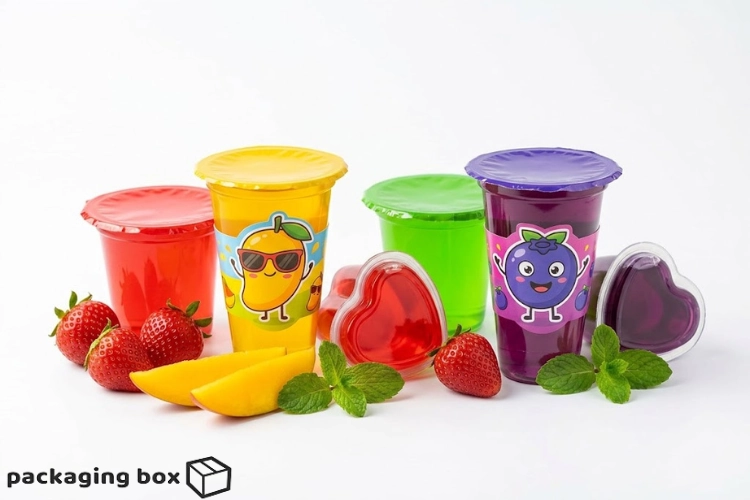

A jelly cup for kids is never just a dessert. It’s a lunchbox surprise, a birthday party favor and a “please, can I have one?” moment at the supermarket checkout. Whether you run a home dessert brand or a growing food business, kids jelly cup packaging decides whether a parent picks your product up, and whether a child begs for it again. In this guide, you’ll find practical jelly cup packaging ideas that balance safety, fun and shelf appeal, so you can build safe jelly cup packaging for kids that both parents and children love.
🍮 Why Packaging Matters So Much for Kids’ Jelly Cups
Children choose with their eyes. Parents choose with their instincts. A good package has to win over both within a few seconds.
Think about a typical supermarket aisle. A child spots a bright cup with a smiling fruit character. The parent turns it over and looks for an ingredient list, an expiry date and a firmly sealed lid. If any of those feels uncertain, the cup goes back on the shelf. That’s why jelly cups for children need packaging that is attractive and trustworthy at the same time.
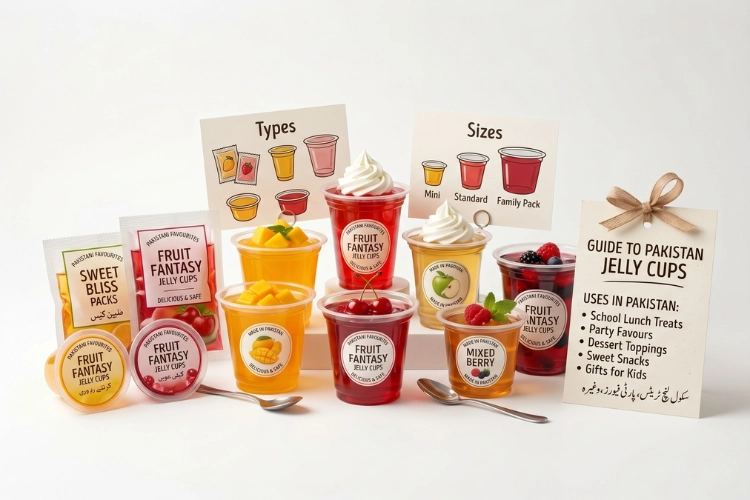
Packaging also does quiet work behind the scenes. It keeps the jelly fresh, stops leaks in school bags and protects the product during transport. A cracked cup or a bulging lid can cost you a customer for good. If you’re still learning the basics, our guide on what a jelly cup is, including its types, sizes and uses in Pakistan is a good starting point before you pick a format.
💡 The Three Jobs of Great Jelly Cup Packaging
Every strong pack does three things. It protects the product, communicates what’s inside, and attracts the buyer. Safety comes first, because no amount of cute design can fix a package parents don’t trust. The next sections follow that order.
🛡️ Safety First: Building Safe Jelly Cup Packaging for Kids
Safety is the foundation of any food product made for children. Parents read labels more carefully than ever, and they notice small details like lid quality and print clarity.
✅ Choose Food-Grade, BPA-Free Materials
The cup itself should be made from food-grade plastic, usually polypropylene (PP) or PET. These materials are widely used for dessert cups because they are lightweight, clear and stable at normal storage temperatures. When sourcing, ask your supplier whether the cups are food-grade jelly cups and whether the resin is BPA-free. A reliable supplier will answer clearly and share documentation without hesitation.
If you want to understand why BPA-free matters in food packaging more broadly, this article on food-grade, BPA-free trays explains the logic well. The same principle applies to dessert cups. Parents increasingly ask about non-toxic packaging materials, and being able to say “yes” builds instant credibility.
⚠️ Respect the Choking Hazard Rules
This is the most important safety point in this guide. Jelly in small cups can be a choking risk for young children if the texture is too firm or the jelly is too elastic. Some jelly products, especially those made with konjac, have been restricted in several countries for exactly this reason.
So think about safety in two parts:
- The recipe: Use a soft, easy-to-break texture, and avoid ingredients known to be restricted in jelly mini-cups.
- The packaging: Add a clear label with age guidance and a simple instruction such as “Eat with a spoon” or “Adult supervision recommended for young children.”
Packaging can’t fix a risky recipe. But it can communicate responsibly, and that matters to both regulators and parents.
🔒 Lids, Seals and Tamper Evidence
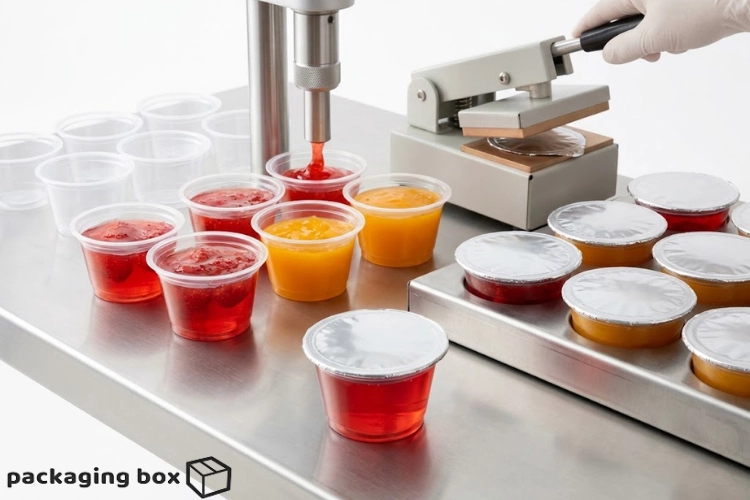
The lid is the most-touched part of the pack. A peel-off lid jelly cup uses a heat-sealed film that shows instantly if someone has opened it, which makes it a strong choice for tamper-proof packaging. For kids, easy-open jelly cups matter too. A tab that is too stiff leads to spills and frustration, while one that is too loose risks leakage.
A good child-safe lid design has smooth edges, no sharp corners and a seal that opens with a gentle pull. If you’re setting up filling and sealing yourself, the step-by-step guide on how to fill and seal jelly cups for retail sale walks you through getting a leak-proof jelly cup every time. A clean seal protects freshness preservation and extends shelf life, which matters for retail.
🧼 Hygiene, Inks and Compliance
Hygiene starts at production. Cups should be stored in clean, covered cartons and handled with gloves. If you need disposable gloves for your filling line, you’ll find disposable gloves in our catalog.
Printing also deserves attention. Any ink that sits on the outer surface should be non-toxic ink suitable for food packaging. Ask your printer to confirm this, because kids touch, squeeze and sometimes chew on packaging.
On the regulatory side, aim to follow recognized standards such as ISO, HACCP and, where relevant to your market, FDA guidance, along with local food authority requirements in Pakistan. You don’t need to become a compliance expert overnight. You just need to ask suppliers the right questions and keep your paperwork organized.
🎨 Attractive Jelly Cup Design That Kids Notice
Once safety is covered, you can have fun. Design is where your jelly cup packaging design ideas really come to life.
🌈 Use a Vibrant Color Palette (Wisely)
Bright colors packaging grabs attention quickly, especially on crowded shelves. Strawberry red, mango yellow, lime green and sky blue all signal fruit and fun. The trick is restraint. Pick two or three core colors per flavor and keep the rest clean. Too many shades make a pack look messy, and messy looks cheap to parents.
A simple rule works well: one flavor, one color family. Kids learn it fast, and repeat buyers can find their favorite in seconds.
🍓 Fruit Imagery and Playful Illustrations
Fruit jelly cups sell better when the fruit is visible and appetizing. Use bold, simple fruit imagery rather than detailed photos. Add playful illustrations like a grinning strawberry or a sleepy banana, and you give the product personality.
Many successful brands go one step further with mascot characters. A single friendly mascot, repeated across all flavors, builds brand recognition and makes your range feel like one family. Just make sure the characters are original or properly licensed, since using cartoon characters on packaging without permission can lead to legal trouble.
👀 Transparent Cup Design
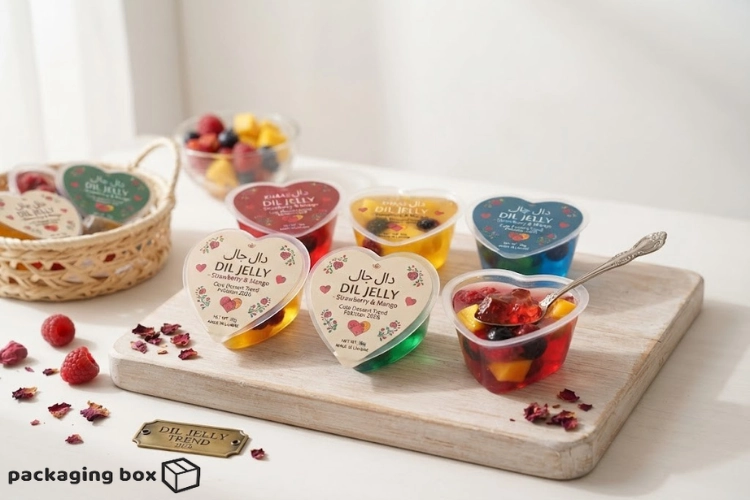
A transparent cup design shows off the jelly’s color, clarity and any fruit pieces inside. Kids love seeing what they’re about to eat, and parents appreciate being able to check the product. A clear body with a printed sleeve or colorful lid gives you the best of both worlds. It also boosts jelly cup shelf appeal, because the product itself becomes part of the design.
💖 Shapes That Create “Wow” Moments
Shape is one of the easiest ways to stand out. A heart-shaped cup works beautifully for gifting and celebration desserts, and the heart jelly cup packaging trend shows how a simple shape change can turn a basic dessert into a social-media favorite. You can see the format in our heart jelly cup listing.
Chocolate-dipped formats add a treat-like feel, and the choc dip jelly cup trend explains why they work so well for kids and parties. Here is the choc dip jelly cup itself. For a more playful, hand-held experience, try the jelly cup cone dessert packaging idea, supported by the jelly cup cone product.
🎭 Minimalist vs. Fun: Which Should You Choose?
Not every brand needs cartoon overload. A minimalist pack with clean typography and soft colors can feel premium and “parent-approved.” A fun pack with mascots and bold patterns appeals directly to children. Many brands blend the two: a clean layout with one playful illustration.
Ask yourself who makes the final decision. If parents buy for toddlers, lean calm and clear. If older kids pick their own snacks, lean bold and playful.
📏 Choosing the Right Size and Format
Size affects safety, portion control and price. A tiny cup is easy for a lunchbox, while a larger one feels like a proper dessert. Single-serve jelly cups and portion-controlled dessert cups also help parents manage sugar intake, which is a growing concern.
Here’s a quick comparison to help you decide:
| Format | Best For | Packaging Tip |
|---|---|---|
| 25ml mini cup | Samples, party favors, small hands | Use a tight peel-off seal and clear age guidance |
| 90ml cup | Lunchboxes, retail shelves, single servings | Add a printed sleeve with flavor and nutrition details |
| Heart or shaped cup | Gifting, birthdays, seasonal sales | Pair with a gift box or ribbon for extra appeal |
| Cone or choc-dip format | Trend-driven dessert stalls, events | Use a stand or tray to keep cups upright and neat |
This table shows that the best format depends on your goal, whether that’s sampling, retail or gifting. If you’re torn between the two most popular sizes, our comparison of the 25ml vs 90ml jelly cup and which size sells more breaks down the numbers. You can browse the 25ml jelly cup and the 90ml jelly cup directly, or explore the full jelly cup category.
For slightly more indulgent desserts like pudding, mousse or layered treats, dessert cups with lids offer extra room and a snug cover.
🎒 Practical Packaging Ideas for Real-Life Situations
Great packaging solves real problems. Here are three scenarios where smart kids dessert packaging makes a visible difference.
🥪 School Lunchbox Snacks
A lunchbox-friendly snack has to survive a bumpy ride in a school bag. That means a spill-proof sealing system, a sturdy cup that doesn’t crush easily and a size that fits next to a sandwich. Stackable packaging also helps parents pack and store multiple cups neatly.
Here’s an example. Imagine a three-pack of 90ml strawberry, mango and lime jelly cups in a printed paper sleeve. The sleeve carries the mascot, the flavor names and a note such as “Perfect for lunchboxes.” Parents see convenience, kids see colors, and the sleeve keeps the cups together. That’s a small design choice with a big impulse buying effect.
🎂 Birthday Party Treats and Gifting
For birthday party treats, presentation is everything. A set of six mini cups in a clear-lid box looks like a mini dessert table. Add a name tag or a themed sticker, and it becomes a personalized favor. Gifting and party packs also allow a higher price per unit, because the buyer is paying for the experience as well as the jelly.
If you’re also working on celebration desserts, our guide to smash cake packaging for kids’ birthdays pairs nicely with a jelly cup party set, and you’ll find ideas for window cake boxes and cupcake boxes in the same family of products.
🏪 Packaging for Retail and Supermarkets
On a supermarket shelf, you have only a moment to stand out. This is where shelf impact really counts. Use a bold front panel, a clear flavor name and a visible seal. Keep the barcode, expiry date and batch code easy to find and print them clearly. Retail buyers also value consistent pack sizes, because they simplify shelving and stock counts.
If you’re planning to sell at scale, the jelly cup business guide for Pakistan covers the commercial side, and our overview of bulk packaging orders, minimum quantities and costs helps you budget properly.
🏷️ Labels That Build Parents’ Trust
A pretty pack with a vague label raises red flags. Parents want facts, and they want them quickly.
A strong label includes the product name, flavor, net weight or volume, a clear packaging labels and ingredients list, allergen information, nutrition details where required, the expiry date and batch code, storage instructions and your business contact details. Use a readable font size and strong contrast between text and background. Tiny gray text on a pastel cup might look elegant, but it frustrates buyers.
This is also where EEAT thinking helps your brand. When you show your production details, certifications and contact information openly, you signal experience and trustworthiness. Parents’ trust isn’t built by slogans. It’s built by clear, honest information.
🌱 Eco-Friendly Jelly Cup Packaging and Sustainable Trends
More parents now ask what happens to packaging after the snack is finished. Eco-friendly jelly cup packaging doesn’t always mean switching materials overnight, but small steps count.
Start with recyclable food containers and mark them clearly with recycling guidance. Reduce unnecessary layers, since a simple paper sleeve can replace a bulky outer box. For gifting and outer packaging, consider kraft options, such as a kraft multipurpose box with handle, which looks natural and feels premium. If sustainability is a priority for your brand, the eco-friendly custom packaging boxes guide offers more direction. Following sustainable packaging trends also gives you a story to tell on the pack itself.
✅ Quick Checklist Before You Finalize Your Packaging
Before you approve any design, run it through this table.
| Check | What to Confirm |
|---|---|
| Material | Food-grade PP or PET, BPA-free, supplier documentation available |
| Seal and lid | Leak-proof, easy to open, tamper-evident |
| Safety | Soft texture, age guidance, no restricted ingredients |
| Design | Clear flavor identity, kid-friendly visuals, legible text |
| Label | Ingredients, allergens, expiry date, batch code |
| Sustainability | Recyclable materials and minimal extra layers |
Use this as a final review. If every row gets a “yes,” your packaging is ready to face both kids and parents.
For a wider view of how this fits into your overall product range, read our guides on how to choose food packaging in Pakistan and choosing the right packaging supplier. You can also browse our food packaging solutions or buy wholesale packaging in Pakistan.
🎉 Conclusion: Make Every Jelly Cup a Safe and Happy Moment
A great jelly cup for kids starts with trust and ends with a smile. Safety comes first: food-grade, BPA-free materials, secure lids, honest labels and responsible texture choices. Once that foundation is solid, color, shape, mascots and clever formats turn an ordinary dessert into something kids ask for by name. The best kids jelly cup packaging is simple, safe and a little bit magical.
Ready to create your own jelly cup range? Explore our full jelly cup collection, choose the size that suits your brand, and start building packaging that parents trust and kids love. For custom orders and bulk quotes, visit PackagingBox.pk and talk to our team today.
❓ Frequently Asked Questions (FAQs)
What is the safest packaging for a jelly cup for kids?
The safest option is a food-grade, BPA-free PP or PET cup with a heat-sealed peel-off lid. It should be tamper-evident, leak-proof and easy for children to open. Pair it with a clear label that includes ingredients, allergen details and age guidance.
Are jelly cups safe for toddlers?
It depends on the jelly’s texture and the child’s age. Jelly that is firm or elastic can be a choking risk for young children, so a soft texture and adult supervision are important. Always follow the age guidance on the label.
Which size jelly cup is best for children?
Smaller cups such as 25ml suit sampling and party favors, while 90ml cups work well for lunchboxes and retail. Smaller portions also help parents manage sugar intake.
How can I make jelly cup packaging more attractive?
Use a bright but simple color palette, playful fruit illustrations, a friendly mascot and a transparent cup design. Shapes like hearts or cones, plus printed sleeves, add extra shelf appeal.
What information should be printed on kids’ jelly cup labels?
Include the product name, flavor, volume, ingredients, allergen information, expiry date, batch code, storage instructions and your contact details. Clear, readable text builds parents’ trust.
Is eco-friendly jelly cup packaging possible?
Yes. You can use recyclable cups, minimal paper sleeves and kraft outer packaging. Even small changes make your brand look more responsible.


💬 0 Comments
Leave a Comment