

If you’re setting up a food brand, a coffee line, or any product that ships in flexible packaging, chances are you’ve already hit this fork in the road: standup pouch printing with labels, or going straight for custom print. Both routes get your branding onto the pouch, but they come with very different cost structures, turnaround times, and long-term implications for your business. This guide breaks down exactly where the money goes in each method, so you can stop guessing and start deciding with confidence.
Here’s the short version before we dive deep: labels are almost always cheaper upfront, but custom printing becomes more cost-effective as your order volume grows. The right choice depends entirely on where your brand currently stands — are you testing a new product, or scaling an already-proven one? Let’s unpack this properly.
📦 What Standup Pouch Printing Actually Means
Before comparing costs, it helps to understand what “printing” on a standup pouch really involves. A standup pouch — sometimes called a stand-up bag — is a flexible packaging format that sits upright on shelves, commonly used for coffee, snacks, pet food, spices, and other dry or semi-liquid products. If you’re new to this packaging style altogether, our complete beginner’s guide to standup pouches walks through the materials, structure, and typical use cases in detail.
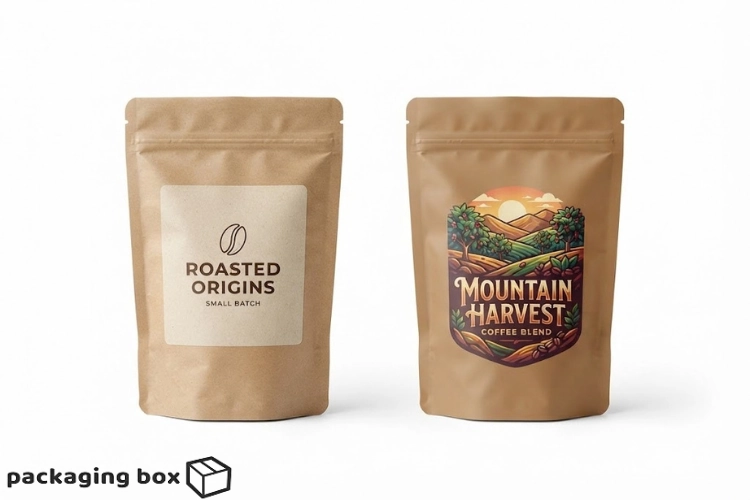
When we talk about “printing” a pouch, we’re really talking about how your brand name, logo, nutritional information, and design elements get applied to that pouch surface. There are two broad paths: applying a pre-printed label onto a plain pouch, or having the design directly printed onto the pouch film itself during manufacturing. Both achieve the same visual goal, but the production process behind them — and therefore the cost — couldn’t be more different.
🏷️ Label Printing on Standup Pouches – How It Works
Standup pouch label printing starts with a plain, unbranded pouch — usually in kraft, white, black, or clear finish — onto which a separately printed label is applied. The label itself is produced using digital printing technology, which doesn’t require expensive printing plates or long setup processes. This is exactly why label-based packaging has become the go-to choice for startups and small-batch producers testing the waters.
The biggest advantage here is flexibility. Because the pouch and the label are produced independently, you can order a plain pouch in bulk (which is cheaper per unit) and print small batches of labels whenever you need them. This also means you can tweak your design, update your logo, or run limited-edition labels without re-ordering your entire pouch stock. If your business model depends on frequent design changes — think seasonal flavors or private label packaging for multiple clients — this setup gives you breathing room that custom printing simply doesn’t.
🎨 Custom Printing on Standup Pouches – How It Works
Custom printed standup pouches, on the other hand, have the artwork printed directly onto the film before the pouch is even formed. This is typically done through rotogravure printing, a method that uses engraved cylinders to transfer ink onto the packaging material with exceptional color accuracy and durability. It’s the industry standard for high-volume flexible packaging printing because it produces vibrant, long-lasting results at a very low per-unit cost — but only once you hit sufficient volume.
The catch is the setup. Rotogravure requires creating printing plates (sometimes called cylinders) specific to your design, and this plate-making process carries a fixed cost regardless of how many pouches you eventually print. For businesses working with smaller MOQs (minimum order quantities), this upfront investment can feel steep. But once that cost is absorbed across thousands of units, the printing plates cost becomes almost negligible per pouch — which is why large brands overwhelmingly choose custom print over labeling.
💰 Standup Pouch Label Printing vs Custom Pouch Printing Cost – Full Breakdown
Numbers tell the story better than theory, so here’s a practical cost comparison based on typical order patterns we see across small and growing brands.
| Cost Factor | Label Printing | Custom Print (Rotogravure) |
|---|---|---|
| Setup / Plate Cost | Low to none | High (one-time, per design) |
| Minimum Order Quantity | Low (500–1,000 pouches) | High (usually 5,000+ pouches) |
| Per-Unit Cost at Low Volume | Lower | Significantly higher |
| Per-Unit Cost at High Volume | Stays roughly flat | Drops sharply, often cheapest overall |
| Design Flexibility | High — change anytime | Low — locked once plates are made |
| Visual Finish & Durability | Good, slightly less premium | Superior, vibrant, scratch-resistant |
| Turnaround Time | Faster | Slower (plate production adds lead time) |
This table captures the core tension in the standup pouch cost comparison debate: label printing wins on flexibility and low-volume affordability, while custom printing wins decisively once volume climbs high enough to offset the plate investment. Neither option is “universally cheaper” — it’s entirely a function of your order size and how often you change designs.
⚖️ So, Which Is Cheaper – Label or Custom Print?
Here’s where most guides give you a vague “it depends” and leave you hanging — but let’s actually settle it. If you’re ordering under roughly 3,000 to 5,000 pouches per run, label printing wins almost every time. The absence of plate costs and the ability to order smaller batches means your upfront investment stays manageable, which matters a lot if you’re still validating product-market fit or running limited promotional batches.
Once your orders consistently exceed that threshold, custom printing starts pulling ahead. The per-unit printing cost drops substantially, and because the design is baked directly into the pouch material, you also avoid the labor and material cost of applying labels one by one — a hidden expense many first-time brand owners overlook. If you’re placing bulk orders already or planning to scale soon, it’s worth reviewing our guide on bulk packaging orders and minimum quantity costs to understand exactly where that break-even point sits for your specific product.
There’s also a practical middle ground worth mentioning: many brands start with labeled pouches during their launch phase, then transition to custom printing once sales data confirms steady demand. This phased approach protects your cash flow early on while still giving you access to premium, cost-effective packaging printing solutions down the line.
🧪 Practical Examples – Real Scenarios Compared
Let’s ground this in two real-world type scenarios that reflect what most of our clients actually experience.
Scenario one — a home-based coffee roaster launching their first product. They’re ordering 800 pouches a month and expect to tweak their label design as they experiment with flavors and branding. For them, standup pouch label printing is the clear winner. A plain kraft pouch with aluminum lamination (ideal for preserving coffee freshness) paired with a digitally printed label keeps costs low while allowing design changes every single batch. If freshness is a priority for your product too, our comparison of kraft pouch versus aluminum pouch shelf life is worth a read before finalizing material choice.
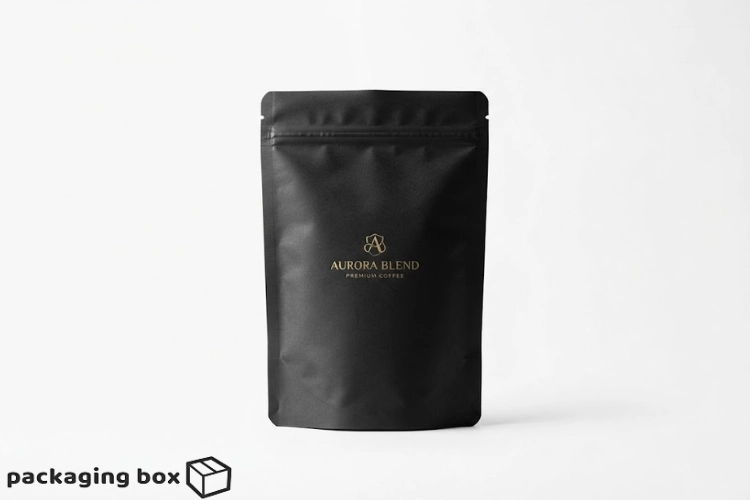
Scenario two — an established snack brand placing orders of 20,000 pouches per run. Here, custom printing becomes the financially smarter route. The plate cost, once spread across that volume, adds pennies per unit, while the finished product looks noticeably more premium and shelf-ready. Brands at this stage often also explore specific finishes like black standup pouches for a premium look or white standup pouches for a clean, modern aesthetic — both of which print beautifully with rotogravure technology.
These two examples highlight exactly why there’s no single right answer to “custom label vs printed packaging” — it genuinely comes down to your order volume, your product type, and how often you expect your branding to evolve.
🧵 Factors That Influence Standup Pouch Printing Cost
Beyond the printing method itself, several other variables quietly shape your final custom pouch printing cost. Pouch material plays a big role — mylar bags printing, for instance, tends to cost more than standard kraft due to the barrier properties mylar offers for moisture and oxygen protection. Similarly, resealable pouches with zip-locks add a small premium over basic heat-seal pouches, but they significantly improve product shelf life and user convenience, which often justifies the extra cost for food packaging pouches especially.
Design complexity matters too. A simple one or two-color design is naturally cheaper to produce than a full-color, photo-heavy label or print, regardless of which method you choose. And if you’re sourcing pouches without a long-term supplier relationship, pricing can vary wildly — which is exactly why picking the right partner matters. Our guide on tips for choosing the right packaging supplier covers red flags to watch for and questions worth asking before you commit to a bulk order.
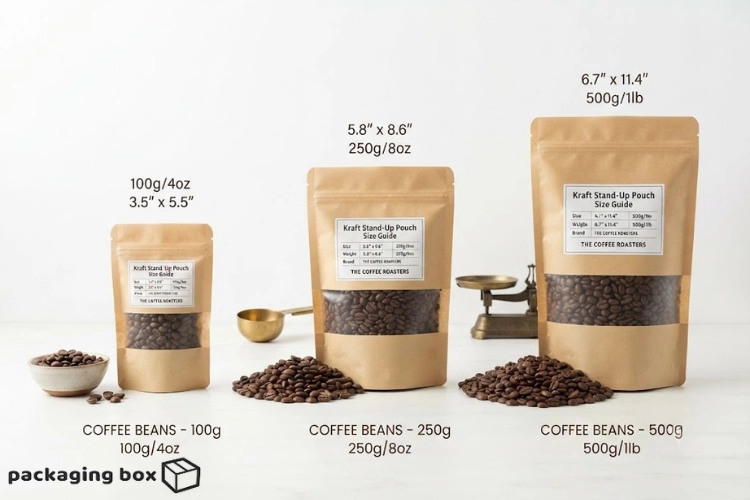
If you’re also unsure which pouch size suits your product weight and category, it’s worth checking our breakdown on how to choose standup pouch size based on product weight — getting this right the first time avoids costly reprints later.
🚀 Which Printing Method Should You Choose for Your Brand?
If you’re still deciding, think of it less as “label vs custom print” and more as “where is my business right now?” New brands validating demand, running small test batches, or managing frequent SKU changes should lean toward labeling — it’s genuinely the most affordable pouch printing option for that stage, and our article on starting a packaging business in Pakistan touches on similar lean-launch principles that apply here too.
Established brands with predictable, high-volume demand should seriously evaluate custom printing. Not only does it reduce per-unit cost at scale, it also elevates perceived brand value — something increasingly important as competition in flexible packaging printing grows across Pakistan’s food and retail sectors. For businesses weighing this investment seriously, our piece on investing in packaging for small businesses offers a broader framework for making that call wisely.
Whichever path fits your stage, sourcing from a reliable supplier matters just as much as the method itself. You can browse ready options directly in our standup pouch collection, or explore our full stand-up pouch packaging solutions for brands if you want tailored guidance based on your product and order size.
🧭 Final Verdict: Which Is Actually Cheaper?
Pulling everything together, label printing is cheaper for low-volume, flexible-design needs, while custom printing is cheaper per unit once your order size justifies the plate investment. There isn’t a universal winner — only a smarter choice based on your specific stage, product, and growth plans. The good news is that neither path locks you in forever; plenty of successful brands start with labels and graduate to custom printing exactly when the numbers start favoring that switch.
The real mistake isn’t choosing one method over the other — it’s choosing without actually running the numbers for your own order volume first. Take the cost table above, plug in your expected quantities, and the right answer usually becomes obvious fairly quickly.
📞 Ready to Get Pricing for Your Pouches?
Whether you’re leaning toward labeled pouches or ready to invest in custom printing, our team can walk you through real quotes based on your exact quantity, material, and design needs. Browse our full range in the shop, or if you’re sourcing in bulk, check our dedicated guide on where to buy wholesale packaging in Pakistan and ordering packaging safely online before placing your first order.
❓ Frequently Asked Questions
How much does standup pouch printing cost in Pakistan? Costs vary based on method, material, and order size. Labeled pouches can start from relatively low per-unit prices for small batches, while custom printed pouches become cost-effective mainly at higher volumes due to one-time plate charges.
Is label printing cheaper than custom printing? Yes, for smaller order quantities. Label printing avoids plate-making costs entirely, making it the more affordable pouch printing option for startups and businesses testing new products.
What is the best printing method for standup pouches? It depends on your order volume. Labels suit low-volume, frequently-changing designs, while custom rotogravure printing suits high-volume, consistent branding needs.
What is the difference between a label and direct print on a pouch? A label is printed separately and applied onto a plain pouch, while direct custom printing applies the design onto the pouch film itself during manufacturing, offering a more integrated, premium finish.
What is the minimum order quantity for custom printed standup pouches? Most custom print runs require higher MOQs, often starting around 5,000 units, since plate costs need to be spread across a larger quantity to stay cost-effective.
Can I switch from labels to custom printing later as my brand grows? Absolutely. Many brands start with labeled pouches during their launch phase and transition to custom printing once order volumes justify the investment in printing plates.



💬 0 Comments
Leave a Comment