
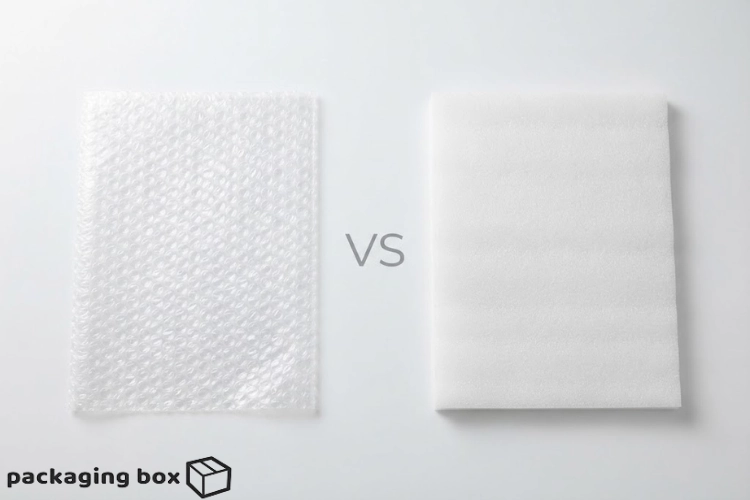

Anyone who has ever shipped a parcel, moved houses, or packed a box of glassware has faced the same dilemma: bubble wrap vs foam sheet — which one actually keeps your items safe? Both materials promise protection, but they behave very differently once your box gets bumped, dropped, or stacked under heavy weight. If you’ve ever unboxed a “fragile” item only to find it cracked despite being wrapped, you already know that not all cushioning is created equal. This guide breaks down exactly how bubble wrap and foam sheets perform in real-world packing scenarios, so you can choose the right material instead of guessing.
📦 What Is Bubble Wrap?
Bubble wrap is a thin plastic sheet embedded with small air-filled pockets that act as a cushion against shocks and impacts. It’s one of the most recognizable protective packaging materials on the planet, mainly because it’s lightweight, flexible, and satisfying to pop (we won’t judge). The air pockets compress on impact and then spring back, absorbing the force before it reaches whatever is wrapped inside.
What makes bubble wrap especially practical is its adaptability. It wraps easily around irregular shapes — mugs, picture frames, vases, decorative items — because the sheet molds around curves and corners rather than staying rigid. If you’re shipping delicate glassware, our dedicated glassware packing material rolls are designed specifically for this kind of wrap-and-cushion job. For businesses that pack frequently, keeping a roll of premium bubble wrap on hand is almost a non-negotiable part of the packing station.
That said, bubble wrap isn’t invincible. The air pockets can pop under sustained pressure or sharp edges, and once they’re gone, the cushioning effect disappears with them.
🧊 What Is a Foam Sheet?
A foam sheet is a flat, flexible sheet made from polyethylene foam — a dense, closed-cell material that doesn’t rely on air pockets to absorb shock. Instead, the foam itself compresses and rebounds, spreading impact force across a wider surface area. This is why foam sheets are often preferred for items that need consistent, even pressure protection rather than point-specific cushioning.
Foam sheets come in various thicknesses, and that material thickness directly affects how much shock absorption you get. Thin foam sheets work well for lightweight items like picture frames or ceramics, while thicker packaging foam rolls are used for furniture, appliances, and heavier electronics. Some foam variants are also treated as anti-static foam packaging, which is critical when wrapping circuit boards, hard drives, or other static-sensitive components.
Unlike bubble wrap, foam sheets don’t lose effectiveness after a single hard impact. They’re more resistant to compression resistance failure over time, which is one reason movers and electronics shippers often reach for foam first.
🔍 Bubble Wrap vs Foam Sheet: Key Differences
When you line these two materials up side by side, the differences become clear — and they matter depending on what you’re packing. Below is a quick comparison to make the packing materials comparison easier to visualize.
| Feature | Bubble Wrap | Foam Sheet |
|---|---|---|
| Shock Absorption | High for sharp, sudden impacts | High for sustained, even pressure |
| Flexibility | Wraps easily around curves | Better for flat or layered packing |
| Durability | Pockets can pop and lose effect | Holds shape longer under repeated use |
| Weight | Very lightweight | Slightly heavier depending on density |
| Best For | Glassware, dishes, decor items | Electronics, furniture, flat panels |
| Reusability | Limited once popped | Reusable material for multiple shipments |
| Cost | Generally cheaper per roll | Slightly higher but longer-lasting |
What this table really tells us is that neither material is universally “better” — the right choice depends on your item’s shape, weight, and sensitivity to pressure versus impact. A fragile ceramic vase and a flat-screen monitor don’t need the same kind of protection, even though both are technically “fragile.”
🛡️ Which Protects Better for Fragile Items?
This is the question most people are really asking, and the honest answer is: it depends on how your item breaks.
Glassware, Ceramics & Dishware
For round, irregular, or hollow fragile items, bubble wrap tends to win. Its ability to wrap tightly around curves and corners means there are no gaps for the item to shift during transit. This is why it remains the go-to fragile item protection material for glassware, ornaments, and dishware. If you’re moving valuables alongside gift items, it’s also worth comparing packaging styles in our breakdown of tin box vs cardboard box for gifting, since the outer box matters just as much as the inner cushioning.
Electronics & Flat Panels
When it comes to foam sheet vs bubble wrap for electronics, foam usually takes the lead. Electronics have flat surfaces and sensitive internal components, and foam distributes pressure evenly across the whole panel instead of concentrating it at bubble contact points. Anti-static foam variants add an extra layer of protection against electrical damage, something plain bubble wrap simply can’t offer.
In short, bubble wrap handles shock resistance level for impact-prone, oddly shaped items, while foam handles weight-bearing capacity and even-pressure protection for flat, sensitive goods.
🚚 Bubble Wrap or Foam Sheet for Moving?
Moving house introduces a different challenge altogether — it’s not just one fragile item, it’s an entire household’s worth of moving supplies that need to survive hours in a truck, multiple handling points, and unpredictable stacking.
For moving, a combination approach almost always performs better than relying on just one material. Foam sheets work well as a base layer for furniture edges, mirrors, and large flat surfaces because they resist puncture resistance failures from corners rubbing against each other. Bubble wrap, meanwhile, is better suited for smaller breakables packed into boxes — dishes, lamps, picture frames, and decorative pieces.
If you’re organizing a full house move, it’s worth strengthening your outer boxes too. Our guide on strengthening corrugated boxes for heavy items pairs well with this cushioning strategy, since even the best internal padding won’t help if the box itself collapses under weight. And for a full packing toolkit, browsing the packaging materials category gives you access to tape, wrap, and filler materials in one place.
💰 Cost, Durability & Eco-Friendliness Comparison
Budget always plays a role in the bubble wrap vs foam sheet for packing decision, and the numbers tell an interesting story. Bubble wrap is typically cheaper upfront, which makes it a popular cost-effective packaging choice for high-volume shippers who need to wrap many small items quickly. However, because the air pockets can puncture or deflate, it’s often a single-use material in practice.
Foam sheets cost a bit more per sheet, but their reusable packaging material nature means businesses often get more mileage out of them over time. If you’re shipping the same type of product repeatedly — say, electronics or framed artwork — foam sheets can be reused multiple times before they lose their cushioning integrity, making the long-term cost comparison much closer than it first appears.
On the sustainability side, neither material is naturally biodegradable, but foam sheets generally have a longer usable life, which reduces overall packaging waste per shipment. If eco-friendly packaging options are a priority for your brand, pairing either material with recyclable void fill materials or paper-based filler can help balance protection with sustainability goals.
For businesses placing large orders of either material, checking our bulk packaging orders guide can help you understand minimum quantities and pricing tiers before committing.
✅ Which One Should You Choose? Practical Recommendations
By now the pattern should be clear: this isn’t really a competition with one winner — it’s a matter of matching the material to the job. For curved, hollow, or oddly shaped fragile items like glassware and ceramics, bubble wrap’s wrap-around flexibility gives it the edge. For flat, sensitive, or heavy items like electronics, picture frames, and furniture panels, foam sheets provide more consistent impact absorption packaging across the whole surface.
Many experienced packers don’t choose one over the other at all — they use both. A layer of foam sheet protects large flat surfaces from scratches and dents, while bubble wrap handles the smaller breakables tucked into the same box. Securing everything with sturdy packaging tape and placing items inside a well-sized box completes the setup. If you’re shipping through courier services, it’s also worth reviewing our tips on packing shoes safely for shipping, since the wrapping principles apply to almost any delicate item, not just footwear.
For businesses sourcing either material regularly, buying from a reliable wholesale packaging supplier in Pakistan ensures consistent quality and better pricing than one-off retail purchases.
❓ Frequently Asked Questions
Is bubble wrap better than foam sheet for shipping fragile items? It depends on the item’s shape. Bubble wrap performs better for curved or hollow fragile items like glassware, while foam sheets are better suited for flat, sensitive items like electronics and framed items during shipping cushioning materials selection.
Can I use foam sheet and bubble wrap together? Yes, and many professional packers do exactly this. Using foam as a base layer and bubble wrap for individual breakable pieces gives you combined shock absorption packaging that covers more scenarios than either material alone.
Which material is more cost-effective for small businesses? Bubble wrap is generally cheaper upfront, making it ideal for high-volume, single-use packing. Foam sheets cost more initially but offer better durability comparison results over repeated use, which can lower costs long-term.
Is foam sheet better for moving heavy furniture? Yes. Foam sheets handle weight-bearing capacity and surface protection better for large, flat furniture panels, while bubble wrap is more effective for smaller, breakable household items during a move.
Does bubble wrap protect against moisture? Bubble wrap offers some moisture resistance since it’s plastic-based, but it isn’t a complete moisture barrier. For sensitive items, pairing it with sealed packaging or a protective pouch adds extra protection.
Which material is more eco-friendly? Neither is fully biodegradable, but foam sheets’ reusability often results in less overall waste per shipment compared to single-use bubble wrap, making it a slightly better eco-friendly packaging options choice over time.
🏁 Final Thoughts
The real answer to “bubble wrap vs foam sheet – which protects better” isn’t about picking a universal winner — it’s about matching the material to the item you’re protecting. Bubble wrap excels at absorbing sharp, sudden impacts around curved and hollow objects, while foam sheets provide steady, even-pressure protection for flat and sensitive goods. Smart packers often combine both, using each material where it performs best rather than forcing one solution onto every box.
If you’re setting up a packing station for your business or your next house move, browse our full range of bubble wrap, foam sheets, and protective packaging supplies to build a cushioning system that actually keeps your items safe from the warehouse to the doorstep.









💬 0 Comments
Leave a Comment