
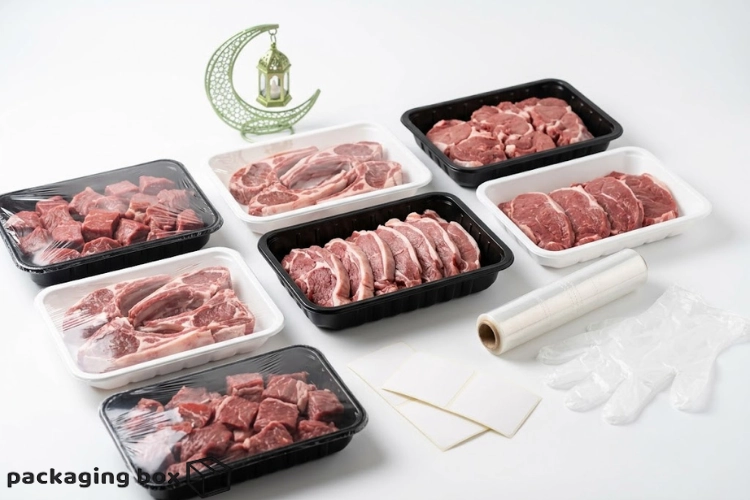

Qurbani meat packaging is not simply about placing fresh meat in a bag or container. During Eid ul Adha, large quantities of beef, mutton, goat meat, and lamb meat are portioned, stored, transported, and distributed within a short period. Without suitable food-grade packaging, meat juices may leak, portions can become mixed, and the risk of cross-contamination increases.
A dependable Qurbani meat packaging guide should therefore cover more than appearance. It must consider food hygiene, tray strength, portion size, sealing, refrigeration, freezing, transportation, and responsible distribution.
The best meat trays for Eid ul Adha make this entire process cleaner and more organised. A sturdy tray supports the meat, raised edges help contain liquid, and cling film creates a practical outer barrier. Whether you are packaging Qurbani at home, operating a butcher shop, managing a mosque distribution point, or supplying meat in bulk, the right packaging materials can save time and reduce mess.
This guide explains how to select meat trays for Qurbani, compare black and white options, package meat safely, and prepare supplies before the Eid rush begins.
Why Proper Qurbani Meat Packaging Matters
Qurbani creates a unique packaging challenge because fresh meat is handled in high volumes, often in warm weather and under considerable time pressure. Packaging that works for dry groceries may not be suitable for raw meat.
It supports better food hygiene
Raw meat and its juices should be kept separate from cooked foods, ready-to-eat items, clean utensils, and other household groceries. A proper tray and secure wrapping help contain the portion during handling and transportation.
Good Eid ul Adha meat packaging can help:
- Keep individual portions separated
- Reduce direct handling after meat portioning
- Contain liquid within the package
- Protect meat from dust and dirty surfaces
- Make refrigerator and freezer organisation easier
- Lower the chance of meat juices touching other foods
Packaging does not sterilise meat or replace correct handling. Hands, knives, cutting boards, tables, weighing equipment, and storage areas must also be kept clean.
It creates fair and organised portions
Qurbani meat distribution usually involves dividing meat for family, relatives, neighbours, and people in need. Consistent portion control trays allow teams to organise similar quantities efficiently.
Labels can also be added to identify:
- Beef, mutton, goat meat, or lamb meat
- Approximate weight
- Recipient or distribution group
- Packing time
- “Keep refrigerated” or “Freeze promptly” instructions
It improves transportation
Loose bags can stretch, tear, or become difficult to stack. Trays create a stable base, while a correctly applied wrap reduces movement and leakage. This is especially useful when packages are being transported by car, motorcycle, or delivery vehicle.
Food-safety authorities advise keeping perishable food refrigerated and not leaving it at room temperature for more than two hours—or more than one hour when the surrounding temperature is above 90°F, approximately 32°C. Maintaining temperature control is especially important during hot Eid days.
What Are the Best Meat Trays for Eid ul Adha?
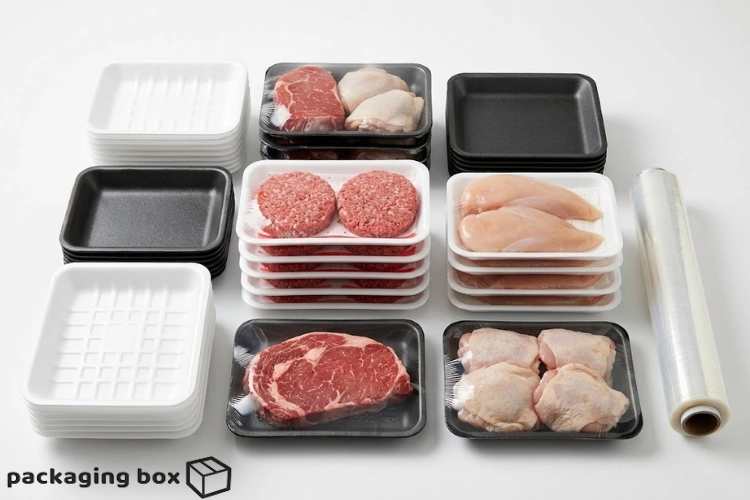
The best option depends on the type of meat, portion weight, distance of transportation, storage method, and available budget. In most situations, a rigid food-grade plastic tray with raised edges offers a practical balance of strength, presentation, and leak resistance.
Here is a quick comparison:
| Tray Type | Best Use | Main Advantage | Important Consideration |
|---|---|---|---|
| Black plastic tray | Premium portions and distribution | Strong contrast and professional appearance | Confirm food-grade status |
| White plastic tray | Household and high-volume packing | Clean appearance and easy labelling | Stains may be more visible |
| Foam tray | Lightweight, short-distance packing | Economical and easy to wrap | Can crack under pressure |
| PET or PP tray | Chilled or freezer-oriented use | Durable and moisture-resistant | Confirm temperature suitability |
| Aluminium tray | Prepared or cooked food | Strong and heat-tolerant | Not always necessary for raw Qurbani meat |
| Biodegradable tray | Sustainability-focused events | Reduced reliance on conventional plastic | Moisture resistance varies |
No tray should be selected solely because it looks attractive. Before buying Qurbani meat trays, confirm that the product is designed for direct food contact and is suitable for the intended refrigerator or freezer conditions.
Packaging Box offers a dedicated collection of meat trays for fresh meat packaging, including black and white options intended for butcher shops, supermarkets, meat processors, and seasonal Qurbani use.
Black Meat Trays vs White Meat Trays for Qurbani
Both colours can perform effectively when the material, size, and construction are appropriate. The colour mainly affects presentation, visibility, and labelling.
Black meat trays
A food-grade black meat tray creates strong visual contrast with fresh red meat. It is a popular choice for branded meat businesses, supermarkets, caterers, and premium distribution packages.
Key benefits include:
- Premium, professional presentation
- Strong contrast with beef and mutton
- Reduced visibility of minor staining
- Availability in different portion sizes
- Compatibility with clear cling wrapping
- Stackable design for organised distribution
The listed Packaging Box black tray is described as BPA-free, refrigerator-safe, freezer-safe, recyclable, and equipped with a ribbed, leak-resistant base. Product suitability should still be checked against the exact storage and handling conditions before purchase.
White meat trays
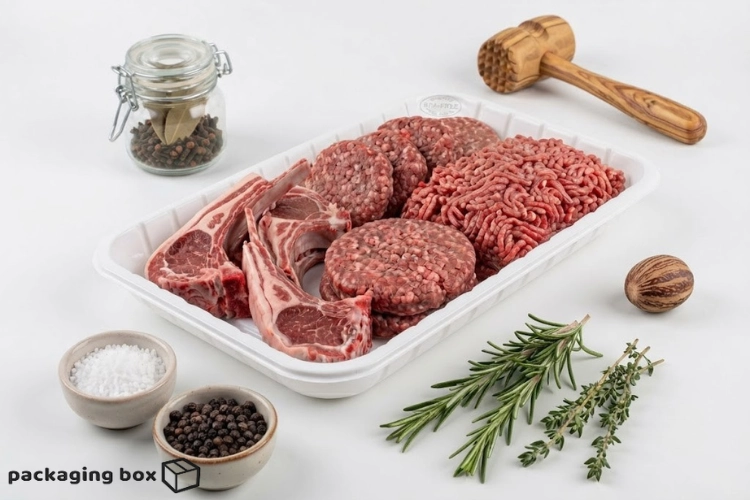
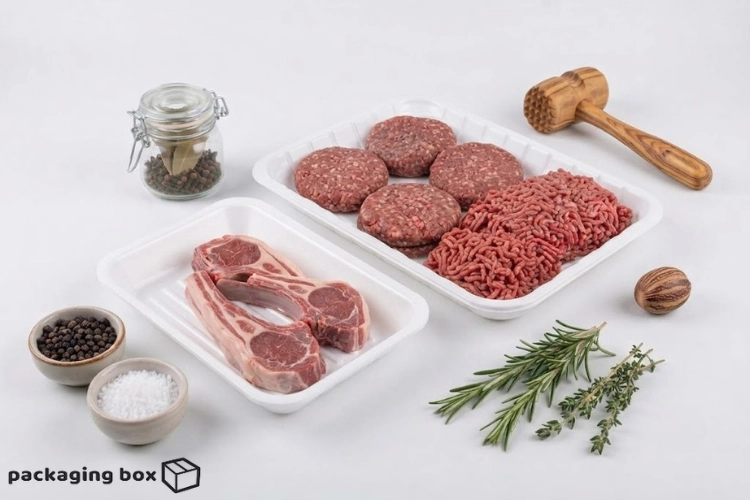
A white meat tray for fresh meat packaging provides a clean and familiar appearance. It works well for household Qurbani portions, welfare distributions, butcher counters, and supermarket displays.
Its main benefits include:
- Clean and hygienic visual presentation
- Easy visibility of the meat portion
- Good surface for labels or stickers
- Suitability for beef, mutton, lamb, and goat meat
- Availability in small, medium, and large sizes
- Compatibility with clear wrapping film
Packaging Box describes its white tray as food-grade, BPA-free, recyclable, refrigerator-safe, and freezer-safe, with a ribbed base intended to resist leakage.
Which colour is better?
Choose black trays when premium presentation and visual contrast are priorities. Choose white trays when you want a clean, traditional appearance and easy labelling.
Colour does not determine food safety. Material quality, food-contact suitability, tray depth, sealing, temperature control, and hygienic handling matter far more. A detailed black vs white meat tray comparison can help buyers compare both styles for retail or distribution use.
Essential Features of Good Qurbani Meat Trays
Not every disposable food tray is suitable for raw meat. Before ordering bulk meat trays for Eid ul Adha, evaluate the following features.
Food-grade construction
Only use a tray intended for direct food contact. Ask the packaging supplier to confirm the material and recommended applications. Common options may include PET, polypropylene, polyethylene-based materials, or other approved food-contact plastics.
“Food-grade” is not a decorative label. It means the material is intended for food contact under specified conditions. A tray designed for dry snacks should not automatically be assumed suitable for moist, fatty, raw meat.
For additional material guidance, read this overview of food-grade BPA-free meat trays.
Raised and leak-resistant edges
Fresh meat naturally releases liquid. Shallow trays can overflow, especially when portions are heavy or uneven.
Look for:
- Raised borders
- A ribbed or channelled base
- Sufficient depth
- Strong corners
- A stable bottom
- A flat rim for effective wrapping
A “leak-resistant” design helps contain liquid, but it should not be treated as completely leak-proof unless the manufacturer specifically verifies that performance.
Suitable tray capacity
Overfilling is one of the most common Qurbani packing mistakes. Meat piled above the tray rim is difficult to seal and can puncture the film.
As a general selection approach:
- Small trays: Individual or small family portions
- Medium trays: Everyday family distribution packs
- Large trays: Heavier cuts and bulk portions
Tray dimensions and depth can differ between manufacturers, so match the actual product to the expected weight and cut. The meat tray size guide for butcher shops and supermarkets offers additional help with portion and capacity planning.
Refrigerator and freezer compatibility
Not every plastic performs in the same way at low temperatures. Some trays become brittle in a freezer, while some films lose adhesion or tear.
Confirm:
- Whether the tray is refrigerator-safe
- Whether it is designed for freezing
- Whether the film remains secure at low temperatures
- Whether the package can be stacked safely
- Whether the packaging is intended for single use
For extended frozen storage, a freezer-safe bag or vacuum-sealed bag may provide a more suitable moisture and air barrier than a film-wrapped display tray alone.
Qurbani Meat Packing Materials Checklist
Buying supplies before Eid prevents last-minute shortages and rushed substitutions. Estimate the number of portions first, then purchase a reasonable extra quantity for damaged trays, wrapping errors, and unexpected distribution needs.
Your checklist should include:
- Food-grade meat trays
- Food-safe cling film
- Absorbent meat pads, where appropriate
- Freezer-safe bags
- Labels or permanent markers
- Digital weighing scale
- Food-safe disposable gloves
- Clean knives and cutting boards
- Sanitised work surfaces
- Insulated coolers
- Ice packs
- Waste bags
- Cleaning and sanitising supplies
A heavy-duty food-safe cling film roll can be used to secure tray-packed portions. The product listing describes a clear, tear-resistant wrap designed for professional food packaging and refrigerator or freezer use. Always follow the film manufacturer’s food-contact and temperature instructions.
Gloves are useful when changed correctly, but they are not magical shields—sadly, gloves do not come with superhero powers. Hands should be washed before putting them on, and gloves must be changed after touching dirty surfaces, phones, waste, money, or unrelated foods. Suitable supplies can be found in the disposable gloves category.
How to Package Qurbani Meat Safely: Step-by-Step
A clear workflow makes high-volume packing faster and more hygienic.
Step 1: Prepare a clean packaging area
Before the meat arrives:
- Clean and sanitise tables, knives, scales, and cutting boards.
- Keep raw-meat equipment away from cooked food.
- Arrange trays, film, labels, bags, and gloves within reach.
- Prepare separate zones for cutting, weighing, wrapping, and dispatch.
- Keep children, pets, waste, and unnecessary items away.
Raw meat and its juices should remain separate from other foods to reduce cross-contamination.
Step 2: Sort the meat
Separate beef, mutton, goat meat, and lamb meat where necessary. Remove packaging debris and organise meat according to the agreed Qurbani distribution plan.
Avoid washing raw meat in a way that splashes juices around the sink or work area. Splashes can spread contamination to nearby utensils, counters, and foods.
Step 3: Create consistent portions
Use a clean weighing scale and decide on common portion sizes before packing begins. Consistent portions make distribution fairer and help the team choose the right tray capacity.
Do not compress excessive meat into a small tray. A slightly larger tray with secure wrapping is usually better than an overloaded tray with exposed edges.
Step 4: Add an absorbent pad when appropriate
Meat trays with absorbent pads can help manage excess liquid and improve presentation. Only use pads manufactured specifically for direct use in fresh-meat packaging.
Do not replace commercial absorbent pads with tissues, newspaper, ordinary paper, or unverified materials.
Step 5: Place meat inside the tray
Keep the portion below the upper rim. Remove any bone edges pressing directly against the film, as sharp bones can puncture the wrap.
For bone-in cuts:
- Select a deeper tray
- Position sharp edges downward where practical
- Use stronger film
- Consider an additional freezer-safe outer bag
- Check the package before dispatch
Step 6: Wrap the tray securely
Stretch food-safe film across the top and seal it around the underside. The wrap should be secure without crushing the tray or pressing liquid out of the meat.
Inspect the package for:
- Open corners
- Torn film
- Exposed meat
- Unstable stacking
- Liquid near the seal
- Sharp bones touching the film
Step 7: Label every portion
A basic label can include:
- Type of meat
- Weight
- Packing date and time
- Recipient group
- Storage instruction
- “Raw meat—keep refrigerated”
Labels reduce confusion and stop recipients from repeatedly opening packages to inspect the contents.
Step 8: Refrigerate or freeze promptly
Place packages into refrigeration as soon as possible. Keep the refrigerator at 40°F, approximately 4°C, or below, and the freezer at 0°F, approximately -18°C, or below.
Do not leave fresh meat waiting on tables while the full distribution batch is completed. Use smaller packing cycles so completed trays can move into cold storage promptly. The FDA also recommends following the two-hour rule for foods that require refrigeration.
Safe Storage and Transportation During Eid
Good packaging cannot compensate for a broken cold chain. A beautifully wrapped tray left in a hot vehicle is still unsafe.
Keep meat cold during distribution
Use:
- Insulated coolers
- Clean ice packs
- Refrigerated vehicles for large operations
- Short and planned delivery routes
- Shaded loading areas
- Immediate recipient notifications
Avoid placing loose ice directly against packages unless the packaging is designed to remain sealed under melting water.
Stack packages correctly
Place heavier and stronger trays at the bottom. Do not stack so much weight that lower trays bend or crack.
Keep raw Qurbani packages separate from:
- Cooked meals
- Bread and desserts
- Drinking water
- Fresh produce
- Personal items
- Medicines
Give recipients clear instructions
A package should not arrive without storage guidance. Tell recipients to refrigerate or freeze the meat promptly and to discard packages that have been left in unsafe temperatures for too long.
Perishable food should generally not remain unrefrigerated for more than two hours, or more than one hour in temperatures above approximately 32°C.
Common Qurbani Meat Packaging Mistakes
Even high-quality packaging can fail when used incorrectly.
Using ordinary shopping bags only
Thin bags provide little structure and can tear under the weight of meat or sharp bones. If bags are used, select food-grade, leak-resistant options and consider placing a securely wrapped tray inside.
Overfilling trays
Overfilled trays are harder to seal and more likely to leak. Use the correct tray capacity rather than stretching film over a mountain of meat.
Assuming cling film makes meat shelf-stable
Cling wrap helps cover food; it does not remove the need for refrigeration or freezing. Temperature control remains essential.
Reusing single-use meat trays
Disposable meat trays may retain cuts, cracks, residue, and odours. Unless a container is explicitly designed for repeated use and can be properly cleaned and sanitised, do not reuse it for raw meat.
Using newspaper or printed paper
Printing inks, dust, and non-food-grade paper should not touch fresh meat. Use certified food-contact materials only.
Leaving packed meat in the sun
Sealed packaging can heat up quickly in direct sunlight. Keep trays in shaded, chilled conditions and minimise loading delays.
Buying packaging too late
Eid demand can affect product availability. Butcher shops, slaughterhouses, charities, caterers, and housing societies should calculate their needs and place wholesale orders early. This wholesale packaging guide for Pakistan provides useful sourcing considerations for bulk buyers.
Eco-Friendly Qurbani Packaging Options
Sustainable food packaging is increasingly important, but raw meat requires dependable moisture resistance and food-contact safety. A package should not be selected as “eco-friendly” if it leaks, fails during transport, or causes food waste.
Consider these options:
- Recyclable trays where local collection facilities accept them
- Biodegradable meat trays certified for food contact
- Compostable packaging designed for wet foods
- Correctly sized trays that reduce unnecessary material
- Reusable insulated delivery crates that do not touch meat directly
- Bulk purchasing to reduce secondary transport packaging
- Clear waste-separation instructions at distribution points
Check local recycling rules before making environmental claims. A recyclable plastic tray may still go to landfill if it is heavily contaminated or if the area has no suitable collection system.
The most responsible solution balances food safety, packaging durability, material use, and local disposal facilities.
How Many Meat Trays Should You Order?
Begin with the expected number of portions rather than the total meat weight alone.
For example, an organiser expecting 500 distribution portions should not order exactly 500 trays. Additional trays may be needed because of:
- Cracks or transport damage
- Different portion sizes
- Bone-in cuts requiring deeper trays
- Wrapping mistakes
- Last-minute recipients
- Volunteer handling errors
A practical order should include a modest buffer. Also purchase more than one tray size when the Qurbani includes mixed cuts.
Businesses comparing bulk or wholesale options can review Packaging Box’s complete meat tray collection and confirm current size, quantity, material, price, and delivery details before ordering.
Final Qurbani Packaging Checklist
Before distribution begins, confirm that:
- Trays are intended for direct food contact
- The correct sizes are available
- Meat is not piled above tray rims
- Sharp bones cannot puncture the film
- Every package is sealed and inspected
- Labels are readable
- Raw meat is separated from other foods
- Refrigeration and freezer space are ready
- Coolers and ice packs are clean
- Delivery routes are planned
- Recipients receive storage instructions
- Damaged or leaking packages are repacked
- Volunteers follow one consistent hygiene process
A successful system is simple: clean handling, suitable food-grade trays, secure wrapping, clear labelling, and uninterrupted cold storage.
Conclusion: Make Qurbani Distribution Cleaner and Safer
The best packaging for Qurbani meat combines food-grade construction, an appropriate tray size, raised edges, secure cling wrapping, and reliable cold-chain management. Black trays offer premium presentation, while white trays provide a clean and familiar appearance. Both can work well when they are sturdy, suitable for raw food, and correctly sealed.
More importantly, hygienic Qurbani meat packaging protects the dignity and purpose of distribution. It allows meat to reach family members, neighbours, and deserving recipients in a clean, organised, and respectful condition.
Order Qurbani Meat Packaging Before the Eid Rush
Prepare early by exploring food-grade Qurbani meat trays, choosing the right sizes, and adding a suitable cling film roll to your packing supplies.
For butcher shops, supermarkets, welfare organisations, caterers, and community distribution teams, confirm bulk availability, minimum order quantity, current pricing, and delivery time before placing an Eid order. Early planning means fewer leaks, faster packing, and one less thing to worry about on an already very busy day.
Frequently Asked Questions
What is the best packaging for Qurbani meat?
A food-grade, leak-resistant meat tray sealed with food-safe cling film is a practical option for short-term refrigerated storage and distribution. For longer frozen storage, use packaging specifically designed for freezer conditions.
Are black meat trays safe for Qurbani meat?
They can be safe when manufactured from food-grade material intended for direct raw-meat contact. Colour alone does not determine safety. Confirm the material, temperature suitability, and supplier specifications.
Are white meat trays better than black trays?
Neither is automatically better. White trays provide a clean, traditional presentation, while black trays create stronger contrast and a premium appearance. Tray strength, depth, food-grade status, and storage suitability are more important than colour.
Can Qurbani meat be packed while it is still warm?
Fresh meat should be moved into suitable cold storage without unnecessary delay. Avoid sealing and stacking large amounts in a way that prevents effective cooling. Follow local food-safety guidance and maintain refrigeration at 4°C or below.
Can cling film be used for raw meat?
Yes, when the cling film is explicitly suitable for direct food contact and the intended refrigeration or freezer conditions. Film-wrapped meat must still be refrigerated or frozen promptly.
How long can packaged meat stay outside the refrigerator?
As a general food-safety rule, perishable food should not remain at room temperature for more than two hours. When the temperature is above approximately 32°C, the limit is one hour.
Should absorbent pads be used in meat trays?
Food-grade absorbent meat pads can help manage liquid and improve package presentation. Only use pads specifically manufactured for fresh-meat packaging.
Can disposable meat trays be reused?
Single-use trays should generally not be reused for raw meat. Replace cracked, scratched, leaking, or contaminated packaging.
What tray size is best for Qurbani distribution?
Small trays suit individual portions, medium trays work for common family packs, and large trays accommodate heavier or bone-in cuts. Always check the tray’s dimensions and capacity rather than relying only on labels such as small or large.
Where can I buy Qurbani meat trays in Pakistan?
Packaging Box provides black and white meat trays through its online meat-tray category. Check current specifications, quantity, price, delivery area, and stock availability before ordering.






💬 0 Comments
Leave a Comment