

If you’ve ever opened a bag of almonds and found a stale, slightly bitter taste, you already know why how to package dry fruits matters. Dry fruits look tough, but they are quietly sensitive to air, moisture, light and heat. Good dry fruits packaging protects your product from all four. It is the difference between a crunchy walnut and a rancid one, and between a repeat customer and a refund request.
This guide explains packaging dry fruits for long shelf life in plain language. You’ll learn why dry fruits spoil, which materials work best, and how to seal, label and store them properly. Whether you’re a home user or a business owner, you’ll find practical examples you can use today.
🌰 Why Dry Fruits Lose Freshness
Before choosing a pouch or jar, it helps to understand the enemy. Dry fruits shelf life depends on how well you control four things: oxygen, moisture, light and temperature.
The Role of Oxygen and Oil Oxidation
Nuts like walnuts, almonds, cashews and hazelnuts are rich in natural oils. When those oils meet oxygen, oil oxidation begins. The result is a rancid smell, a sharp bitter taste and some nutrient loss. Walnuts are the most delicate because of their high polyunsaturated fat content. A sealed bag of walnuts left in a warm kitchen can turn within weeks.
Moisture, Mold and Texture Change
Dried fruits such as raisins, dates, dried figs, apricots and prunes face the opposite problem. They attract humidity through moisture absorption. Once moisture creeps in, you get sticky, soft fruit and then fungal growth. Even crunchy nuts suffer, because texture change from soft, chewy almonds is one of the most common customer complaints.
Light, Heat and Pests
Direct sunlight speeds up oil breakdown and fades the natural color of apricots and pistachios. High storage temperature also speeds up spoilage. Finally, weak packaging lets in pantry moths and weevils, so preventing insect infestation is part of the job.
Think of dry fruits as sponges for the wrong things. Your packaging has to keep the wrong things out and the good flavor in.
📦 Choosing the Best Packaging for Dry Fruits
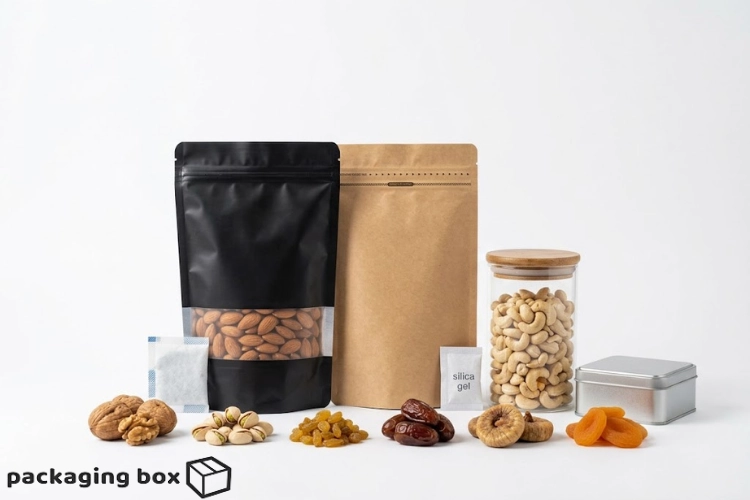
The best packaging for dry fruits is not one single material. It depends on the product, the storage period and whether the pack is for your kitchen or a shop shelf. Here are the main dry fruit packaging materials and where each one fits.
Aluminum Foil Pouches and Mylar Bags
For maximum protection, aluminum foil pouches and mylar bags are hard to beat. They act as light-proof packaging and offer excellent barrier packaging film performance against oxygen and moisture. If you want long-term freshness for almonds or cashews, a foil-lined pouch is a safe pick. Brands in Pakistan often choose aluminium foil stand-up pouches for exactly this reason, since they combine protection with a premium shelf look. If you want a deeper comparison, this guide on kraft pouch vs aluminum pouch shelf life explains the real-world difference.
Resealable Zipper Pouches and Stand-Up Pouches
Resealable zipper pouches and stand-up pouches suit everyday use. Once a customer opens the pack, the zipper lets them seal tightly again, which helps maintain crunchiness after the first opening. A clear front also lets buyers see the product. If you’re new to this format, start with the complete beginner’s guide to stand-up pouches. You can also browse the full range of kraft stand-up pouches or a clear zipper stand-up pouch for lighter, shorter-term retail packs.
Glass Jars and Airtight Containers
Glass jars for dry fruits are ideal at home. Glass is non-porous, doesn’t hold odors and doesn’t react with food. Pair a jar with a tight lid and you have a reliable set of airtight containers. The downside is that clear glass lets light in, so keep jars inside a cupboard. For retail, food-grade plastic is a lighter option, such as these round plastic jars.
Tin Boxes and Acrylic Containers
Tin boxes and acrylic boxes are more about presentation than long-term storage, but they matter for gifting. A well-fitted tin blocks light and looks premium. If your dry fruits are meant for gifting or short-term display, browse tin boxes or acrylic dry fruit boxes. For deeper packaging decisions, read this comparison of tin box vs cardboard box for gifting.
Quick Comparison of Packaging Types
| Packaging Type | Barrier Strength | Best For | Typical Use |
|---|---|---|---|
| Aluminum foil / mylar pouch | Excellent | Almonds, cashews, walnuts | Long-term retail and bulk |
| Clear zipper stand-up pouch | Good | Raisins, dates, mixed nuts | Short to medium retail |
| Glass jar with airtight lid | Very good | All dry fruits | Home pantry |
| Tin box | Moderate | Gift sets | Gifting and display |
| Acrylic box / crystal bowl | Low to moderate | Display and gifting | Short-term presentation |
As the table shows, high-barrier materials win for long storage, while display-focused containers suit short-term use. Match the container to the job, and you avoid most freshness problems.
🛠️ Step-by-Step: How to Package Dry Fruits at Home or in Business
Now for the practical part. These dry fruit packaging methods work equally well for a family kitchen and a small food brand.
Step 1: Start with Fully Dry, Fresh Product
Packaging cannot fix a bad product. If dry fruits already carry excess moisture, sealing them in only traps the problem. Spread nuts on a clean tray for a short time in a cool, ventilated room if they feel even slightly damp. Check dates and figs for stickiness or any off smell before packing.
Step 2: Choose the Right Pack Size
Smaller packs mean fewer openings and less air exposure. A 250 g pouch of almonds stays fresher than a 2 kg bag opened every day. If you sell packs, match the pouch to the weight. This guide on how to choose a stand-up pouch size based on product weight helps you avoid oversized pouches that trap extra air.
Step 3: Remove Excess Air
Air is the main cause of oxidation, so remove excess air before sealing. At home, press out the air from a zipper pouch by hand. For better results, use vacuum sealing. Vacuum packaging for dry fruits works especially well for walnuts, cashews and almonds. For soft fruits like dates and figs, use gentle vacuum pressure so you don’t crush the pieces.
Step 4: Add an Oxygen Absorber
An oxygen absorber is a small sachet that removes leftover oxygen inside a sealed pack. Drop one into a mylar bag or foil pouch before sealing and it keeps oils stable for months. Always match the absorber size to the pack volume, and never reuse an absorber once exposed to open air. Use only food-grade sachets.
Step 5: Control Humidity with Silica Gel
For soft dried fruits and humid climates, silica gel packets support humidity control. Keep in mind that silica gel suits products that need to stay dry, such as nuts and crispy snacks. Don’t put silica gel and oxygen absorbers together without checking the supplier’s guidance, because some products are designed for different jobs. Never allow loose silica to contact food.
Step 6: Seal Tightly and Label Clearly
Use a heat sealer for foil pouches and check the seal line for gaps. For zipper pouches, run a finger along the zip to confirm it’s closed. Then label the pack with the product name, packing date and dry fruits expiry date or best-before date. Clear labeling is also a trust signal for customers.
Step 7: Store in the Right Place
Even the best pack fails in a bad location. Follow the rule of cool and dry place storage: avoid direct sunlight, keep away from humidity, and stay clear of stoves and windows. A dark pantry shelf works well. For long periods, the fridge or freezer helps nuts keep their flavor, as long as the pack is airtight so odors and condensation stay out.
🥜 Dry Fruit by Dry Fruit: Shelf Life and Packing Tips
Different products behave differently. The figures below are approximate and vary with quality, climate and packaging.
| Dry Fruit | Pantry (Airtight) | Fridge / Freezer | Best Packing Tip |
|---|---|---|---|
| Almonds | 6–12 months | Up to 2 years | Foil pouch with oxygen absorber |
| Cashews | About 6 months | 9–12 months | Vacuum seal, cool storage |
| Walnuts | 3–6 months | About 1 year | Always refrigerate if possible |
| Pistachios | 6–12 months | Up to 1 year or more | Light-proof pouch, keep dry |
| Hazelnuts | 6–9 months | Up to 1 year | Airtight jar away from heat |
| Raisins | 6–12 months | Longer | Zipper pouch, avoid humidity |
| Dates | 6–12 months | 1 year or more | Seal tightly, keep cool |
| Dried figs, apricots, prunes | 6–12 months | Longer | Moisture-proof pack, check for stickiness |
Use this table as a guide, not a guarantee. If any product smells sour, looks moldy or tastes bitter, discard it. Food safety always comes first.
💼 Dry Fruits Packaging for Business
If you sell dry fruits, packaging is your silent salesperson. It protects the product and tells customers whether you’re a trusted brand. Strong dry fruits packaging for business needs three things working together: freshness, clarity and presentation.
Freshness First, Branding Second
A beautiful pack that lets nuts go stale will cost you repeat customers. Start with the barrier. A pouch with aluminum lamination and a resealable zipper handles most retail needs. Then add branding such as color, logo and a clear window. A brand selling premium pistachios, for example, might use a matte black foil pouch with a small window, which protects from light and still shows the product.
Packaging Ideas for Seasonal and Gifting Demand
Dry fruits sell heavily around Eid, Ramadan, weddings and corporate gifting. For these, presentation matters as much as shelf life. These guides offer dry fruits packaging ideas for each occasion:
- Eid dry fruit hamper packaging ideas
- Wedding dry fruit box decoration and packaging guide
- Corporate gift dry fruit packaging tips
- Dry fruit and chocolate hamper ideas for Independence Day
For gifts, a smart approach is to seal the dry fruits in a food-grade inner pouch first and then place the pouch inside an acrylic tray or tin. That gives you protection and presentation. If you’re deciding between display options, this comparison of acrylic box vs crystal bowl for dry fruit gifting is helpful. Ready-made options include a 500 g straight acrylic box and a 4-portion crystal dry fruit tray.
Buying Smart and in Bulk
When you scale up, cost and consistency matter. Read about minimum quantities and costs for bulk packaging orders before placing a large order. It also pays to know where to buy wholesale packaging in Pakistan and how to choose the right packaging supplier. For a wider view of the category, see this guide on food packaging in Pakistan and this one on how to choose food packaging.
⚠️ Common Packaging Mistakes to Avoid
Even careful people make a few repeat errors. Fixing these can double your dry fruits shelf life with no extra cost.
- Packing warm or damp product, which traps moisture
- Using thin, non-food-grade plastic bags with no barrier
- Leaving large air gaps inside oversized pouches
- Storing packs near the stove, window or refrigerator back panel
- Mixing different dry fruits in one pack, because moist dates will soften dry nuts
- Skipping labels, so no one knows how old the stock is
The fix is simple. Use the right barrier, size the pack well and keep storage cool and dark.
🧊 Home Storage Tips You Can Use Today
For home users, a few habits make a big difference. These dry fruits storage tips are easy and cost almost nothing.
Keep a small “daily jar” for what you eat this week and store the rest sealed in a larger airtight pack in the fridge or freezer. This way, the main stock rarely meets fresh air. When you take nuts out of the fridge, let the sealed pack reach room temperature before opening, so condensation doesn’t form inside. Label each container with the date you stored it, and use older stock first.
Walnuts deserve extra care. Because of their high oil content, keep them cold. If you buy in bulk during a discount season, portion them into small freezer-safe bags. That is one of the simplest ways of preserving freshness for months.
For soft fruits such as dates, figs and prunes, the goal is the reverse. You want them soft but not sticky or damp. A sealed jar in a cool cupboard usually works, and the fridge helps in hot, humid summers.
🌿 Food Safety and Quality Checks
Good packaging supports food safety, but it isn’t a substitute for checking your product. Always use food-grade packaging that is clearly meant for direct food contact. Check seals for tiny holes, and look for packaging durability that survives transport without tearing.
Before eating or selling, do a quick sensory check. Fresh nuts smell mild and sweet. Rancid ones smell like old paint or stale oil. Dried fruits should look glossy or slightly matte, never fuzzy or white-spotted. If you see signs of spoilage, don’t taste-test. Throw the batch away. For businesses, keep batch records so you can trace any issue quickly, which also builds the trust and credibility customers look for.
✅ Conclusion: Small Packaging Choices, Big Freshness Gains
Knowing how to package dry fruits well comes down to a short list of principles. Start with dry, good-quality product. Use a high-barrier, food-grade pack. Remove excess air, add an oxygen absorber when needed, and seal tightly. Then store everything in a cool, dark, dry place. These steps protect flavor, crunch and nutrition, and they extend dry fruits shelf life from weeks to many months.
For businesses, the same steps also protect your reputation. Customers remember fresh, crunchy almonds and a pack that opens cleanly, and they come back for more.
🚀 Ready to Package Your Dry Fruits Like a Pro?
Explore the full range of stand-up pouches, acrylic dry fruit boxes and tin boxes at PackagingBox.pk. Pick the right pack for your dry fruits, place your order and give your product the freshness it deserves.
❓ Frequently Asked Questions (FAQs)
How do you package dry fruits for long shelf life?
Use a high-barrier, food-grade pack such as an aluminum foil or mylar pouch. Remove excess air, add an oxygen absorber if suitable, seal tightly and store the pack in a cool, dark, dry place.
What is the best packaging for dry fruits?
Aluminum foil pouches, mylar bags and airtight glass jars are the best options for freshness. Resealable stand-up pouches are great for retail, and tin or acrylic boxes suit gifting.
Can dry fruits be vacuum sealed?
Yes. Vacuum sealing works well for almonds, cashews, walnuts and pistachios. For soft fruits like dates and figs, use light pressure to avoid crushing them.
How long do dry fruits last in airtight containers?
Most nuts and dried fruits last about 6 to 12 months in airtight containers at room temperature. Walnuts last less, usually 3 to 6 months. Refrigeration or freezing can extend this.
How do you stop dry fruits from going rancid?
Limit exposure to oxygen, light and heat. Use airtight, light-proof packaging, add an oxygen absorber, and keep nuts, especially walnuts, in the fridge or freezer.
Should dry fruits be refrigerated?
Refrigeration helps in hot or humid weather and for oil-rich nuts. Always keep them in a sealed container so they don’t absorb moisture or odors.








💬 0 Comments
Leave a Comment