

If you sell packaged food in Pakistan — whether it’s bakery items, snacks, spices, or beverages — understanding the Food Label Requirements in Pakistan isn’t optional, it’s the law. Every box, pouch, or wrapper that leaves your facility is legally required to carry specific information that protects consumers, builds trust, and keeps your business out of regulatory trouble. Many small and medium food businesses in Pakistan unknowingly skip critical label details simply because no one explained the rules clearly, and that single oversight can lead to fines, product recalls, or rejected export shipments.
This guide breaks down everything you need to know in plain language — from the authorities who regulate labeling to the exact information your packaging must display, with real examples you can apply today.
🏛️ Who Regulates Food Labeling in Pakistan?
Food labeling in Pakistan isn’t controlled by a single body — it’s a shared responsibility between federal and provincial authorities, which is exactly why so many brands get confused about compliance. At the federal level, PSQCA (Pakistan Standards and Quality Control Authority) sets the technical standards for packaged food labeling, including how nutritional data, batch numbers, and expiry dates should appear. Provincial regulators then enforce these standards within their jurisdictions.
The main bodies you’ll encounter are:
- PSQCA – sets national labeling and packaging standards
- Punjab Food Authority (PFA) – enforces food safety and labeling rules in Punjab
- Sindh Food Authority – regulates food businesses operating in Sindh
- DRAP (Drug Regulatory Authority of Pakistan) – oversees labeling for food products with health claims or nutraceutical content
Because these authorities periodically update their requirements, it’s worth checking their official notifications regularly rather than relying on outdated label templates.
📋 Why Food Label Requirements in Pakistan Matter for Your Business
Beyond legal necessity, proper labeling is one of the simplest ways to build consumer trust at the shelf. A customer picking up a packaged snack or sauce bottle instinctively checks the expiry date, ingredients, and sometimes the Halal logo before deciding to buy — if that information is missing, confusing, or printed too small to read, you lose the sale right there.
There’s also a financial angle most business owners overlook: inconsistent or missing labels are one of the top reasons shipments get held at customs or rejected by large retail chains. If you’re planning to scale distribution or move into supermarkets, your food packaging in Pakistan needs to meet retail-ready labeling standards from day one, not as an afterthought once you’re already selling.
🧾 Mandatory Food Label Information Pakistan: The Complete Checklist
This is the part most business owners search for directly — what exactly needs to go on the label. While requirements can vary slightly by product category (dairy, confectionery, beverages, spices), the core mandatory elements remain consistent across Pakistan’s food safety framework.
🔖 Product Name, Ingredients & Nutritional Information
Every package must clearly state the product name as it’s commonly understood by consumers — vague or overly creative branding names without a descriptive term can create compliance issues. Right alongside it, the ingredients list must be printed in descending order of quantity, meaning the ingredient used in the largest amount appears first.
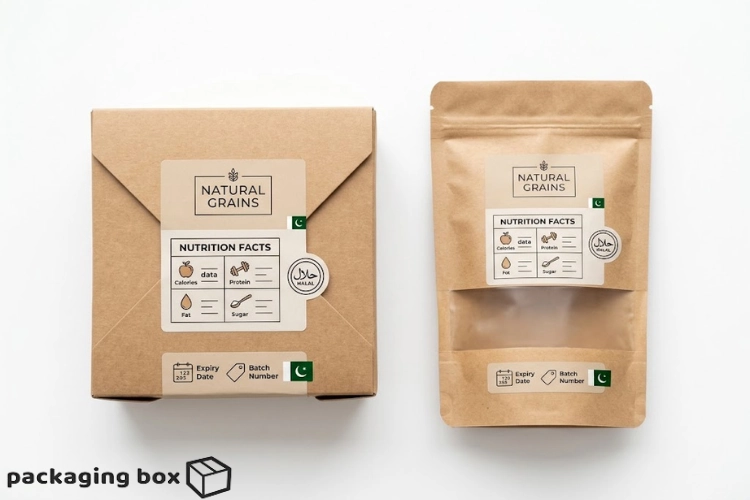
Nutritional information is equally critical. A proper nutrition facts panel typically includes calories, fat, carbohydrates, protein, and sodium content per serving. For packaged snacks, juices, and dairy products especially, this panel is often the first thing health-conscious buyers check.
📅 Manufacturing Date, Expiry Date & Batch Number
The manufacturing date and expiry date (or best before date) must be printed clearly and permanently — not in a font so small it needs a magnifying glass. Alongside these dates, a batch number allows manufacturers and regulators to trace a specific production run if quality issues or recalls ever arise. This single detail has saved many brands from larger PR disasters by allowing targeted recalls instead of pulling entire product lines.
⚖️ Net Weight, Manufacturer Details & Country of Origin
The net weight or net quantity must reflect the actual contents, not including packaging weight — Pakistani consumer protection law treats inflated net weight claims as a punishable offense. Your label also needs the manufacturer’s name and address, giving consumers and regulators a verifiable point of contact. If the product is imported, the country of origin must be disclosed clearly under import food labeling rules.
💰 MRP, Storage Instructions & Shelf Life
The MRP (Maximum Retail Price) must be printed in a way that can’t be altered or peeled off, protecting consumers from overcharging. Storage instructions (such as “store in a cool, dry place” or “refrigerate after opening”) combined with clear shelf life information help prevent spoilage-related complaints and returns.
Here’s a quick reference table summarizing these mandatory elements and why each one matters:
| Label Element | Why It’s Required |
|---|---|
| Ingredients List & Nutritional Info | Helps consumers make informed health choices |
| Manufacturing & Expiry Date | Legal requirement; prevents sale of unsafe products |
| Batch Number | Enables traceability during recalls |
| Net Weight / Quantity | Prevents consumer deception on contents |
| Manufacturer Name & Address | Establishes accountability and traceability |
| MRP | Protects against price manipulation |
| Allergen Warning | Protects consumers with food sensitivities |
| Halal Certification | Builds trust with Pakistan’s majority Muslim consumer base |
🚫 Allergen Warnings and Food Additives Disclosure
If your product contains common allergens — nuts, dairy, gluten, or soy — an allergen warning must be visibly displayed, usually in bold or a separate highlighted section. Similarly, any food additives like preservatives, artificial colors, or flavor enhancers must be disclosed by name or recognized code, not hidden under vague terms like “natural flavoring” when synthetic additives are actually used.
🕌 Halal Certification and Religious Compliance on Food Labels
For a market where the overwhelming majority of consumers actively look for religious compliance, Halal certification isn’t just a regulatory checkbox — it’s often the deciding factor at the point of purchase. The Halal logo or Halal mark should come from a recognized certifying body, and placing it prominently on your packaging (rather than buried in fine print) genuinely improves consumer confidence and shelf conversion rates.
Brands producing meat products, confectionery, or anything with gelatin-based ingredients should treat Halal certification as a core part of their food packaging standards strategy, not an optional add-on.
🌐 Urdu Language Labeling & Import Food Labeling Rules
Here’s a detail many new food brands miss entirely: Pakistani regulations generally expect essential label information — particularly instructions, warnings, and sometimes ingredients — to be available in Urdu alongside English. This bilingual approach ensures the label is genuinely accessible to the broadest possible consumer base, not just English-literate urban buyers.
For imported food products, import food labeling rules require that foreign-language labels be supplemented with a compliant Urdu/English sticker or re-label before the product reaches retail shelves. Skipping this step is one of the most common reasons imported food shipments get flagged at ports.
⚖️ Food Safety Labeling Standards Pakistan: Penalties for Non-Compliance
Non-compliance with food safety labeling standards in Pakistan isn’t treated lightly anymore. Provincial food authorities like PFA and Sindh Food Authority have significantly increased inspections in recent years, and penalties for mislabeling can range from fines to complete suspension of a food business’s operating license. In more serious cases involving health risks — such as undisclosed allergens or falsified expiry dates — legal action under consumer protection law can follow.
There’s also a tax-related angle worth noting: certain packaged goods require an FBR tax stamp as part of compliance, separate from the food safety label itself. Confusing these two requirements, or assuming one covers the other, is a mistake that catches many small manufacturers off guard.
📦 How Packaging Design Impacts Food Label Compliance
Compliance isn’t only about what information you print — it’s also about where and how you print it. Packaging that doesn’t allocate enough flat, visible surface area for mandatory label content forces manufacturers into illegible, cramped text, which technically fails compliance even if every required detail is technically present.
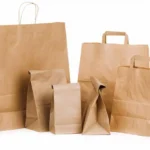
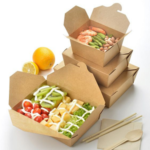
This is where thoughtful packaging design becomes genuinely valuable. Structures like custom kraft food boxes or printed stand-up pouch packaging are specifically designed with dedicated label zones that make it easier to fit nutritional panels, batch numbers, and Halal logos without overcrowding your brand design. Similarly, custom printed kraft paper bags offer enough surface space to separate branding visuals from compliance text clearly — something flimsier packaging formats often struggle with.
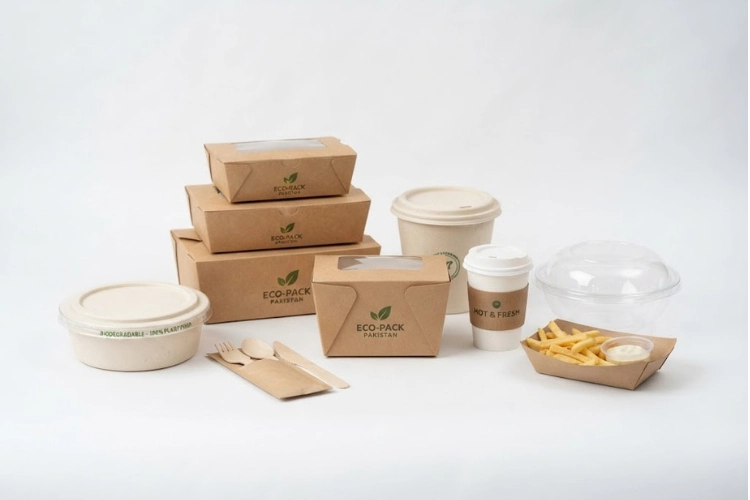
If you’re exploring more sustainable options, our eco-friendly custom packaging guide for Pakistan also covers how to balance environmental packaging goals with full labeling compliance.
✅ A Practical Example: What Should Be on a Food Label in Pakistan
Let’s make this concrete. Imagine a small Lahore-based bakery launching a packaged cookie line in a printed box. A fully compliant label on that box would include: the product name (“Chocolate Chip Cookies”), an ingredients list starting with flour and sugar, a nutrition facts panel per 100g, manufacturing and expiry dates, a batch code like “B-LHR-0547,” net weight in grams, the bakery’s registered address, MRP in a tamper-proof print, an allergen note for “contains nuts and gluten,” and a Halal logo if applicable.
Compare that to a plain unmarked plastic bag with just a sticker price — the difference in consumer trust, and legal standing, is enormous. This is precisely why many growing food brands upgrade from generic bags to structured food packaging boxes that offer enough space to do labeling properly from the start.
🚀 How to Ensure Food Label Compliance in Pakistan for Your Brand
Getting compliance right doesn’t require a legal team — it requires a systematic approach. Start by cross-checking your current label against the mandatory checklist above, then verify your packaging format physically accommodates all required text without compromising readability.
A few practical steps worth prioritizing:
- Review your product category’s specific PSQCA requirements, since dairy, beverages, and meat products often have added rules
- Get your Halal certification renewed and displayed prominently, not just mentioned in fine print
- Choose packaging formats that reserve clear space for compliance information
If you’re a smaller operation working with tighter margins, our guide on affordable food packaging solutions for small businesses in Pakistan walks through cost-effective packaging formats that still leave room for full compliance. And if you’re still deciding between packaging types, how to choose the right food packaging in Pakistan breaks that decision down further.
🎯 Conclusion: Compliance Builds Trust, and Trust Builds Sales
Understanding Food Label Requirements in Pakistan isn’t just about avoiding fines — it’s about giving every customer who picks up your product a reason to trust it immediately. From ingredients and expiry dates to Halal certification and bilingual instructions, each label element plays a specific role in protecting your brand’s credibility in a competitive market.
The good news is that compliance becomes significantly easier once your packaging is designed with labeling in mind from the start, rather than squeezed in as an afterthought. If you’re ready to upgrade your packaging to meet both branding and compliance goals, explore our full range of custom food packaging solutions built specifically for Pakistani food businesses.
❓ Frequently Asked Questions (FAQs)
1. What is the primary law governing food labeling in Pakistan? Food labeling in Pakistan is primarily governed by PSQCA standards at the federal level, with provincial bodies like Punjab Food Authority and Sindh Food Authority enforcing compliance within their regions.
2. Is Halal certification legally mandatory for all food products? Halal certification isn’t universally mandatory for every category, but for meat, poultry, and gelatin-based products, it’s generally required and strongly expected by consumers regardless of category.
3. Does the label have to be in Urdu, English, or both? Pakistani labeling practice generally expects both Urdu and English, particularly for warnings, instructions, and essential consumer information, to ensure accessibility for all buyers.
4. What happens if a food label is missing the expiry date? Selling food without a clearly printed expiry or best-before date is a violation that can result in fines, product seizure, or suspension of your food business license.
5. Can imported food products use their original foreign-language label? No — imported products must carry a compliant Urdu/English label, often added as a supplementary sticker, before they can be legally sold in Pakistan.
6. How can packaging design help with label compliance? Packaging formats with dedicated flat surface areas, like structured boxes and pouches, make it easier to display all mandatory information clearly without overcrowding your brand design.




💬 0 Comments
Leave a Comment