
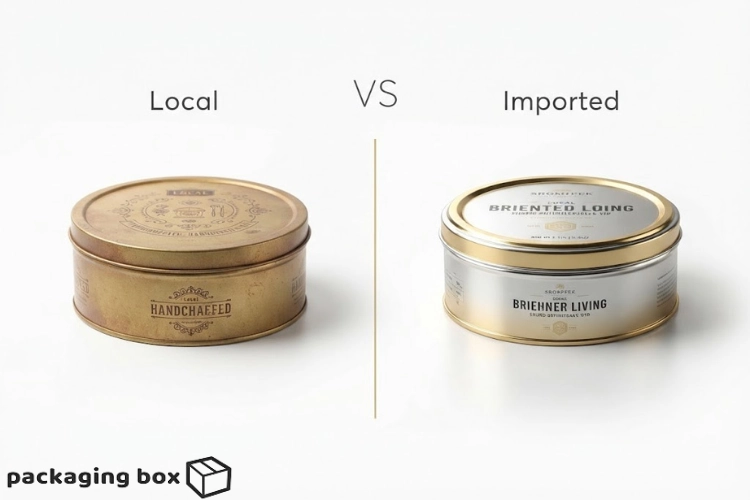

When it comes to packaging that feels premium, reusable, and gift-worthy, tin boxes remain one of the most trusted choices for brands across Pakistan. But the moment you start sourcing them, one question always comes up: should you go with local vs imported tin boxes? This decision affects not just your budget but also how your product looks, feels, and lasts on the shelf — and honestly, it’s a question that deserves more than a quick guess.
Every packaging buyer, from small home bakeries to large mithai brands, eventually faces this fork in the road. Local tin boxes promise faster delivery and friendlier pricing, while imported options carry a reputation for superior finishing and thickness. But is that reputation always deserved? Let’s unpack this properly, looking at material quality, manufacturing standards, pricing structures, and real-world use cases so you can make a decision that actually fits your business — not just your assumptions.
🏭 Understanding Local Tin Boxes Quality
Pakistan’s local packaging industry has grown significantly over the past decade, and tin box manufacturing is no exception. Local manufacturers now produce boxes that rival imported alternatives in appearance, especially for mid-range gifting and mithai packaging needs.
That said, local tin boxes quality does vary quite a bit depending on the supplier. Some manufacturers use thinner tin sheets to keep costs low, which can affect how the box holds its shape after repeated use. Others invest in better tooling and achieve genuinely impressive tin box coating quality, with smooth lids, tight-fitting bases, and vibrant printed finishes that hold up well over time.
The biggest advantage of going local is speed and flexibility. Because the supply chain is domestic, you’re not waiting weeks for customs clearance or dealing with shipping delays. This matters enormously for seasonal businesses — think Eid mithai sellers or wedding hamper suppliers — who often need bulk orders turned around quickly. If you’re exploring how the broader local packaging industry operates and what to expect from domestic suppliers, our guide on how to start a packaging business in Pakistan offers useful context on production capabilities and standards.
Another underrated benefit is customization. Local suppliers are generally more open to smaller minimum order quantities and flexible custom printing, which is ideal if you’re testing a new product line before committing to a large imported shipment.
🌍 The Imported Tin Box Advantage
Imported tin boxes have built their reputation on consistency. Countries with mature metal packaging industries — think China, and parts of Europe — often use automated production lines that maintain tin box manufacturing standards far more strictly than smaller local workshops can manage.
This shows up in a few tangible ways. First, thickness consistency: imported boxes tend to use uniform-gauge tin sheets, which directly affects how durable tin containers feel in hand and how well they resist dents during shipping. Second, coating and rust protection: many imported tin boxes come with a superior lacquer or enamel coating, making them genuinely rust-resistant tin boxes that hold up in humid storage conditions — a real concern in Pakistan’s climate during monsoon months.
The trade-off, naturally, is imported tin boxes price. Import duties, shipping costs, and currency exchange rates all stack onto the base manufacturing cost, which means imported options usually sit at a noticeably higher price point than domestic alternatives. There’s also the matter of lead time — international shipments simply take longer to arrive, and unexpected customs delays aren’t uncommon.
If you’re a buyer weighing whether importing packaging materials online is even a safe and practical option in the first place, it’s worth reading our detailed breakdown on ordering packaging online in Pakistan before committing to a large import order.
💰 Price Comparison: Local vs Imported Tin Boxes
Price is usually the deciding factor for most buyers, so let’s get specific about the tin container price difference between the two options. Local tin boxes typically cost anywhere from 30% to 50% less than their imported counterparts, depending on box size, printing complexity, and order quantity.
This price gap widens further once you factor in bulk ordering. Local suppliers often offer better per-unit pricing at lower minimum quantities, while imported suppliers usually require much larger bulk orders to make the shipping cost worthwhile. If you’re planning a large order and want to understand how minimum quantities affect overall cost, our guide on bulk packaging orders and minimum quantity pricing breaks this down clearly.
Here’s a simplified snapshot of how the two options generally compare:
| Factor | Local Tin Boxes | Imported Tin Boxes |
|---|---|---|
| Average Price | Lower (30–50% cheaper) | Higher due to duties & shipping |
| Delivery Time | Fast (days) | Slow (weeks) |
| Thickness Consistency | Variable by supplier | Generally uniform |
| Coating & Rust Resistance | Moderate to good | Typically superior |
| Minimum Order Quantity | Often flexible | Usually higher |
| Custom Printing Options | Highly flexible | Limited unless bulk-ordered |
As this table shows, neither option wins outright — it genuinely depends on what your business prioritizes: speed and affordability, or premium consistency at a higher cost.
⚖️ Quality Comparison: Durability, Coating & Finishing
Beyond price, the real question most buyers care about is which tin box is better in terms of everyday performance. This comes down to three core factors: material thickness, coating quality, and design finishing.
Tin box thickness comparison studies (informal, but widely reported by packaging suppliers) generally show imported boxes using slightly heavier gauge tin, which resists denting better during transit and stacking. Local boxes, especially from established manufacturers, have closed this gap considerably in recent years — but budget-tier local options can still feel flimsier.
When it comes to tin box design and finishing, this is genuinely one area where local suppliers shine. Custom printed tin boxes with intricate local designs — think traditional mithai patterns or Eid-themed prints — are often more readily available and affordably customized through domestic suppliers, since they understand regional aesthetic preferences better than overseas factories do.
Food safety is another important consideration. If your tin box will store edibles like cookies, dry fruits, or mithai, you need food-grade tin boxes with safe internal linings. Both local and imported suppliers offer food-safe options, but it’s worth explicitly confirming this with your supplier rather than assuming it by default. For a deeper look at how tin boxes compare against other packaging materials for gifting purposes, check out our comparison of tin box vs cardboard box for gifting.
🎁 Best Use Cases: When to Choose Which Tin Box
Different business scenarios call for different priorities, and honestly, that’s the real key to answering “best tin boxes for packaging” — the answer changes depending on what you’re packaging and who you’re selling to.
For seasonal gifting occasions like Eid, weddings, or corporate hampers, presentation matters more than raw durability, which makes premium local tin boxes an excellent choice. Our guide on tin boxes for Eid mithai and traditional gifting walks through exactly how brands use tin packaging to elevate perceived value during festive seasons.
For premium retail products meant to sit on store shelves for extended periods, imported tin boxes’ superior rust resistance and consistent finishing often justify the added cost — particularly for cookies, mithai, or dry fruit brands competing in the premium segment. If shelf appeal and repeat-purchase design matter to your brand, our comparison of square vs round tin boxes for shelf display and gifting is worth a read before finalizing your box shape.
A few quick scenarios to consider:
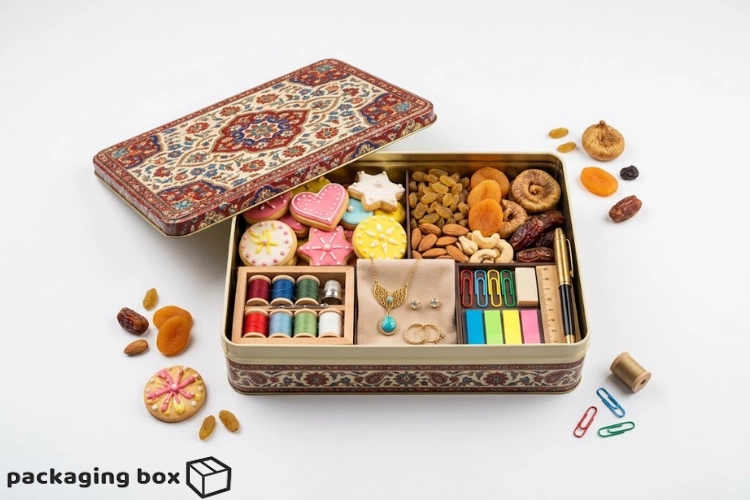
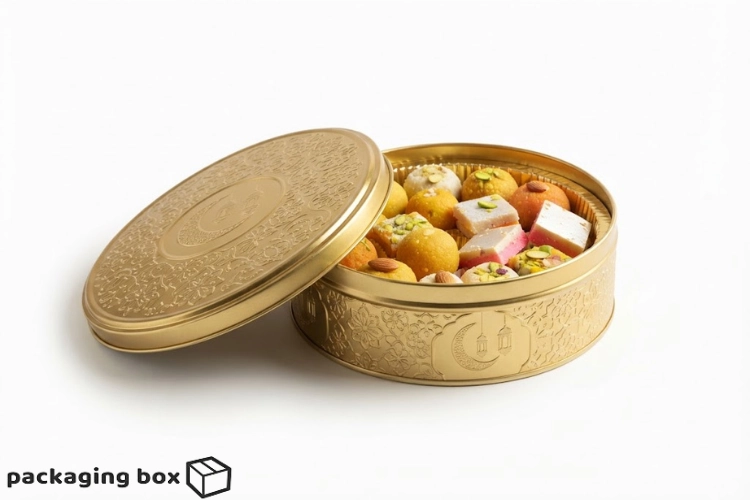
- Mithai and sweets brands — gold or printed tin boxes work beautifully for festive presentation, like the options available in our gold tin box collection for cookies and mithai.
- Reusable packaging strategies — many customers keep tin boxes long after the product is consumed, which is a genuine brand advantage worth exploring in our piece on why customers love reusable tin box packaging.
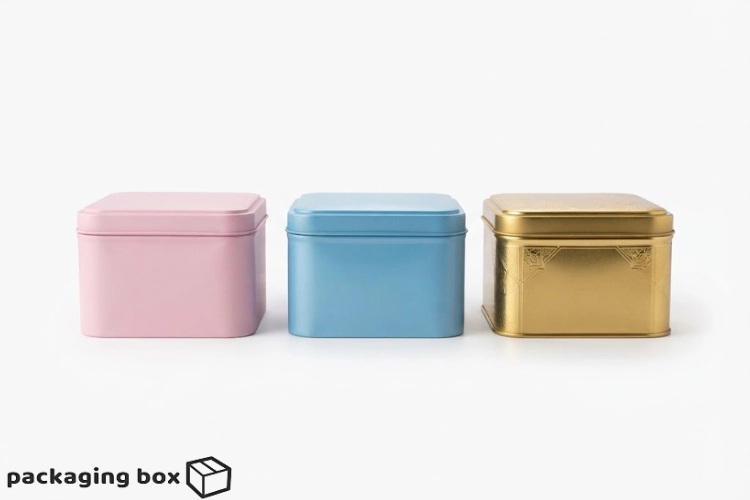
- Corporate and bulk gifting — square-shaped tin boxes like our pink square tin box or blue square tin boxes tend to stack and ship more efficiently.
🛒 Tin Box Buying Guide: How to Choose the Right One
Making the right choice ultimately comes down to matching your priorities with the right supplier — which is really what any good tin box buying guide should help you do. Start by clarifying your actual use case: are you packaging for retail shelf life, one-time gifting, or reusable branded packaging? This single decision narrows down whether thickness and coating quality (favoring imported) or cost and turnaround speed (favoring local) should drive your decision.
Next, always request physical samples before committing to bulk orders. This is the only reliable way to judge tin box coating quality and thickness firsthand rather than relying on product photos alone. A proper tin box supplier comparison should always include a side-by-side sample test — pressing lids, checking seam quality, and even leaving samples in humid conditions for a few days to test rust resistance.
It’s also worth evaluating your supplier’s overall reliability, not just their pricing sheet. Our detailed advice on choosing the right packaging supplier covers red flags to watch for and questions worth asking before placing a large order.
Finally, don’t ignore customization flexibility. If your brand identity depends on custom printed tin boxes, confirm minimum order quantities and printing turnaround times upfront — this alone can eliminate suppliers who look great on price but can’t deliver your exact design vision within your timeline.
✅ Final Verdict: Which Tin Box Is Better?
So, after weighing quality, pricing, and practical use cases, is there a clear winner in the local vs imported tin boxes debate? Not really — and that’s actually the honest, useful answer. Local tin boxes win on affordability, speed, and customization flexibility, making them ideal for seasonal gifting, mithai packaging, and businesses that need quick turnarounds without massive upfront investment. Imported tin boxes win on consistency, thickness, and rust resistance, making them a smarter pick for premium retail products expected to sit on shelves for months.
The smartest approach many established brands take isn’t picking one exclusively — it’s matching the box to the purpose. Use premium local tin boxes for festive, high-turnover gifting, and reserve imported options for flagship retail products where long shelf life and consistent finishing genuinely matter to your bottom line.
Whichever direction fits your business, the goal remains the same: packaging that protects your product, reflects your brand, and gives customers a reason to remember you.
❓ Frequently Asked Questions
What is the main difference between local and imported tin boxes? The core difference lies in thickness consistency, coating quality, and price. Imported tin boxes generally offer more uniform manufacturing standards and better rust resistance, while local tin boxes offer faster delivery and more affordable, flexible customization.
Which tin box lasts longer, local or imported? Imported tin boxes often last slightly longer due to thicker gauge material and superior coating, though high-quality local suppliers have significantly closed this durability gap in recent years.
Is imported tin box price always higher than local options? Yes, in most cases. Import duties, international shipping, and currency conversion typically push imported tin box pricing 30–50% higher than comparable local alternatives.
How can I test tin box quality before placing a bulk order? Always request physical samples first. Check seam tightness, lid fit, coating smoothness, and even leave a sample in humid conditions for a few days to gauge rust resistance before committing to bulk quantities.
Are local tin boxes food-grade safe for mithai and cookies? Many local suppliers do offer food-grade tin boxes with safe internal linings, but this should always be explicitly confirmed with your supplier rather than assumed, especially for edible product packaging.
Which tin box is better for gifting mithai and cookies? For festive gifting like Eid mithai or wedding hampers, premium local tin boxes usually offer the best balance of attractive design, quick turnaround, and affordability without compromising on visual appeal.
🎯 Ready to Choose the Right Tin Box for Your Brand?
Whether you’re leaning toward the affordability of local tin boxes or the premium consistency of imported options, the right packaging partner makes all the difference. Explore our full range of tin boxes, including round tin boxes and square tin boxes, and get samples before your next bulk order.





💬 0 Comments
Leave a Comment